

Air Cargo Netherlands (ACN) has launched its Air Cargo Innovation Lab (ACIL), in partnership with the University of Amsterdam’s Startup Village. This initiative is intended to serve as a platform for innovation and process improvement within the air cargo sector.
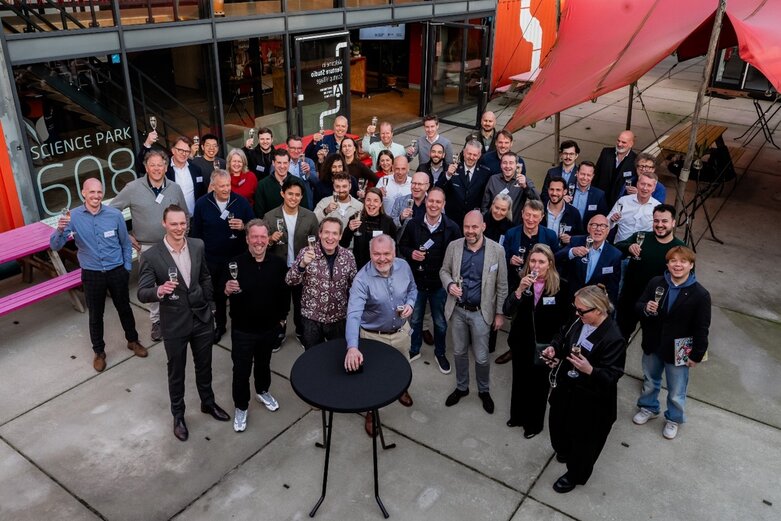
ACN, which owns the Smart Cargo Mainport Program (SCMP), has already been involved in digitization and supply chain collaboration for several years. With the addition of ACIL, a dedicated space for experimentation and development is now available, according to SCMP’s Program Manager, Fabian Haijenga (FH), and Startup Village Amsterdam’s Managing Director, Femmie Geradts (FG).
Short-Term Solutions and Long-Term Innovation
“The solutions we have been building and developing, have to be implemented in the community and checked on their workability. This is, however, all in the short term – working on problems that actually occur, but in the longer term, we also have to innovate and look forward,” says Mr Haijenga.
Innovation by young talent
“And that is where we step in,” Ms. Geradts adds. “We are part of the University of Amsterdam, and we bring in university-based knowledge and the input of start-ups. That is the driver for our collaboration. At Startup Village Amsterdam, we focus mainly on AI and Quantum, but we are not tied to a specific (industry) string. We have start-ups in Healthcare, Logistics, as well as local city administration, market research, etc.”
“The ultimate aim is to marry innovation by young talent to problem definition. This specific problem definition is provided by ACN, because they know this better than we do.”
Current Themes and Areas of Focus

CFG: ACIL was launched some two weeks ago. Could you name some ideas that are gaining traction at the moment?
FH: “Certainly. In the meantime, some issues have already been identified. One is Expected Time of Arrival (ETA)/Geofencing. There is extensive planning required and it is necessary to know what goods are in transit. While incoming shipments via Road Feeder Services (RFS) are tracked, situations like traffic jams require the ability to anticipate and, where possible, take preventive action.
Another focus area is cargo dimensions. Although it may seem trivial, accurately knowing what is arriving is essential. This involves both data collection and measurement capabilities. Environmental responsibility is also a key consideration.
HR and labor are also in scope, with themes including robotization, staff flexibility, and the impact of implementations on the wider community. Stakeholder engagement is crucial, as the community comprises of different target groups – some are front runners, while others are smaller parties.”
FG: “Over the next three months, work will focus on these five themes, with students and start-ups invited to participate. Presenting the problems to specialists, the aim is to create a road map for the current situation and explore whether additional solutions can be introduced. The needs must originate with the market to ensure the right people are brought in.”

Challenge-Based Learning
Mr. Haijenga highlights the importance of involving a diverse group of stakeholders in the process. “We like to adopt the 80/20 rule, with the top 20 taking the lead and the opportunity to join for those who wish to do to. We need a good group of people who can clearly define what the problems are.”
“To students and start-ups, it will be a form of challenge-based learning, and cross-fertilization between the different parties. It is not a question of fundamental research, but exposing applicability,” Ms. Geradts adds.
Drawing inspiration from other industries
Although Startup Village Amsterdam does not have specific experience in the air cargo sector, there are parallels with industries such as Defense, particularly regarding security. Ms. Geradts notes that start-ups from other fields may also offer valuable inspiration.
A Measured Approach and Future Outlook
After the initial three-month set-up period, ACIL aims to share more concrete outcomes by the end of the year. “We take a measured approach, because the last thing you want is to put something down with which the community does not feel any connection at all,” Femmie Geradts concludes.