
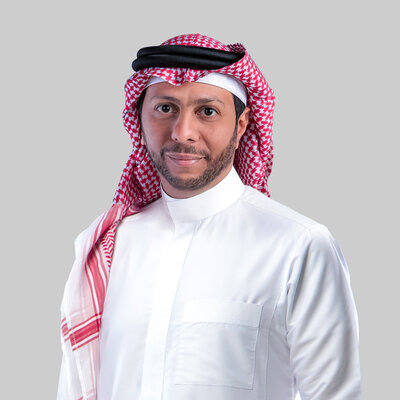
The cargo division of the Saudi Arabian national carrier intends to up its freighter fleet from currently 7 units to 14 come 2028. The main decks are complemented by lower deck compartments offered the market by the fast-growing passenger fleet of the airline. This proactive asset policy goes hand in hand with strategic partnerships in jointly establishing a logistics bridge between the APAC region, the Middle East, Africa and Europe, explains CEO Eng Loay Mashabi (LM) in this exclusive interview in which he stresses operational expansions in Asia and Europe and e-Com initiatives. Specifics will be revealed to customers at the upcoming Air Cargo Europe trade fair in Munich, Germany.
CFG: Saudia Cargo will have a booth at Air Cargo Europe. What are the motives behind this decision?
LM: Saudia Cargo’s presence at Air Cargo Europe is driven by a desire to amplify our brand visibility on a global stage, connecting with key decision-makers and showcasing our commitment to innovation. It’s a crucial platform for business development and networking, allowing us to explore new opportunities and solidify partnerships. Participation is also essential for staying ahead of industry trends and best practices. Ultimately, our presence supports Saudi Vision 2030, contributing to the Kingdom’s goal of becoming a leading global logistics hub.
CFG: What topics will Saudia Cargo be focusing on in meetings with customers and industry representatives during the Munich trade show?
LM: Air Cargo Europe serves as a key international platform for the air freight industry, offering valuable opportunities to connect with decision-makers, explore new innovations, and stay ahead of industry trends. Saudia Cargo will focus on highlighting its growth strategy; plans to expand our freighter fleet and enhance our infrastructure. Additionally, we will showcase our specialized services, including pharma, perishables and e-commerce solutions.
Strategic partnerships are key, and we’ll showcase collaborations like our continued agreement with Jan de Rijk Co., a leading European transportation and logistics company, to enhance our services and expand our reach in Europe. This agreement which started back in 2023 allows us to leverage Jan de Rijk’s extensive trucking network to bolster our operations and strengthen our presence in Europe.
We will also discuss our commitment to innovation, sharing insights into our investments in technologies like AI, IoT, and blockchain. Sustainability is a priority, and we’ll share our dedication to minimizing our environmental impact. Finally, we will outline our network expansion plans, including our direct flight route from Liège Airport in Belgium to King Fahd International Airport in Dammam, increasing our total weekly flights from Liège to eleven.
CFG: In 2024, Saudia Cargo transported 577,870 tons of air freight. At the presentation of the annual result, you said that the airline will “remain focused on growth, strengthening partnerships and providing advanced solutions” to the benefit of customers. Meanwhile, the first five months of 2025 have passed. On which of these three points have significant results been achieved so far?
LM: In the first five months of 2025, Saudia Cargo has made significant strides in all three strategic areas: growth, strengthening partnerships, and providing advanced solutions. We’ve continued to see strong growth in key sectors like e-commerce and perishables, particularly in our trade lanes with Asia. We’ve also made progress in expanding our network, with new destinations and increased frequencies planned for later in the year. Our recent MoU with China Henan Aviation Group (CHAGC) represents a major achievement in strengthening our partnerships. This strategic collaboration will establish a robust air logistics bridge between Asia-Pacific, the Middle East, Europe, and Africa, leveraging Zhengzhou and Riyadh as key interconnected hubs. We’ve also continued to deepen our relationships with existing partners like Cainiao, the logistics arm of Alibaba, serving as their largest partner in Saudi Arabia and contributing to the European supply chain. Furthermore, we’ve made significant progress in implementing our digital transformation strategy, leveraging AI, IoT, and blockchain, to enhance our efficiency, transparency, and customer experience. We’ve also continued to invest in specialized services, such as our top-tier pharma solutions and our innovative perishables handling.
CFG: Lately, Saudia Cargo has been very active in e-commerce. How much does e-commerce currently contribute to the carrier’s total volumes and sales, and has the recent tariff dispute between the U.S. and China (and most other countries) had any effect on Saudia Cargo’s business?
LM: E-commerce is a rapidly growing and increasingly important segment for Saudia Cargo, contributing substantially to our overall success. Last year, our e-commerce volumes improved by 23% to 64,107 tons. At present, we handle valuable and time-sensitive products, particularly for e-commerce, where we collaborate with major Chinese players. We’ve made major investments in infrastructure, technology, and strategic partnerships to support the growth of e-commerce, and we’re seeing positive results in our strong performance in this sector. Regarding the recent tariff disputes, while it’s still too early to fully assess the long-term impact, we are closely monitoring the situation and actively adapting our operations to mitigate any potential negative effects. Our strategy involves diversifying our markets and trade lanes, strengthening our existing partnerships, and providing flexible and reliable solutions to our valued customers.
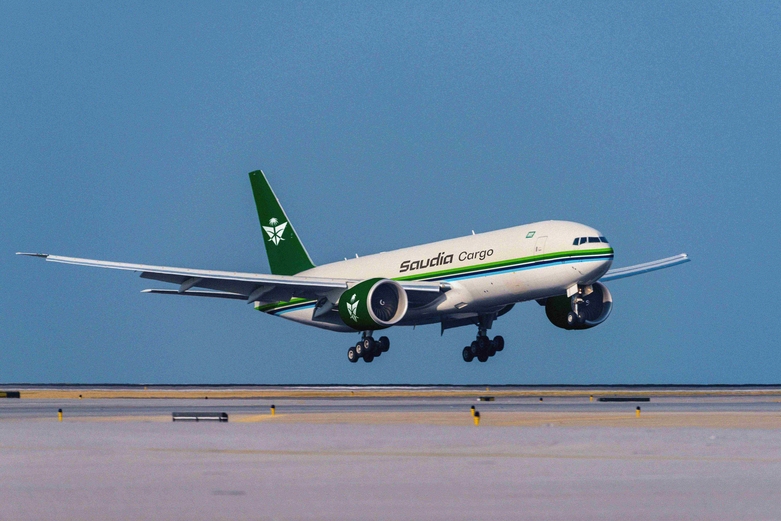
CFG: Saudia Cargo operates a fleet of 7 freighter aircraft (mix of B747F and B777F) and markets the lower decks of 140+ passenger aircraft. In view of the growth plans announced by you, Mr. Loay Mashabi, are there any intentions to expand the freighter fleet by additional units or to increase capacity through wet lease contracts?
LM: Expanding our capacity is a key priority, and we are actively exploring all options to meet growing demand. This includes expanding our freighter fleet and optimizing belly capacity. We have ambitious plans to double our freighter capacity by 2028. We are also evaluating opportunities to increase capacity through wet lease contracts. Our goal is to ensure sufficient capacity to meet customer needs.
CFG: Finally, what is the 2025 year-end target for transported tons and turnover?
LM: While we don’t disclose specific year-end targets, we are aiming for significant growth in both transported tons and turnover throughout 2025. We are confident that our strategic initiatives, investments in infrastructure and technology, and commitment to exceptional service will enable us to achieve our ambitious goals. We are focused on maximizing efficiency, optimizing our network, and expanding our market share in key sectors. Above all, we are deeply committed to contributing to the Kingdom’s economic success. Our profitability is strong, and we are focused on continuing to improve our performance.
CFG: Thank you for your time and input.