
Frankfurt Airport operator Fraport AG and the Chinese state-owned Shanghai Pudong Airport have agreed on a strategic partnership in the cargo segment. According to the MoU signed by both sides in Shanghai, the existing cooperation between the partners in their respective airport communities is to be expanded, regulatory processes optimized, and market potential jointly developed.

The MoU is a visible result of the roadshow organized by Fraport AG in Shanghai around a year ago. Since then, there has been a constant exchange of information concerning cargo issues between the two sides, with the current MoU as a partial result.
Global online trade is going through the roof as it does in Frankfurt, where around 5 million e-commerce shipments are currently handled every single month. Whether Shein, Temo, or Alibaba, most of the packages originate in China. The pulling together of the two airports in cargo matters, that has now been sealed, is intended to further optimize cross-border processing on the basis of common standards. Frankfurt operator Fraport adds to this that its partnership with Shanghai Pudong is part of the comprehensive CargoHub Frankfurt master plan which provides for new cargo buildings and warehouses in order to further strengthen FRA’s competitiveness within Europe in air freight matters.
In a joint statement, both airports emphasize that they see the opportunity for deeper cooperation to make international freight traffic between East Asia and Europe even more efficient and future-oriented. Joint projects include a coordinated rapid response and communication mechanism to accelerate customs and regulatory processes, as well as further joint roadshows to build a more connected freight ecosystem.
To better understand the scope of the agreed cooperation and to learn more about the next steps planned, we spoke with Alexander Laukenmann (AL), Senior Executive Vice President Aviation at Fraport AG:
Standardizing e-commerce flows
CFG: Frankfurt and Shanghai announced to expand their long-standing cooperation. What exactly did and does this ‘long-standing cooperation’ consist of? And how will the cooperation of the airport communities take shape in practical terms?
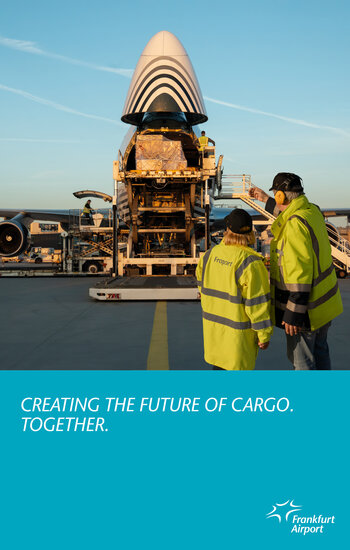
AL: Our collaboration is founded on the conviction that together we are stronger, also reflected in Frankfurt Airport’s guiding principle, “Creating the Future of Cargo. Together.” In addition, both airports have agreed to organize regular expert exchanges, including site visits, management internships, and working groups focused on optimizing cargo flight frequencies and slot allocation. There will be coordinated efforts to engage with customs authorities, aimed at accelerating regulatory processes and ensuring seamless cargo operations.
Further to this, joint roadshows and industry events will be held in both Frankfurt and Shanghai, creating platforms for airlines, freight forwarders, cargo owners, and related industries to develop new market opportunities and establish shared standards. These initiatives will be complemented by collaborative projects in innovation and digitalization, such as the development of digital cargo community systems and standardized processes for e-commerce shipments.
CFG: In your press release you indicate plans to set up a coordinated rapid response and communication mechanism to accelerate customs and regulatory processes within a better-connected cargo ecosystem. Where exactly do cargo clients benefit from this intent?
AL: A more connected cargo ecosystem means creating an environment where all relevant stakeholders – airlines, freight forwarders, cargo handlers, regulatory agencies, and technology partners – work together in an integrated way. Specifically, we plan to establish a rapid response mechanism between Frankfurt and Shanghai for direct communication and problem-solving. This will lead to faster, more predictable clearance processes for cargo shipments.
Joint roadshows and industry events will foster stronger relationships and shared standards, encouraging innovation and the adoption of digital solutions for tracking, documentation, and data exchange. For cargo clients, this translates into reduced lead times, greater transparency, improved reliability, and enhanced product safety – key advantages for time-sensitive and high-value sectors such as e-commerce, pharmaceuticals, and industrial goods. By leveraging digitalization and close cooperation, we’re improving delivery times, digital traceability, and compliant processing, ensuring our customers benefit from efficient and secure cargo flows.
CFG: The MoU marks the start of further international cooperation in strategically important markets. Which are the important cargo markets and which airports are suitable for cooperation in the cargo sector from Fraport’s point of view?
AL: Currently, China is one of Fraport’s top-priority strategic markets, as outlined in our Cargo Masterplan, with Shanghai Pudong International Airport identified as offering a great potential for developing new trade lanes and increasing air cargo traffic between Europe and Asia. Looking ahead, India is another focus market, given its rapid growth in cargo volumes and evolving logistics infrastructure. We have already organized roadshows in India, bringing together stakeholders to discuss future opportunities and strengthen our partnerships in the region. While we do not comment on specific future partnerships at this stage, our strategic goal is to strengthen collaboration with airports in markets that play a pivotal role in global supply chains and offer the best prospects for mutual development.
CFG: Presumably, a financial cross-shareholding between the airports of Frankfurt and Shanghai Pudong is not an issue – is it?
AL: This is correct. Financial cross-shareholding is not part of this agreement. The partnership is built on mutual benefit, knowledge exchange, and joint initiatives to enhance operational efficiency and service quality. Each party remains fully independent and bears its own costs while cooperating within the agreed framework.
CFG: Alexander, thank you for these explanations.