This agreement is sparking the imagination of freight carriers because it promises a significant increase in tonnage due to the virtual elimination of customs barriers on both routes across the South Atlantic, from northwest to southeast and in the opposite direction. The trade agreement, which has been under negotiation for a quarter of a century between the EU and four South American countries, has provisionally come into force on 27FEB26. Only Paraguay’s signature is currently still missing.
With over 260 million inhabitants, Mercosur is the fifth-largest economic bloc in the world. For the EU, Mercosur is the tenth-largest trading partner. Conversely, the EU is the second-largest trading partner of the Mercosur countries, after China. In 2024, the trade volume between the two economic blocs amounted to approximately 111 billion euros, with more than 80% of that figure attributable to Brazil – by far the strongest South American member of the bloc in economic terms.
Core element of the scheme is the gradual elimination of tariffs on over 90% of all traded goods, which will significantly increase the exchange of industrial and agricultural items. A key motivation for the EU is the diversification of supply chains. In particular, Europe wants to reduce its dependence on China for raw materials such as lithium and other so-called rare earth elements, which are needed for batteries, electric motors, and the energy transition. The European Commission also expects that exports by European companies to Latin America could increase by up to 39%. In the long term, according to the European Commission, hundreds of thousands of new jobs could be created in Europe. Conversely, European markets are opening up to agricultural products from South America, particularly beef, poultry, sugar, and soy, even though there have been protests by French, Italian, and German farmers against this opening clause right up until recently. For cargo airlines operating routes between the two trade blocks, the agreement offers a ray of hope. Unlike with North American traffic, they anticipate a steady increase in cargo volume and stable supply chains thanks to the customs regulations. CargoForwarder Global (CFG) spoke with Enrica Calonghi (EC), Cargo Director South America at Air France KLM Martinair Cargo, and Cleverton Vighy (CV), Head of Sales and Handling Brazil and South Cone* at Lufthansa Cargo.
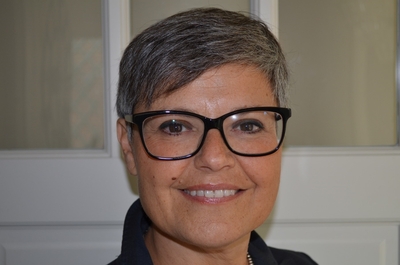
CFG: Erica, what impact does Air France KLM Martinair Cargo expect the pact to have on its business to and from South America?
EC: The Mercosur agreement strengthens trade relations between South America and Europe, and is expected to support higher bilateral flows, particularly for time-critical, temperature-sensitive, and high-value goods where air freight is essential.
For Air France KLM Martinair Cargo, this aligns with our focus on adapting capacity and solutions to evolving market dynamics while remaining close to customer needs across the region.
In Mercosur, sustainability and digitalization are increasingly part of commercial decision-making, especially among multinational exporters and global forwarders.
Our approach is pragmatic and operational, centered on transparency, efficiency, and available options such as emissions visibility, access to Sustainable Aviation Fuel where feasible, and digital tools that support informed decision-making. Through myCargo, customers can manage bookings and shipments 24/7, with reliable transaction handling and real-time visibility, supporting efficient trade flows between South America and Europe.

CFG: Cleverton, which cargo products are likely to benefit most from the treaty?
CV: A growth of imports such as car and auto parts, chemical goods and industrial components to involved countries is very likely. But also goods with lower value will support investments and growth in the region. On the export side, we assume a direct increase in semi-manufactured goods such as fashion and textiles. Additionally, we assume that the Brazilian and Uruguayan markets will benefit from pharmaceutical exports as well.
EC: In our view, it will be perishable goods such as fresh produce, fruit, vegetables, flowers and seafood. Those we expect to benefit most, given their time-sensitive nature. Pharmaceuticals and high-tech products should also see increased volumes, given their requirements for reliability and temperature control. In addition, automotive parts, machinery, and industrial goods are likely to benefit, particularly for urgent or high-value shipments. The continued growth of e-commerce in South America further supports demand for fast and reliable air cargo.
CFG: On which specific routes can tonnage growth be expected (both import and export?)
CV: Brazil and Argentina.
EC: Tonnage growth is expected on both export flows, such as perishables moving to Europe, and import flows, including industrial goods and pharmaceuticals into South America.
CFG: How many cargo flights does your airline operate to the South American Mercosur states weekly? How well is your carrier represented in the market?
EC: With a longstanding presence in South America, Air France KLM Martinair Cargo is firmly established in the South America region, leveraging a balanced combination of dedicated freighter operations and belly capacity on passenger flights to deliver flexible and reliable cargo solutions. As the EU-Mercosur agreement continues to evolve, we will closely monitor market developments and proactively adapt our capacity and services to ensure we effectively support our customers and partners across this important trade lane.
CV: Lufthansa Cargo manages the belly capacities of 51 passenger flights within Lufthansa Group and four freighter rotations covering Mercosur-involved countries. Due to the addition of ITA belly capacity, we were able to further increase our offer to customers in the region, over the last year. This makes Lufthansa Cargo the second biggest carrier in volumes between the EU and Mercosur countries.
CFG: Erica, Cleverton, thank you for your time and input.
*** The Southern Coneis a geographical and cultural subregion composed of the southernmost areas of South America, mostly south of the Tropic of Capricorn. In terms of geography, the Southern Cone comprises Argentina, Chile, and Uruguay, and sometimes includes Paraguay and Brazil’s four southernmost states (Paraná, Rio Grande do Sul, Santa Catarina, and São Paulo).