
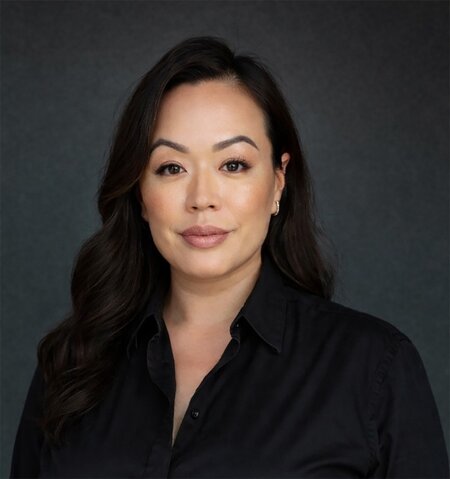
Each week, CargoForwarder Global’s ‘Spotlight On…’ picks out a specific segment of the air cargo industry, passing the mic to someone working there, to illustrate their function. In such a fragmented industry where so many different aspects need to seamlessly interact to ensure the smooth and safe transport of all kinds of commodities, it can be challenging to maintain an overview or completely understand another stakeholder’s requirements when working on improving process efficiency or designing new logistics solutions. That is where neutral input from outside can help. Bringing in independent consultants who have a solid understanding of process flows, industry developments, and change management, can facilitate process design and implementation. One such expert is this week’s Spotlight: Kendy Choi, Founder of NEMplus, explains her role, and shares views and advice on how to carve out a career in the air cargo industry.
CFG: What is your current function and company? And what are your responsibilities?
KC: I am the founder of NEMplus, where I work with airlines, airports, ground handling agents and logistics players on commercial growth and performance.
On one side, I originate and structure cargo flow, connecting capacity with demand and bringing the right partners together to create new business.
On the other, I focus on how those flows actually perform. That means looking at how commercial strategy, operations, and digital capabilities come together in practice.
What shapes my approach is my experience working close to the operational core of e-commerce. That’s where you really see the pressure on speed, execution, and data.
What became clear to me early on is that this doesn’t have to stay within e-commerce and in fact becomes a blueprint. The same principles (real-time visibility, tighter control, faster execution) are just as relevant in areas like pharma logistics, where reliability and transparency are critical.
A key focus of my work is helping organizations translate that into their own reality in a way that actually improves both performance and customer experience.
CFG: What does a normal day look like for you?
KC: A truly ‘normal’ day in logistics would be quite boring and wouldn’t really unlock what defines a good logistician: the ability to find creative solutions, adapt to constantly changing situations, and bring structure to complexity.
In practice, my days are shaped by working closely with stakeholders, understanding what they are trying to achieve, where things get stuck, and what would actually make a difference, whether commercially, operationally, or digitally. That can range from an airline looking for the right partner to launch a charter program, to a ground handling agent looking to attract e-commerce flows, or an airport exploring how digital innovation can strengthen its ecosystem.
What I appreciate in my work today is that I’m working directly with decision-makers. When there is alignment from the start, things move faster.
At the same time, I stay very close to execution. Because what I’ve learned over time is that something can make perfect sense in a meeting, but behave very differently once it hits operations and reality adds its own set of conditions.
That perspective comes from my earlier roles as a cargo airliner, and later moving closer to ground handling in a high-volume e-commerce environment.
You see very quickly how small misalignments translate into delays, costs, or missed opportunities.
CFG: How long have you been in the air cargo industry, and what brought you to it?
KC: You think you give air cargo a shot, with no expectations… and suddenly you’re 19 years in.
I grew up around aviation, as we had a travel agency in the family, but I had no connection to cargo whatsoever. That changed when I joined EVA Air. I started in an administrative role, but quickly moved into the cargo department – and that’s where it clicked. The pace, the urgency, the art of meticulous planning under pressure… what a kick!
I still remember early in my airline career, a forwarder once told me: “beggars can’t be choosers”. And at the time, that was the reality. Airlines and forwarders were competing for freight, and competing often meant winning on price.
Around 2019, a question that had been there for a while became impossible to ignore: what exactly is e-commerce, and how do we position ourselves around it? Many discussions were held, but few clear answers were given. For me, the only way to understand it was to experience it firsthand. That led me to join Alibaba’s Cainiao network in 2020, as part of the inaugural team building the eHub in Liège.
That environment introduced a very different way of thinking: a shipper-driven mentality, where speed, data, and end-to-end control define how logistics is designed and executed. And that’s where I saw the shift very clearly.
Because when you invest, not only in price, but in everything that builds trust with your customer, you are no longer just competing for freight. You become the one that gets chosen.
And in that sense, the “beggar” doesn’t stay a beggar. You can position yourself to become the chosen.
That evolution, from competing on price to being chosen on value, is what has defined my journey in this industry.
CFG: What do you enjoy most about your job?
KC: What I enjoy most now is the perspective. Running my own consultancy means I’m no longer looking at the industry from one angle, I’m constantly moving between different perspectives across the ecosystem. You start to see patterns, connect the dots, and understand how things really move beneath the surface.
The real energy, however, comes from working directly with decision-makers.
When there is alignment from the start, things just click. Conversations are sharper, decisions are faster, and you can actually move!
The ability to go from idea to execution without layers slowing it down, is something I really enjoy.
And yes, part of it was also about taking back control over my own agenda. Being able to decide what deserves my time and energy (and just as importantly, what doesn’t), has been a game changer for me. It allows me to focus on what truly matters, and to work in a way that feels intentional, and where I know I can make a real difference.
CFG: Where do you see the greatest challenges in our industry?
KC: The industry’s reluctance to fully engage with (= invest in) digital solutions. There are more tools, platforms, and providers than ever before, yet we are still operating in silos, with limited data sharing. And that’s not only between stakeholders. You also see it between solution providers themselves.
Even when services of two solution providers are complementary, there is still hesitation to share data, or it comes at a disproportionate cost with long lead times to get it done.
What holds the industry back is not the technology, but mindset.
The hesitation to invest, to change, or to take the lead is often driven by internal structures, risk aversion, or simply because the current way of working is still “accepted”.
At the same time, we see a very different dynamic in other parts of the world.
In China, for example, the customer is really king and its continuous demanding and pressing expectation level is, if not, the primary driver to force any customer serving industry to evolve much faster. That pressure has accelerated innovation in a way that is difficult to replicate without that same urgency.
In Europe, we are more cautious. We tend to observe, evaluate, and wait. But the risk of that approach is that you end up reacting to change, rather than shaping it. And once that gap becomes visible, it’s much harder to close.
CFG: What advice would you give to people looking to get into the air cargo industry?
KC: A logistics degree or relevant courses can get you into the industry.
If you want something more specific, certifications like IATA cargo training give a good foundation. But if you really want to give it a proper shot and grow in it, finding the right mentor can make all the difference.
In this industry, the people you learn from shape how you think and how you operate. The difference between someone who just tells you what to do and someone who takes the time to explain, challenge you, and share experience, is huge. So be intentional about that. Get close to people who inspire you, ask questions, and stay open.
As Alvin Toffler put it, “the illiterate of the twenty-first century will not be those who cannot read and write, but those who cannot learn, unlearn, and relearn”.
At the same time, don’t avoid the operational side.
Take on the less attractive tasks. Deal with complaints. Understand where they come from. That’s where you start to see what is really not working and where you can actually influence the outcome.
And don’t rely on just one perspective. What you hear from a desk is often very different from what’s happening on the shop floor.
CFG: If the air cargo industry were a film/book, what would its title be?
KC: ‘No Country for Old Processes’ [Smiles] It’s not the strongest that survive, but the ones willing to change!
Many thanks, Kendy!