
On 24JUN26, Venezuela was struck by devastating earthquakes – a magnitude 7.2 quake, roughly 160 km west of Caracas, was followed less than a minute later, by a magnitude 7.5 tremor along the San Sebastián fault system. The death toll has since climbed past 4,700, with widespread destruction across coastal and central states and severe damage to infrastructure, including the country’s main gateway, Simón Bolívar International Airport in Maiquetía. In the weeks that followed, the international community including key air cargo industry players, collaborated to bring relief supplies and aid to Venezuela in the aftermath, as it struggles to stabilize and rebuild. Recently, Avianca Cargo and DSV carried out one of these aid operations.
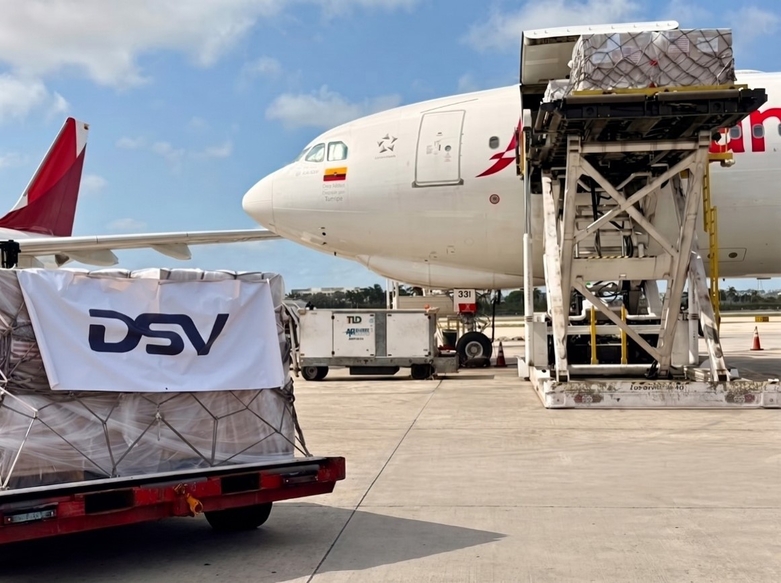
Avianca Cargo, the cargo arm of the Abra Group, partnered with global logistics giant DSV to operate a dedicated Airbus 330 freighter carrying 58 tons of humanitarian aid from Miami to Caracas. On board were medical supplies, food, hydration kits, personal hygiene products, and other essential relief items. The flight was coordinated with humanitarian organizations Direct Relief, Global Empowerment Mission, Heart to Heart International, and World Central Kitchen, to establish where the supplies were most urgently required.
A shared commitment to making a difference
Juan Correa, Chief Commercial Officer of Avianca Cargo, commented: “This humanitarian mission, carried out together with DSV, reflects our shared commitment to making a meaningful difference when communities face extraordinary challenges. Our core priority is ensuring the seamless, efficient delivery of international humanitarian aid, which requires ongoing alignment with local authorities and our relief partners.”
Stephanie Penarete, Vice President of DSV Air Product Americas, emphasized: “The greatest impact comes from what we achieve together with purpose and collaboration. We are proud to work alongside Avianca Cargo, combining our logistics expertise with their network and operational excellence, to deliver essential relief supplies to communities in Venezuela. Together, we demonstrated how a shared commitment can transform logistics into meaningful action and create lasting impact for the communities we serve.”
An airbridge to Venezuela
This was not an isolated gesture. Avianca earlier coordinated a joint approach with Wamos Air (also part of Abra Group), again operating a dedicated Airbus A330 freighter to carry 55 tons of supplies, this time from Bogotá to Maiquetía. The airline has, to date, moved over 150 tons of relief supplies in partnership with local foundations, and even adjusted its passenger network – running temporary flights between Bogotá and Valencia – to keep a transit corridor open while runway repairs continued at the main Caracas airport.
“As part of its ongoing commitment to supporting communities in times of need, Avianca will continue to put its logistics network and operational infrastructure at the service of those affected by emergencies. Through its extensive cargo capabilities across the Americas, the company remains committed to delivering critical humanitarian assistance quickly, safely, and wherever it is needed most,” its press release underlines.
Coming together, to help
Alongside Avianca Cargo and DSV, other carriers have and continue to ferry aid to Venezuela. Amazon Air arranged its first-ever humanitarian air bridge, and DHL, LATAM Cargo, FedEx, Atlas Air, GOL, DP World, and specialists such as Air Charter Service all carried out relief operations in the aftermath of the earthquake disaster. Over in the European Union, the European Commission immediately activated its Civil Protection Mechanism, with eight member states – Czechia, Spain, Italy, France, Luxembourg, Germany, Portugal, and the Netherlands – sending rescue teams, medical staff, and telecommunications equipment. Since then, more than EUR 25 million in aid have been released, more than 750 responders and experts from 18 countries have been mobilized, and circa 80 tons of aid (shelter materials, water and sanitation equipment, and education supplies) delivered via the EU humanitarian air bridge out of Copenhagen.
Logistical challenges
The operations have not been simple. Damage to Simón Bolívar International Airport disrupted the country’s primary air gateway, forcing carriers to reroute through alternate airports and adjust schedules around repair work. Venezuela’s existing economic fragility – high inflation, currency instability, and years of underinvestment in infrastructure – complicates fuel supply, ground handling, ports, and last-mile distribution once cargo lands. Coordinating dozens of independent carriers, NGOs, and government agencies without duplicating shipments or creating bottlenecks at damaged facilities adds another layer of complexity. Yet, air cargo is indispensable in times of crisis. Widebody freighters like the A330F can move dozens of tons of aid in a single flight, and the speed of air transport compresses response times from weeks to days – often the critical window in which medical aid and clean water save the most lives. As the Venezuela earthquake response shows, air cargo is not simply about moving freight; in a crisis, it is the fastest bridge between the world’s willingness to help and the people who need that help most.