
“In the 100th anniversary year since the founding of the first [sic] Lufthansa, its freight subsidiary, Lufthansa Cargo, is setting the course for sustainable growth in the coming decades and positioning the company for a successful future,” the press release states, going on to announce the acquisition agreement signed between the air cargo airline and the 60-year-old handling company, LUG aircargo handling GmbH, until now, a subsidiary of Dettmer Group. The signing took place on 07SEP26, and will make the cargo handler’s 400 staff and 50,000 m² of warehouse and 18,000 m² of office/infrastructure space part of Lufthansa Cargo to 100%. The cargo airline has done this in order to have “greater capacity and flexibility for cargo handling in the home market”, and the move is “one of the key pillars of Lufthansa Cargo’s growth strategy and is intended to create the infrastructural foundation for future profitable growth and further strengthen the company’s competitiveness.” Seems sensible to insource handling in the heart of its operations in Frankfurt once again, at least in part. This time it is gaining a company with a great deal of experience and serving a number of international airlines. The press release does underline that the acquisition will not change anything for the existing customers of either company, because LUG aircargo handling GmbH will continue to operate independently, but also explains that “Lufthansa Cargo will gain immediately available, additional handling capacity within Germany”, particularly with the view to the LCCevo program that is still underway. The acquisition still needs to go through the required antitrust and regulatory approvals.
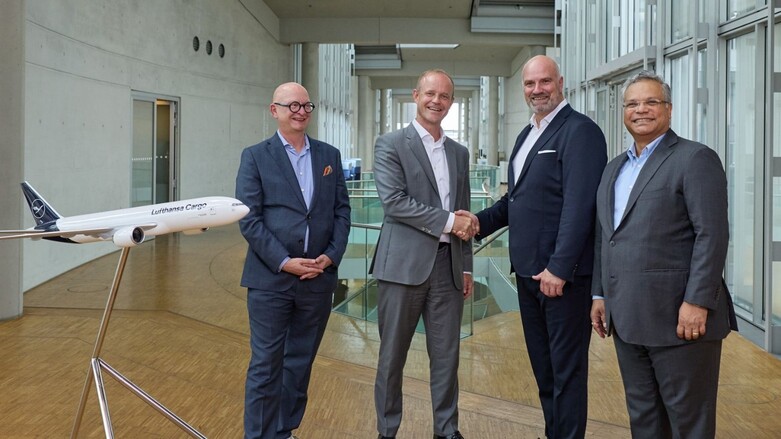
Though it contains no direct quote from Dettmer Group, the seller is said to “welcome the planned transaction and believes the company is well-positioned for further growth under Lufthansa Cargo’s ownership.”
Frank Bauer, Chief Operating Officer of Lufthansa Cargo, explained: “In an increasingly volatile market environment, we want to become more flexible, more efficient, and more resilient for our customers. That is why we are making targeted investments in our infrastructure in our home market in Germany, to set the course to provide an even better offering for our customers and achieve profitable growth – this is a win-win situation for both companies. We will continue to stand for ‘Enabling Global Business’ for Germany as an export nation and across our entire global network.”