
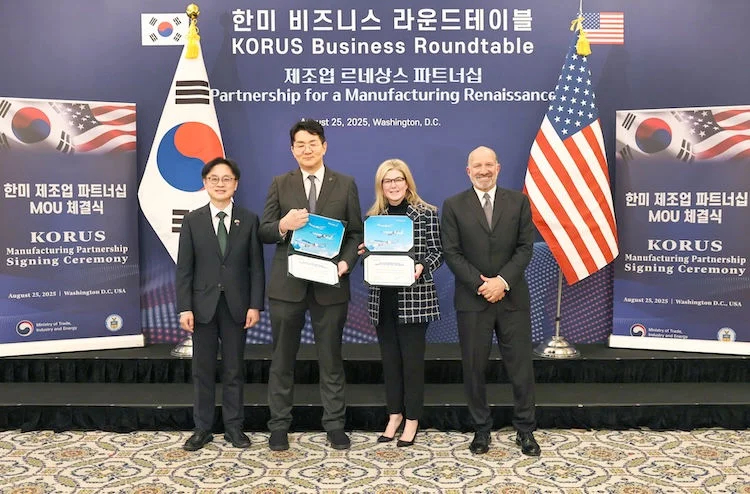
On 25AUG25, Korean Air signed a landmark agreement to purchase 103 next-generation Boeing aircraft in a deal valued at approximately USD 50 billion, marking the largest purchase in the airline’s history. The aircraft shopping list includes 20 Boeing 777-9s, 25 Boeing 787-10s, 50 Boeing 737-10s, and eight Boeing 777-8F freighters. It is the first time that the airline has committed to the world’s largest and most efficient twin-engine cargo aircraft. The order will complement Korean Air’s cargo fleet of twelve 777-200Fs, seven 747-8Fs, and four 747-400ERFs.
Scheduled to enter service from around 2028, the phased delivery of these new freighters will enable Korean Air to absorb capacity increases in a measured way, supporting stable growth as it integrates with Asiana Airlines’ cargo operations. The fleet modernization will strengthen Korean Air’s competitive position in global air cargo markets by offering greater cargo volumes, lower costs and emissions, and expanded reach on key trade corridors.
“Korean Air has a long history of fostering close ties between the two countries [US and Korea], beginning with the opening of its first U.S. cargo route (Seoul – Tokyo – Los Angeles) in April 1971 and its first passenger route (Seoul – Tokyo – Honolulu – Los Angeles) in April 1972. This cooperation continues today through its trans-Pacific joint venture with Delta Air Lines,” the release states, going on to confirm that “Korean Air will continue to serve as a vital bridge between the two countries.”
Walter Cho, chairman and CEO of Korean Air, announced: “This agreement with our long-standing partners, Boeing and GE, marks a pivotal moment for Korean Air. Acquiring these next-generation aircraft is the core of our fleet modernization strategy, delivering significant gains in fuel efficiency and enhancing the passenger experience across our global network. This investment is also a critical enabler for our future as a merged airline with Asiana, to ensure that our combined carrier is one of the most competitive airlines in the industry.” Stephanie Pope, President and CEO of Boeing Commercial Airplanes, stated: “We are honored to strengthen our partnership with Korean Air through this landmark agreement, which reflects the value and capabilities of Boeing’s market-leading airplane family. As Korean Air transitions to a larger unified carrier, we are committed to supporting the airline’s growth with one of the world’s most efficient fleets.”