
The two airlines have announced that they are offering joint cargo services on two intercontinental routes: Luxembourg–Narita and Narita–Chicago. Both routes will be served twice weekly starting 01APR26. The trans-Pacific route will be operated by cargo aircraft from the U.S. company, Kalitta Air. The collaboration is initially limited until 30SEP26.
Standing in the glaring spotlight of the media is not where Cargolux CEO, Richard Forson, and his CFO, Maxim Straus, like to be. This is evident, among other things, by the number of press releases published by the airline, that cite both executives. Since MAY25, there has been a total of just three new releases – which is extremely uncommon for a freight airline claiming to be Europe’s largest by fleet size. In its most recent communication, issued on 25MAR26, the company announced its intention to collaborate with the cargo division of the Japanese capacity provider, JAL.
Kalitta steps in
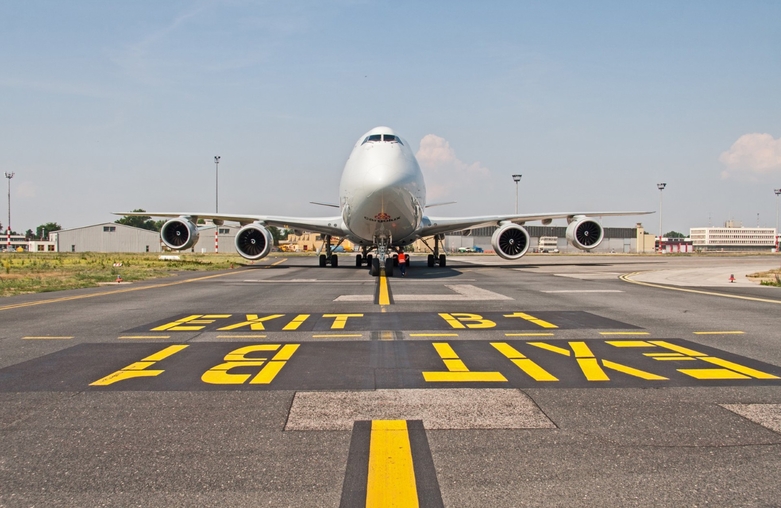
The agreement stipulates that the Narita–Luxembourg route will be offered every Wednesday and Saturday, with return flights departing the respective following day. The codeshare flights will be operated by the U.S. carrier, Kalitta Air, using a B747-400F. Its larger variant, a B747-8F aircraft, belonging to the Cargolux fleet, will be used on the Luxembourg–Tokyo sector. Departure days from Luxembourg are Tuesday and Friday, with return flights departing from Narita every Wednesday and Saturday.
Both routes are integrated into the broader network of the two cargo airlines, which combines their respective networks to offer enhanced air cargo services to a wider range of customers across Asia and Europe. Reason for the move: JAL and Cargolux are committed to meeting the robust cargo demand on the Asia-Europe and Asia-North America routes. By doing so, they are contributing to the development of logistics infrastructure and creating new market value across continents, thanks to their capacity offering.
“More robust and stable cargo network,” Kito
Yuichiro Kito, Executive Officer, Cargo and Mail Division, JAL, explained: “With the launch of this cooperation with Cargolux, we have secured scheduled freighter space on key European routes, allowing us to build an even more robust and stable air cargo network across the vital arteries of global commerce linking Asia with both the Americas and Europe. In addition to JAL’s passenger flights and freighter network connecting Asia and the Americas, we will leverage this partnership with Cargolux to deliver JAL’s high-quality cargo handling services to customers across an even broader area of Europe, centered around Luxembourg.
Parent company, Cargolux, has not specified what role – if any – its subsidiary, Cargolux Italia, has in this arrangement. Cargolux Italia has served the Narita route for years, deploying Jumbo -400 freighters. That there is no specific mention of this, is particularly surprising since Pierandrea Galli, EVP, Commercial Planning, Cargolux Airlines, who took part in the JAL-Cargolux-signing ceremony, also plays an important part at Cargolux Italia’s executive management level.
Recited manager
Instead, Galli said this: “Japan has long been a cornerstone market for Cargolux, and this partnership with Japan Airlines represents an important step forward for both carriers. These new transpacific routes will complement our existing services from Asia to North America. By combining our complementary networks and operational strengths, we can extend our reach into strategic global markets and deliver an expanded, high‑quality offering to our customers – built on the trusted standards of excellence shared by Cargolux and Japan Airlines.”
In 2025, Cargolux closed the fiscal year with a profit of USD 448 million after tax and generated revenues of USD 3,324 million. Operationally, fiscal 2025 was marked by geopolitical tensions, with the ongoing war in Ukraine forcing Cargolux to avoid Russian airspace due to Western sanctions and increasingly hampered by escalating hostilities in the Middle East. These conflicts and their impact on global trade, affected both operational costs and efficiency as well as customer confidence.
Founded in 1970, the cargo airline operates at more than 85 stations worldwide, in over 50 countries. Its shareholders are Luxair (35.10%), China’s HNCA (35.00%), the financial institutions BCEE (10.90%) and SNCI (10.67%), and the State of Luxembourg (8.32%).