

When you sit down with your cup of coffee or tea and swipe through the articles in your air cargo publication of choice, do you ever stop to think about how these news outlets make money? If and how journalists are paid for their input? Week after week, press releases are sent out, companies are interviewed, and stories put together to inform and entertain readers – often those employed by the company being portrayed*. The short answer to the first question is: free publications rely on advertising and sponsorship to keep running. However, financial input is only part of the transaction – and the Return on Investment encompasses a great deal more.
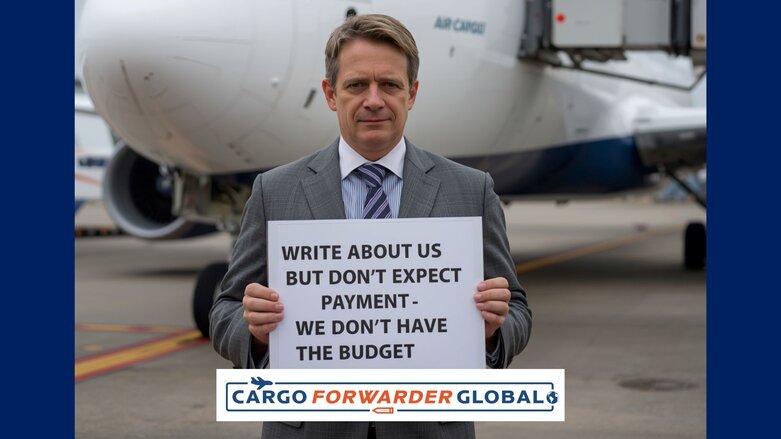
How we disseminate and consume information has changed a lot with the rise of social media. Yet, even in times where so many people share so much on LinkedIn, industry-specific publications still matter – whether they are print or, as in the case of CargoForwarder Global, entirely digital news outlets. For air cargo, logistics, and aviation companies, buying advertising in relevant titles – and sponsoring journalists to attend press days or company-specific events – isn’t just about being seen; it’s about being understood, trusted, and talked about in the right circles.
Reaching the right people
Trade magazines, online portals, and industry newsletters are where your real audience already spends time: air cargo managers, network planners, GSA executives, freight forwarders, ground handlers, airport decision-makers, air cargo software providers, ULD managers, etc. In CargoForwarder Global’s case, the full pallet [pun intended!] of air cargo stakeholders can be found among our readers. So, when you advertise there, you’re not broadcasting to the masses; you’re talking directly to people who actually shape and move the air cargo industry, and who decide on their industry-specific business partners.
Credibility through association
And because your ad sits alongside editorial content that those readers trust, it benefits from the publication’s reputation and gains a credibility boost. Sponsoring journalists to attend press days or site visits at your hub, warehouse, or special cargo facilities, then enhances that further, giving you face‑to‑face access to the people shaping the stories that will influence the publication’s readers. Readers often place greater trust in editorial articles than in paid placements, so combining both – ads plus earned coverage – creates a ‘double validation’ effect. For air cargo companies launching a new belly‑cargo alliance, opening a new animal center, or repositioning around sustainability or digitalization, that kind of dual‑channel presence can ensure that the message is well and truly heard.
Building real relationships with journalists
Offering journalists a realistic press‑day package – covering flights, hotels, and access to your operations – says more about your company than a press release ever can. It shows that you respect the journalists’ time and talent, and it gives them a chance to see your cargo hub, handling processes, or new equipment in person. When reporters can walk through a facility, talk to ground staff, and ask questions on the spot, they tend to produce deeper, more accurate coverage that reflects the realities of your business, rather than just the bare outline that a generic press release conveys. And, over time, these interactions build rapport; journalists are more likely to return to you as a source, give you a fair hearing during industry debates, and write with a little more empathy when crises hit.
Shaping the story
Press days give you a rare chance to control the environment in which stories are formed – without crossing the line into editorial interference. You can coordinate a clear agenda, pair journalists with the right technical or commercial experts, and guide them through key projects: a new cold‑chain setup, a ramp‑handling automation rollout, or a new warehouse facility, for example. When journalists experience the operation themselves, misunderstandings are avoided, they’re less likely to rely on rumors and more likely to portray your business in a way that aligns with your strategy.
Brand building that lasts
In an industry where trust is earned over years and reputations are built on reliability, advertising in key publications and sponsoring journalist visits are long‑term investments, not short‑term campaigns. Being visible over time in the outlets your peers read, helps keep your company in people’s minds when RFPs are being drafted, communities are being formed, or capacity‑sharing discussions are underway. When a journalist recognizes your name from repeated coverage and has previously toured your operation, they’re more likely to reach out during industry debates, regulatory changes, or crisis moments to get your perspective. That consistency builds a narrative around your brand that’s hard to match with occasional one‑off campaigns or social‑media bursts alone.
Quite aside from the fact that, these days, no company can afford to sit on its laurels, nor instruct its customers on its brilliance, as that old style of marketing no longer works. Customers and other stakeholders in the air cargo ecosystem are the ones judging a company’s performance and worth, nowadays. (And journalists, too, may struggle to remain impartial if the relationship between company and publication is heavily one-sided. Hence, the question of whether your company is a ‘free publicity’ scrounger? And how well does that sit with your company values, I wonder?)
Oh, but ‘Compliance’!
One company recently told CargoForwarder Global that they no longer pay transport for journalists to attend their event as this contravenes compliance regulations. Whether that is a genuine issue or simply a cover-up for cost-cutting decisions or a lack of budget, remains unclear – particularly given that other subsidiaries of the same group obviously have no such concern. CargoForwarder Global subsequently discussed the issue of compliance with the press department of a different company at a fully paid press event and carried out further research. The result: Sponsoring journalists or advertising in publications does not usually break compliance regulations such as anti‑bribery laws, internal codes of conduct, or corporate governance policies. In practice, covering reasonable travel and accommodation for journalists to attend press days is generally seen as a legitimate communications expense aimed at facilitating accurate reporting, and is therefore not bribery. Most compliance frameworks focus on whether a benefit is intended to influence a decision or secure an unfair advantage. Press coverage decisions are typically editorial, not procurement‑related – and journalists are neither regulators, government officials, nor key public-sector decision-makers. Not to mention: CargoForwarder Global always comes to its own conclusions and cannot be bought, anyway.
That said, it is important for the company inviting, to ensure complete transparency. Clear internal policies and documentation should register that the press sponsorship is free of any expectation of favorable editorial treatment. Handled correctly (in other words, with openness, consistency, and respect for editorial independence), advertising and sponsorships pose no corporate compliance problem, whatsoever.
Support the flow of credible information
At the end of the day, while the return on media‑investment may not necessarily be in immediate leads, it does pay off in relationships, exposure and opportunities. And we all talk of an air cargo eco-system, that this is a people-industry and one where we all work together towards a common goal. Supporting air cargo publications (and CargoForwarder Global very clearly means publications, plural – as we have great respect for our peers running other air cargo news outlets) is another aspect of that eco-system. When you invest in ads or sponsor journalists to attend your own company events, you’re not just buying exposure; you are also helping to sustain the flow of credible information that the whole industry depends on.
If you’d like to actively participate in keeping independent air cargo journalism alive and well, CargoForwarder Global’s Media Kit can be found here.
*It gets interesting when employees first learn about changes in their company through the press, however, since it says quite a bit about how well the company’s internal communication channels function.


You might be interested in the results of the LinkedIn poll I ran on this topic, recently: https://www.linkedin.com/posts/brigitte-gledhill_just-out-of-interest-if-your-company-holds-activity-7450297970509594624-3BaC?utm_source=share&utm_medium=member_desktop&rcm=ACoAAA9aOoABVXkjE9YuWms2KnZPUF-E5D_BX88