
Sustainable Aviation Fuel (SAF) stands high on the agenda of the Berlin-Brandenburg Aerospace Alliance at the upcoming ILA Berlin Air Show. At BBAA’s booth 331 in Hall B, experts will discuss how SAF could gradually replace conventional Jet A-1 kerosene to reduce CO2 emissions and slow global warming. The air cargo industry can play a key pioneering role here. Although minimizing the environmental footprint of the aviation industry is a Herculean job. Without cargo, our world would be significantly poorer. Exemplified day after day during the COVID-19 pandemic, when airfreighted vaccines saved many lives. And – something few people probably realize – without the carriage of freight shipments in the holds of passenger aircraft, most airlines would struggle to be profitable.
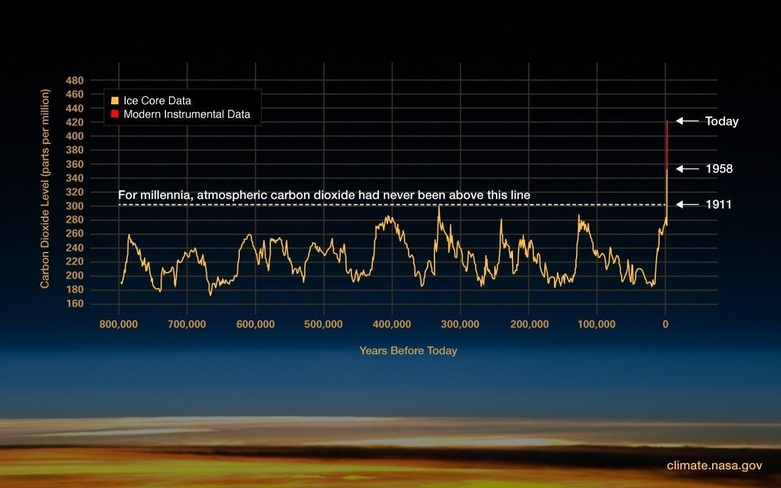
Global warming is increasingly changing the environment we live in. It is a universal challenge that can only be addressed through cooperation and shared responsibility. Back in the 1980’s, we started talking about the ozone hole, caused by CFC gases which were used in refrigeration and spray bottles. We were experiencing the loss of protection against UV radiation, and areas like New Zealand were a live display of how bad it could become. In 1987 the Montreal Protocol was signed, CFC gases were banned, the ozone hole shrank to such an extent that nobody talks about it anymore. It is an encouraging example of collective action. Mankind’s response to advancing global warming, however, has not been a success story so far. We have known about air pollution since the industrial revolution and about effects of greenhouse gas emissions (GHG) since the early 1800’s. Yet, we have never managed to get any control over the constantly increasing emissions. For more info, check: https://science.nasa.gov/climate-change/evidence/
It took until 2007 for air freight customers to ask their freight forwarders for ways to reduce the GHG emissions caused by the transportation of their goods. Multinationals were first, given their need to publish environmental governance information in their annual reports. Back then, forwarders could only offer to use airlines with the most modern equipment, with the least fuel consumption and thus least emissions. GHG reporting was introduced, but it was still a long way to go until anyone mentioned Sustainable Aviation Fuel.
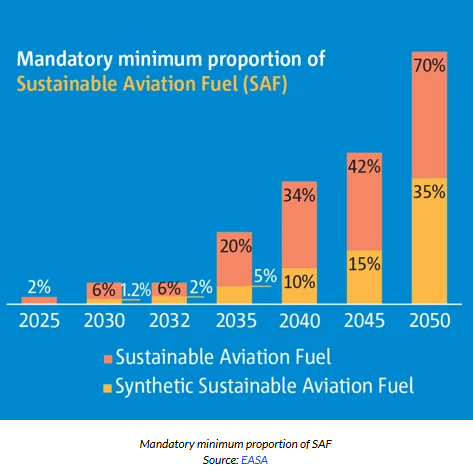
But as early as 100 years ago, the German scientists Franz Fischer and Hans Tropsch developed and patented a process to make synthetic liquid fuel. Today, the Fischer-Tropsch process is still the most promising technology to scale up production of Sustainable Aviation Fuel (SAF), while fortunately there is strong competition from the side of biogenic SAF which is the first kind to be available to match the EU mandates of (currently still only) 2% SAF in the fuel blend. It seems ironic that the country that gave birth to relevant technology, and acts as a driver within the EU in introducing environmental targets, now must admit that their own emissions reduction roadmap has dramatically failed to materialize, as reported on 15 May by the German government-mandated Council of Experts. Another ironic fact is that the findings of the honorable U.S. institution NASA are not convincing their own government to support the COP Paris agreement of 2015 or even the shipping industry’s IMO efforts to reduce emissions in the maritime sector. Both Germany and the U.S. are heavyweight users of airfreight, unavoidable in the global supply chain for industry sectors like pharmaceuticals, aerospace, electronics etc., typically in trade deals with other European and Asian industrial strongholds. A tiny bit of confidence comes up when despite insufficient leverage created by the policy makers, some airfreight users and their service providers become proactive and invest in SAF purchase agreements.
Many cases reported by this publication since 2020, about initiative and joint action, have shown the way to get the ball rolling. Among the first, DB Schenker’s customers Merck KGaA, Siemens Healthineers, Lenovo and others supported a weekly freighter between Frankfurt and Shanghai, operated by Lufthansa Cargo. The following years saw ups and downs of this development, fortunately more ups in recent times, such as DHL and FedEx securing large SAF allocations, Air France KLM MP Cargo cooperating with their customers on the subject, airlines United, Cathay Pacific, IAG and others, forwarders DSV, CEVA, and even the mid-size Quick Cargo are following the given examples.
But is it sufficient? Certainly not, when you consider research by specialized institutions such as impact on Sustainable Aviation and Transport & Environment. In summary we can say OK, there are beginnings of emission reduction, but they are more than neutralized by the constant global annual 5% growth rate of aviation.
Can the airfreight community have an impact? Yes, because it is ultimately driven by financial foresight. As explained above, manufacturing companies are getting aware of their increasing emission cost, under the still small but sharpening “polluter pays” policies. The upcoming ILA Berlin Air Show will feature challenging discussions organized by Germany’s leading international SAF initiative aireg (Hall C, Stand 121), and more airfreight-specific by the SAF driver of the capital region, Berlin-Brandenburg Aerospace Allianz (Hall B, Stand 331), with a panel on SAF in air freight on 11JUN26 at 12:00h-13:00h.
Author:
Hugo Duchemin