
Both companies have entered a technical collaboration to develop and certify the application of AeroSHARK riblet technology on the wings and stabilizers of the Airbus A330ceo series. The aim is to secure the world’s first commercial certification of this specific riblet technology for the wings and tail of this aircraft variant. Once completed, it would be a significant milestone for the use of drag-reducing technologies in commercial aviation.
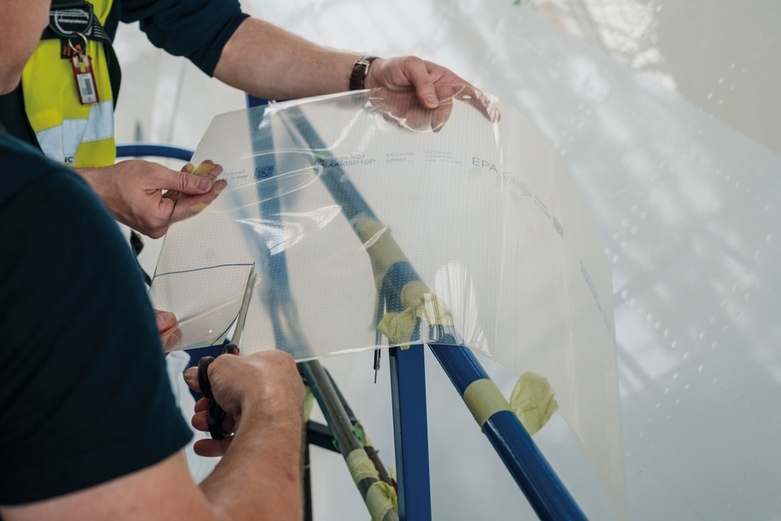
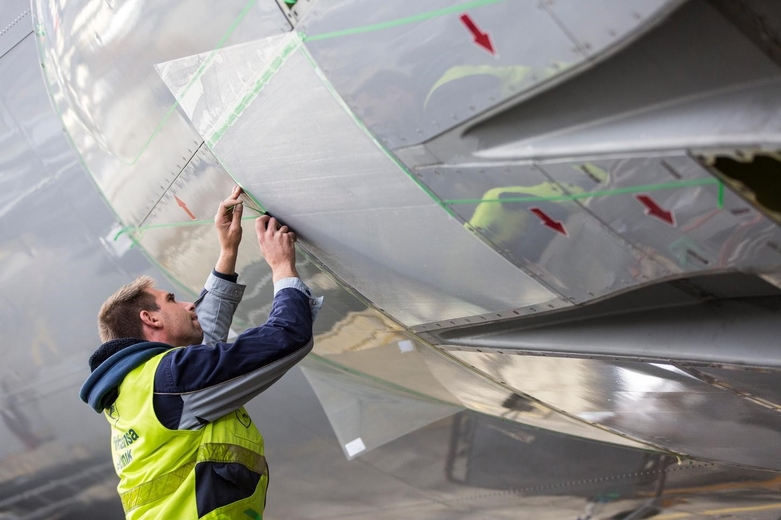
Lufthansa Technik press officer Pia Luedtke speaks of fuel savings of up to 2.5% once an A330ceo is fully coated with riblets measuring around 50 micrometers that mimic the fine structure of a shark’s skin. The riblet technology’s effect on reducing aerodynamic drag is most significant during cruise flight of passenger or cargo aircraft since the foil optimizes the aerodynamics on flow-related parts of a jetliner leading to reduced greenhouse gas emissions, she explains. This makes carriers operating long-haul routes ideal candidates for skin modification, is stated in an LHT release.
At best, 1,000 A330 aircraft could become “flying sharks”
The technology was jointly developed by Chemical firm BASF Coatings and Lufthansa Technik and is currently utilized by several airlines, including LATAM and Lufthansa Cargo. To date, a total of 30 B777 passenger and cargo aircraft have been fitted with the artificial shark skin, among them are the fleets of LATAM Airlines and Lufthansa Cargo. LH Technik estimates that the life span of the shark skin coating is at least six years.
In a joint project with Airbus, the outfitter is now extending the technology by coating the wings and tail sections of the Airbus A330ceo series. “The choice of the A330ceo as the next candidate for AeroSHARK certification is strategic, given the type’s widespread use and significant leverage on global fuel consumption and emissions. With about 1,000 A330-200 and -300 aircraft in service worldwide, the potential for operational cost savings and substantial environmental benefits is vast,” stated Andrew Muirhead, Vice President Original Equipment Innovation at Lufthansa Technik during the presentation of the project at his company’s Hamburg homebase.
Certification to follow
Following successful validation and approval by the European Union Aviation Safety Agency (EASA), the solution is intended to be commercialized. Lufthansa Technik will hold the Supplemental Type Certificate (STC) and lead the certification activities. The company’s Engineering unit will be responsible for the overall certification concept and execution and will be supported by Airbus’ Engineering through the provision of key aircraft type data and safety assessments. From a technical perspective, the certification program will comprehensively assess the impact of riblet application on flight dynamics, lightning strike protection, structural loads, maintenance aspects and all relevant aircraft systems, including flight control, autopilot and navigation systems.
Every step helps to reduce global warming
The wing and tailplane application is intended to complement AeroSHARK coverage on the fuselage and engine nacelles, which was being developed separately by Lufthansa Technik and BASF Coatings. Especially in times of rising jet fuel prices and stricter regulatory requirements to reduce aircraft CO2 emissions, AeroSHARK technology can make a contribution – albeit a modest one – to improving airlines’ environmental footprints. Lufthansa Technik already holds certifications for the AeroSHARK retrofit on the Boeing 777-300ER, 777-200ER and 777F. The A330 is the second-most delivered wide-body aircraft type after the Boeing Triple Seven.