
Every week, CargoForwarder Global’s ‘Spotlight On…’ hands the mic to an individual working in a particular segment of the air cargo industry, to demonstrate just how varied careers here can be. For example, did you know that much of what happens in air cargo actually takes place on the ground? Sovereign Speed describes itself as an ‘airline on the road’ and operates a dense European road feeder network, ensuring that air cargo continues to move between airports or on to destinations that cannot be reached by plane. And aside from that, it also manages cargo handling stations at major German hubs, maintaining an important role at the intersection of ground handling, road feeder services, express transport and digital connectivity. This week, Louisa Wittenbecher, Director Corporate Communication, Marketing & Events, Sovereign Speed GmbH, talks about her responsibilities, experiences and advice for people considering a career in the air cargo industry.
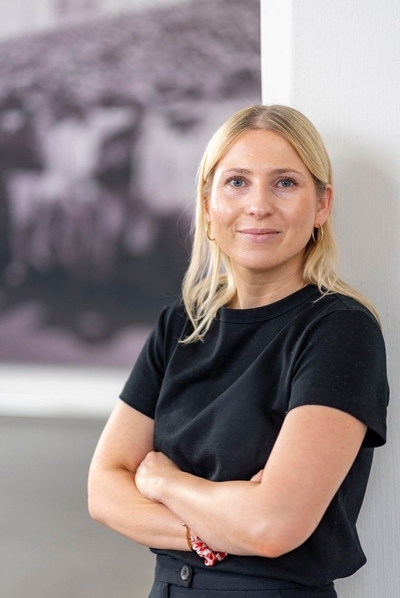
CFG: What is your current function and company? And what are your responsibilities?
LW: As Director Corporate Communication, Marketing & Events at Sovereign Speed, I’m responsible – together with my team – for how the company communicates, how it is perceived, and how the Sovereign brand comes to life internally and externally.
That includes everything from corporate communications, PR, internal communication and social media to crisis communication – which, in logistics, usually means staying calm while everyone else discovers the meaning of urgency.
On the marketing side, I develop strategies to position both our services and the company in a visible and relevant way. This covers campaigns, branding, digital channels, content, lead generation and market positioning.
And then there’s the events side – from customer events and trade fairs to executive formats and internal events. For me, events are never just about organization. They’re about creating experiences, strengthening relationships and making the brand tangible.
CFG: What does a normal day look like for you?
LW: Honestly, there’s no such thing as a ‘normal’ day – and that’s exactly what I enjoy about the role.
Some days are very strategic: developing communication concepts, marketing campaigns or preparing executive messaging. Other days are about event planning, quick decision-making or topics that suddenly become top priority within minutes.
My calendar usually starts with a plan. The day itself often has other ideas.
What I really like is the mix of strategy, creativity and dynamics. In communications and marketing – especially in logistics – you constantly switch between long-term positioning and topics that need attention immediately.
CFG: How long have you been in the air cargo industry, and what brought you to it?
LW: I’ve been in the air cargo and logistics industry for about seven years now, but it wasn’t an industry I originally set out to work in.
At the time, I was working in agencies on lifestyle and food brands, so when a headhunter first approached me with a logistics role, my initial reaction was probably what many people outside the industry think: “Logistics? That sounds… efficient.”
Coming from a very emotional and consumer-focused environment, logistics initially felt a bit less glamorous from a brand perspective.
What changed my perspective quickly was the reality of the industry itself. The level of complexity, the international setup and how central logistics is to almost everything we use in daily life – even if it usually happens out of sight.
From a communication perspective, I actually found that even more exciting. Because in logistics, you’re not just marketing products – you’re building trust, explaining complexity and giving visibility to an industry that literally keeps global business moving.
CFG: What do you enjoy most about your job?
LW: What I enjoy most is that the role never feels one-dimensional.
I like the combination of creativity and structure – having strategic discussions one moment and then turning ideas into something tangible the next. For me, communication is at its best when it connects people, not just information.
That’s also why I really enjoy internal communication. You’re not only communicating messages; you’re helping create culture, transparency and a sense of connection across very different teams and locations. Especially in logistics, where many people work operationally and under time pressure, good communication can genuinely make a difference.
I also appreciate that Sovereign has an environment where new ideas are welcomed instead of immediately being overanalyzed.
A good example was our internal podcast. It actually started as a spontaneous conversation with our CEO about finding a more personal and authentic way to communicate internally. The idea gained momentum very quickly, people really connected with it – and a year later, we’re still producing it.
Those are the moments I enjoy most: when an idea starts small, people get excited about it and suddenly it becomes part of the company culture. And I personally find it very rewarding to create something that simply didn’t exist before.
CFG: Where do you see the greatest challenges in our industry?
LW: One of the biggest challenges right now, is the gap between rising expectations and an increasingly complex operating environment.
Customers today expect speed, transparency, flexibility and sustainability all at once. At the same time, supply chains are becoming more complex. Geopolitics, regulation, capacity constraints and volatile markets are no longer exceptions; they are part of everyday business. So, the industry is constantly in a mode where it has to adapt while still being expected to perform with full reliability.
Closely linked to this is perception. Logistics and air cargo are incredibly important and highly sophisticated industries, but they’re still often underestimated from an employer branding perspective. Many young professionals don’t immediately associate them with innovation, international environments or real career opportunities – even though that’s exactly what they are. As I said, I actually had a similar perception myself before entering the industry.
CFG: What advice would you give to people looking to get into the air cargo industry?
LW: My first advice would be: don’t over-engineer your entry into the industry. Be open to it first – and let the industry convince you, not the other way around.
Air cargo is one of those industries that really reveals itself once you’re inside. It’s fast-paced, international and incredibly interconnected, and that’s exactly what makes it so interesting to work in.
In terms of background or training, there isn’t one single path that leads into it. Of course, logistics or supply chain knowledge is valuable for operational roles. But just as importantly, the industry thrives on people bringing in different perspectives – communication, marketing, digital, data, customer experience or engineering. That diversity is often where real innovation starts.
What matters most, in my view, is curiosity and the ability to work with complexity without losing the bigger picture. Things are rarely linear in this environment – but that also means there’s a lot of room to learn, grow and shape things.
So, my advice would be: come in with an open mind, stay curious, and don’t worry too much about having the ‘perfect’ background. The industry is very open to people who want to contribute and learn – and it offers a lot of opportunities once you’re part of it.
CFG: If the air cargo industry were a film/book, what would its title be?
LW: ‘The Art of Making Things Arrive.’
And sometimes, that’s harder than it sounds.
Thank you, Louisa.
If you would like to share your personal air cargo story with our CargoForwarder Global readers, feel free to send your answers to the above questions to cargoforwarderglobal@kopfpilot.at We look forward to shining a spotlight on your job area, views, and experiences.