
ILA 2026 was a record-breaking event that opened a variety of new chapters in aviation thanks to the broad range of exhibitors and the presentation of innovative products. A total of 750 exhibitors from 37 countries showcased their products and provided interested parties with detailed information about their range of services.
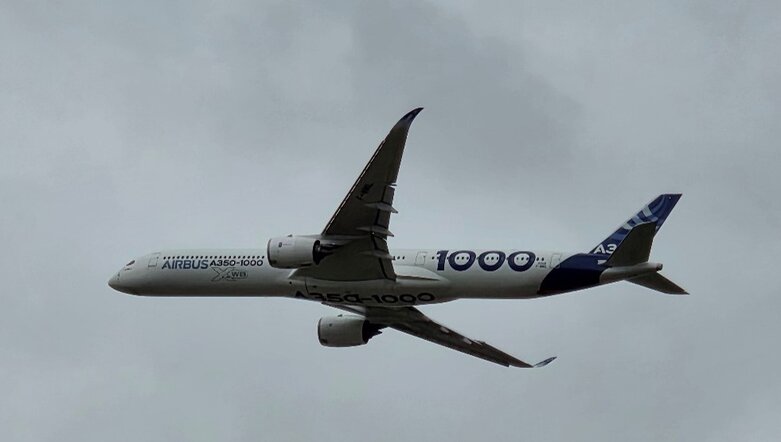
The focus was primarily on technological innovations. Unfortunately, cargo airlines and forwarding agents were largely absent. In contrast, drone manufacturers were given their own hall area for the first time, which was highly frequented. And new developments in the space and defense sectors were also much more prominently featured at this year’s trade show than in the past. The program was rounded off by various air shows, during which Airbus’ newest fleet member, the A350-1000, was presented to a wider public for the first time, both on the ground and in the air.
“ILA of new beginnings”
In addition, many participants used the trade show to make business contacts, network, agree on strategic partnerships, or initiate joint projects. It was not surprising that the German Aerospace Industries Association (BDLI) was very satisfied with this year’s ILA, as Marie-Christine von Hahn, CEO of BDLI, confirmed: “Our members report a level of engagement and negotiation that we haven’t seen in a long time – it’s broader, more concrete, and more binding. Contracts, Memorandums of Understanding (MoUs), and product launches demonstrate that the aerospace industry is being redefined as a key sector for competitiveness, security, and technological sovereignty. Trade visitor days have shown that this record-breaking ILA is also an ‘ILA of new beginnings’,” she said. Beside various jetliners, helicopters and military aircraft, what really caught the eye was the wide range of flying wing solutions currently being developed by several companies.
Electrification of aviation
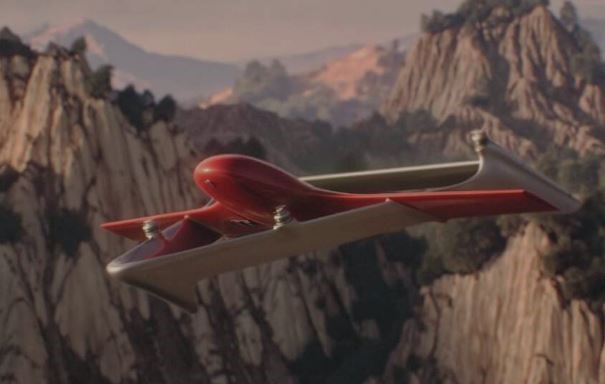
Take developer Getwing_One, for example, which presented the concept of its Blended Wing Body. The aircraft, powered by two electric fan motors, is designed for a range of 300 km and reaches a cruising speed of 185 km/h. The Getwing_One represents another step toward the electrification of short and medium-haul air travel.
Another eyecatcher was Fixar 025, an advanced fully electric VTOL with a unique airframe design, suitable for complex missions. Its range is 300km and it offers a payload of 10 kg. It enables a variety of use cases such as mapping, scanning, multispectral imaging, aerial photography or delivery of small and urgent packages like medical items. Fixar 025 costs between USD 150-350K, depending on customer configuration, while manned aircraft / military UAVs cost USD 1-5 million each, in comparison.
Hindrances and skeptics
The fact that refueling aircraft with SAF is still not going smoothly at some airports is illustrated by a demonstration flight of KLM (Flight 1755) from HAM to AMS shortly before ILA was kicked off. HAM’s local service provider, AFS – Aviation Fuel Services GmbH, kept raising concerns and piled up bureaucratic hurdles, with the result that KLM decided to refuel with enough SAF in Amsterdam to cover the return flight as well. This went off without a hitch. No one at AFS in Hamburg was available by phone to answer questions. The current case was tabled by Mark Siegel at the ILA, an executive of Ineratec, a spin-off from the Karlsruhe Institute of Technology (KIT). The company converts greenhouse gases and renewable electricity into sustainable fuels (e-fuels), including chemical products. It is a contribution to the decarbonization of sectors that are difficult to electrify, such as aviation and shipping.
Strong demand for VÆRIDION products
Aircraft developer, VÆRIDION, also announced significant progress for its Microliner electric regional aircraft at ILA Berlin: The company secured orders for more than 100 new aircraft in cargo and passenger configurations in Europe. These commitments come from leading business and regional operators, a lessor, and an electric flight training provider across Denmark, Germany, Ireland, the Czech Republic, and the Netherlands, reinforcing market demand for VÆRIDION’s fully electric Microliner and further validating the business case for electric regional flight. In addition, VÆRIDION agreed to its first commercial collaboration with General Atomics Aeronautical Systems for its airborne battery system and successfully completed the aircraft-level Preliminary Design Review, a major technical milestone that validates the aircraft.
Attracting young talent
Also, the States of Brandenburg and Saxony signed a strategic cooperation agreement. The Memorandum of Cooperation (MoC) between the two German states and the European Union’s Aviation Research and Innovation Program, aims to strengthen collaboration on the development of disruptive technologies for more efficient, competitive and cleaner aviation in Europe.
Finally, ILA offered a Talent Hub on the exhibition ground for young potential and junior staff to encourage them to consider careers in aviation. Pilots, engineers, air traffic controllers and other experts were there to provide information and answer questions.