
The Middle East, normally an oasis of prosperous trade and transportation benefiting from favorable tax policies, is currently undergoing a fundamental crisis. The downturn is the result of hostile conflicts between the United States, Israel, and Iran. Which is not over yet as evidenced by recent U.S. airstrikes on Iran and drone attacks by the mullah regime on U.S. bases in Kuwait and Bahrain.
Shippers and their forwarders in Europe and the Far East are sharply reducing the transport of shipments by Gulf airlines. By doing so, they avoid transits of their goods in Doha, Dubai, or Abu Dhabi this way reacting to security alerts caused by military hostilities in the region.
The extent to which this clash is affecting Gulf airlines’ air cargo business is evidenced by IATA’s May figures. According to data, total demand, measured in cargo ton-kilometers (CTK), increased by 6.0% compared to May 2025 levels. Capacity, measured in available cargo ton-kilometers (ACTK), increased by 1.9% compared to May 2025.
8.9% down
Carriers in the Middle East, however, reported a combined contraction of 8.9% year-on-year as war-related impacts continued throughout most parts of May.
Monthly data shows that this downward trend in air freight has been ongoing since 28FEB2026, following Operation “Epic Fury,” which Trump had authorized the day before. It was a massive attack in which more than 1,000 targets in Iran were bombed and shelled in the first 24 hours. The mullah regime responded with drone attacks on targets in the Middle East, also hitting airports in Dubai, Kuwait, and Bahrain. So it’s no wonder that the crisis in the Gulf region quickly began to affect the air freight business of local carriers.
According to IATA, tonnage on the Europe–Middle East route plummeted by 19.8% between 01MAR26 and 31MAY26. On the Middle East–Asia route, the decline was 16.5%. This benefited Air France-KLM Cargo, Lufthansa Cargo, Singapore Airlines Cargo, and ANA Cargo – to name just four players – whose volumes increased significantly during the period in question.
Favorable global cargo climate
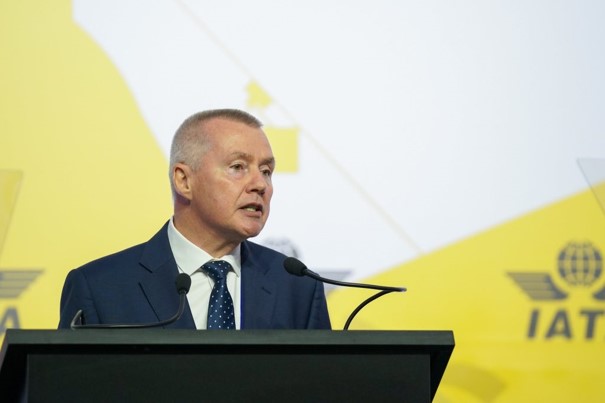
Aside from the weakness of Emirates Cargo and its Gulf peers, May offered a favorable outlook for the majority of cargo airlines. Global trade increased by 5.0% year-on-year, extending 25 months of consecutive annual growth. The Global Manufacturing Output Purchasing Managers’ Index (PMI) rose to 53.5, while the New Export Orders Index remained below the 50-mark at 49.6, suggesting that air cargo growth was driven by specific trade flows rather than a broad-based increase in global exports. “May’s strong performance coupled with macro-economic factors give cautious optimism for air cargo’s prospects over the remainder of the year. Trade and manufacturing output are both growing. Airlines have adapted operations to align with shifting demand patterns and supply chain needs. Meanwhile, yield growth and higher load factors are helping to recoup higher fuel costs. It’s still a tough year, particularly as Middle East uncertainties weigh heavily on parts of the industry, but robust demand and airline resilience are clear,” said Willie Walsh, IATA’s Director General.
Walsh goes, but who comes?
It was the last monthly freight report he presented and commented on. On 30JUN26, he will step down from IAATA’s top deck to take over as CEO of the Indian low-cost carrier Indigo one day after. However, his successor will have to tackle similar challenges to those Walsh had already on his agenda: transitioning aviation from the carbon era to a clean future, improving the industry’s profitability, and reducing the financial burden caused by ever-increasing government taxes and bureaucratic regulations.