
Every Sunday, CargoForwarder Global’s ‘Spotlight On…’ highlights a different segment of the air cargo industry, inviting an individual to showcase their role, thus illustrating the many different career paths the industry offers. This week, CargoForwarder Global readers gain insight to one of the world’s largest and most integrated global freight forwarders. Freight forwarders are the oil in the logistics chain, bringing shipments and capacity together and smoothing the path – from origin to destination. At DSV, that includes offering end‑to‑end air freight solutions, arranging charter capacity, providing vertical market expertise, and deploying digital tools that help stabilize and optimize shipper supply chains. Arcadio Martinez (AM), Vice President of Global Tender Management Air & Sea at DSV, shares his responsibilities, views and advice.
CFG: What is your current function and company? And what are your responsibilities?
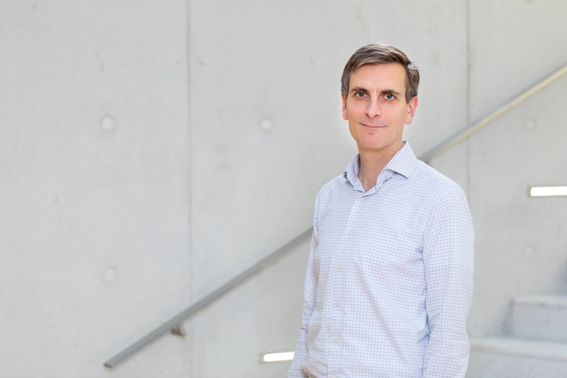
AM: I’m VP of Global Tender Management Air & Sea at DSV. I lead a team of around 50 analysts across EMEA, Americas and APAC, who handle over 1,000 tenders a year. In short: when a customer puts their freight out to bid, my team makes sure DSV shows up with a competitive, well-built offer.
In air freight, that offer is rarely just a rate sheet. It is a judgement on where capacity will be in six or twelve months, how much of it we secure through block space agreements and charter programs versus the open market, and how much risk we are prepared to carry on fuel and demand. Getting that balance right is the real job.
CFG: What does a normal day look like for you?
AM: There isn’t one, and that’s honestly the point of the job. One day, it’s a global Air tender with 800+ country pairs, the next, it’s a market disruption forcing us to rework pricing overnight, or I work on a market update to explain to customers why rates have moved. What’s constant is deadlines, tenders don’t wait.
This year is a good illustration. When the Middle East disruption escalated in late February, jet fuel in the region nearly doubled within weeks, capacity came out of the Gulf, and rates on the lanes touching the region moved hard. Every live tender on the affected corridors had to be re-priced, and every customer wanted a clear answer on what was structural and what was noise. Separating those two things is a big part of my day.
CFG: How long have you been in the air cargo industry, and what brought you to it?
AM: 26 years in logistics, and I ended up here half by accident. I started in ocean at Maersk Logistics and what kept me was that the work is real. Cargo either moves or it does not, and you find out fast which one it is. I moved into air cargo a few years later through a forwarding sales role. Customers kept asking for air solutions next to their ocean freight, so I learned it the practical way: sitting with operations people, walking cargo terminals, and asking basic questions until they stopped being basic. What made me stay is the clock speed. Ocean thinks in weeks, air thinks in hours. Once you are used to that pace, everything else feels slow.
CFG: What do you enjoy most about your job?
AM: The negotiation. A tender is a bit of a chess game, you’re reading the market, the customer, and your competitors at the same time. In air freight, the board keeps moving while you play. Belly capacity shifts with passenger schedules, freighter space tightens the moment a product launch or a disruption hits, and a rate that was defensible when the tender opened can be wrong by the time it closes. When you win a big one after months of work, there’s nothing like it.
CFG: Where do you see the greatest challenges in our industry?
AM: Two things. The first is volatility. Capacity and rates swing faster than ever, and 2026 has proven the point. The Middle East disruption took capacity out of the Gulf and pushed regional jet fuel up sharply, and rates on some corridors into and around the region rose 70% to 90% within weeks. In the same period, transatlantic rates fell, because summer passenger schedules added belly capacity faster than demand grew. Same industry, same quarter, opposite directions. That is also why fuel surcharges are a poor proxy for rate movements. Supply and demand set the price, everything else is commentary.
AI in particular will change how forwarders work faster than most people in this industry think. In tender management, the use cases are already concrete: reading and translating RFQ documents that arrive in twenty different formats, cleaning and validating customer volume data, benchmarking rate competitiveness across thousands of lanes, and drafting first versions of market updates. Work that took an analyst days, now takes hours. That does not remove the analyst, it moves them to the part machines cannot do: judging risk, reading a negotiation.
CFG: What advice would you give to people looking to get into the air cargo industry?
AM: Learn the operations first, because you can’t price or sell what you don’t understand. The best classroom is the ground floor: a cargo terminal, a gateway, an internship with a forwarder or a handling agent. Watch freight being built up on pallets and you will understand chargeable weight, density, and why some shipments are economically sustainable and others never will be, faster than any course can teach you. No specific degree needed; curiosity and stamina matter more.
And get comfortable with data, because that’s where the industry is heading. I mean the practical kind: rate benchmarks, capacity and load factor statistics, and customer volume files that never arrive clean. If you can take a messy spreadsheet with ten thousand lines and turn it into a decision, you will always have work in this industry.
CFG: If the air cargo industry were a film/book, what would its title be?
AM: ‘No Plan Survives First Contact.’ Every day proves it. You can build the perfect strategy in January, and by March, a strait is closed, fuel has spiked, or a customer has changed its sourcing. The winners in this industry are not the ones with the best plan. They are the ones who adjust fastest when the plan dies.
Many thanks, Arcadio!
If you would like to share your personal air cargo story with our CargoForwarder Global readers, feel free to send your answers to the above questions to cargoforwarderglobal@kopfpilot.at We look forward to shining a spotlight on your job area, views, and experiences.