
Royal Air Maroc has expanded its network to 81 global destinations, now, having recently added four new airports to its summer portfolio. They are Bilbao and Alicante in Spain, Verona in Italy, and Lille in France. With that, the airline has increased its footprint in Spain to four destinations, joining Barcelona and Seville an northern Spain. “Alicante targets the Costa Blanca tourist region and connects the local Moroccan diaspora,” the press release explains, going on to say that “in JUN26, Verona became Royal Air Maroc’s eighth destination in Italy, alongside Rome, Milan, Bologna, Naples, Catania, Turin and Venice. And [since] JUL26, Lille offers much-requested cargo capacity from northern France and also serves the Moroccan diaspora in the region.”
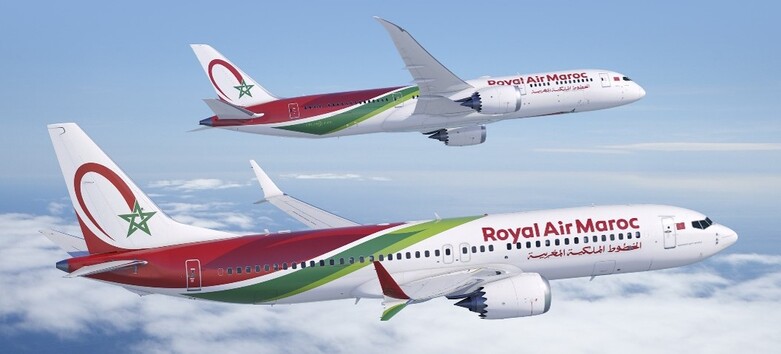
The additions, operated mainly by Boeing 737 planes, open up more opportunities for the transport of cargo in both directions. Each flight offers a cargo uplift of around 3 tons, connecting into and out of Royal Air Maroc’s Casablanca hub, and thus connecting Europe more closely with its international network – particularly its role as a gateway to Africa. The carrier maintains an expansive long-haul widebody and freighter network out of Casablanca. The expansion supports Europe-African trade and the transport of vital cargo such as industrial goods, pharmaceuticals and consolidations into Africa.
Rita Chraibi, Vice-President Cargo, Royal Air Maroc, illustrated: “As a key strategic gateway into Africa, our focus at Royal Air Maroc is on connecting high-potential regional markets in Europe, that can generate consistent point-to-point demand and feed cargo flows through Casablanca to destinations across Africa and other international markets in the Americas and Asia. While there is keen competition among leisure-focused carriers operating to these destinations, Royal Air Maroc’s ability to also deliver exceptional cargo services for a broad range of commodities, is what sets us apart. These new routes support both import and export flows and increase the efficiency of our growing international network through improved frequencies, greater flexibility and more attractive transit times.”