

CargoForwarder Global usually hands the mic to a human every week, shining a ‘Spotlight On…’ their role the air cargo industry to demonstrate the enormous spectrum of career possibilities it offers. The extraordinary heat this summer has resulted in more than one kind of drought: tumbleweeds when it comes to CargoForwarder Global Spotlight invitation responses, and reduced footfall registered in high street shops as customers opt for online shopping as a cooler alternative. Yet why then, over in the EU, has there been a dramatic drop in e-commerce shipments since 01JUL26? The incredible air cargo boom over the past decade, has taken a bit of a knock in recent months – ever since the introduction of temporary €3 customs duty on import consignments whose total value does not exceed €150. This week, a low-value e-commerce parcel tells its story now that it is now longer duty free. One that might be topic for discussion at the upcoming EU CBEC, next month – and one that you might have an opinion on, that you would like to share with CargoForwarder Global.
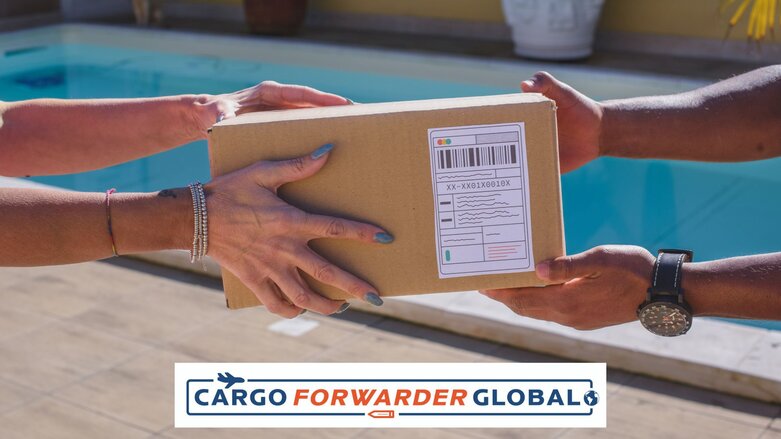
CFG: What is your current function and company? And what are your responsibilities?
ES: I’m a low‑value e‑commerce shipment, usually priced at €150 or less, sold by a non‑EU retailer and shipped directly to a consumer in the EU. I don’t have one employer; I’m passed along a chain that starts with a marketplace or online shop in Asia, moves through a freight forwarder and airline, then lands with an EU customs broker and courier before a local driver places me on the buyer’s doorstep. My responsibility is simple in theory but demanding in practice: I have to arrive with the right data attached so I can quickly clear customs. That means my seller or platform has collected VAT at checkout under Import One-Stop Shop (IOSS), declared me correctly, and, since 01JUL26, accepted that I carry a €3 flat customs duty per line item. From 01NOV26, I will also require product identifiers so that customs can verify what I am without opening my box.
CFG: What does a normal day look like for you?
ES: There’s no such thing as a ‘normal’ day – my journey is a sequence of handoffs where data and timing matter more than distance. Before I even leave Asia, my seller enters my commercial detail – value, HS code, IOSS number – into the ICS2 Entry Summary Declaration so the EU’s Import Control System 2 can risk‑assess me before I’m loaded onto the aircraft. I spend hours strapped onto a ULD on a freighter or in a belly‑hold, then touch down at a major EU gateway where I’m presented under the simplified H7 declaration. Things were easier before 01JUL26, when I simply joined the short and quick duty‑free exit. Now, I pick up a €3 flat duty line on my record (and the VAT settled via IOSS). If my product identifiers and valuation match, I’m released within hours and sent to a local depot. If not, I’m held for inspection or re‑classification, and the promise of ‘express’ delivery evaporates. And if – worst case – I’m sent back, that €3 duty fee is non-refundable, so that changes how my seller feels about free returns.
CFG: How long have you been in the air cargo industry, and what brought you to it?
ES: While you could argue that e-commerce has its roots a good few decades back if we’re being pedantic, the 1990s were where some of today’s largest platforms were launched, though it’s really the past five to ten years that have seen me truly take off. The wave of e‑commerce parcels into the EU has doubled every year since 2022, driven by consumers who want their orders in days, not weeks. Online marketplaces have made it easy to buy a product from Asia, with the expectation of receiving it Europe within a handful of days. Airlines and forwarders have built dedicated lanes and capacity to serve that increasing demand. The sheer scale – 4.6 billion parcels in 2024, rising to about 5.8 billion in 2025, in other words, roughly 16 million parcels a day – has pulled me into the heart of air cargo operations and, inevitably, into the center of EU customs reform.
CFG: What do you enjoy most about your job?
ES: If I should enjoy anything, it would be speed with certainty. When my data is clean – IOSS in place, correct value and HS code, product identifiers ready – I clear within hours and reach the customer in two to four days from click to door. I like being part of a high‑frequency, high‑predictability network: daily flights, tight cut‑offs, automated clearance. That’s where air cargo shines for small, time‑sensitive goods, and it’s the moment I feel most useful.
CFG: Where do you see the greatest challenges in our industry?
ES: Data, cost, and capacity. Bad or missing product data, valuation, or identifiers trigger holds, and the EU is deliberately pushing responsibility upstream to the platforms and sellers who control that data. Costs are rising: the €3 flat duty from JUL26 plus an expected €2 handling fee from NOV26 can add up to €5 extra per line item for low‑value goods, squeezing margins on ultra‑cheap products and forcing pricing or checkout changes. Returns hurt because the €3 duty is non‑refundable, making free‑return promises more expensive. And then there’s volume: with around 16 million parcels a day in 2025, any spike in inspections or data errors creates congestion at EU gateways and missed delivery SLAs. Layer on a complex regulatory timeline – ICS2 full rollout, the €3 duty, product identifier rules, the handling fee, and the future Customs Data Hub in 2028 – and you have an industry constantly recharting itself mid‑flight. Oh, and who foots the initial bill for those extra costs? Thoughts?
CFG: What advice would you give to people looking to get into the air cargo industry?
ES: Sit at the intersection of data, operations, and compliance. Learn EU customs end to end: IOSS, H7 declarations, how duties and VAT work for e‑commerce, and what ICS2 requires before a plane is loaded. Get comfortable with HS classification and product identifiers – EAN, ISBN, GTIN – and how that data feeds customs risk engines. On the operations side, learn ULD build‑up, flight cut‑offs, and exception handling at hubs. Systems literacy helps: exposure to cargo community systems, customs platforms, and marketplace seller tools makes you immediately useful. Add strong communication skills so you can translate between sellers, forwarders, and customs brokers, and write clear SOPs and incident reports. For training, look at national customs broker courses or EU e‑commerce VAT modules focused on IOSS, IATA cargo and forwarding fundamentals, dangerous goods awareness if you’ll touch warehouse operations, and basics of data quality or master data management for product information.
CFG: If the air cargo industry were a film/book, what would its title be?
ES: I’d call it “Against the Clock: The Parcel That Crossed a Continent.” It’s a thriller about speed, data, and borders – where the hero isn’t a person but a small box with perfect paperwork, racing to beat a customs hold and a missed delivery promise.
Thank you, e-commerce shipment.
If you would like to share your personal air cargo story with our CargoForwarder Global readers, feel free to send your answers to the above questions to cargoforwarderglobal@kopfpilot.at We look forward to shining a spotlight on your job area, views, and experiences.

Well written, Brigitte 🙂