
Each week, CargoForwarder Global’s ‘Spotlight On…’ singles out a different segment of the air cargo industry, to demonstrate its size, complexity, and wealth of career opportunity. It is an industry that continuously depends on many cogs functioning smoothly together. One company group has taken that responsibility as its development focus and is on a mission to transform the industry’s efficiency through innovation, digitalization, and specialized services. This week, Valentin Buruiana (VB), Group CFO of Quito Group (ECS Group, Global GSA, TCE, CargoTech, AERION), illustrates his role and shares his views and advice on working within air cargo.
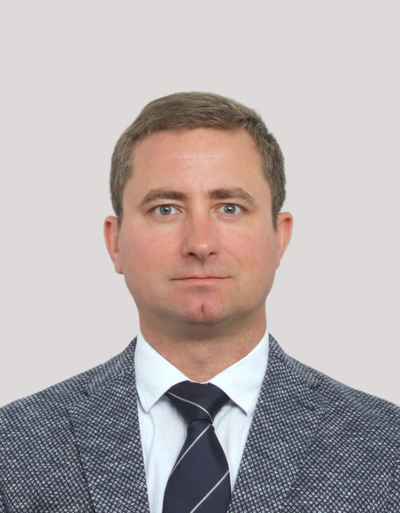
CFG: What is your current function and company? And what are your responsibilities?
VB: I am Group CFO of Quito Group, the holding company bringing together ECS Group, GGG, TCE and CargoTech. With AERION, we are bringing these complementary strengths together around a shared ambition: to play a leading role in the future of air cargo, combining global reach, specialist expertise and technological innovation. Much of what we do happens behind the scenes. Our names may not appear on the shipments themselves, but our teams, services and technologies help keep air cargo moving worldwide.
My role covers the full finance scope of the group. First, the fundamentals: accounting, consolidation and reporting for a network of more than 120 entities, with the controls that make the numbers reliable. Second, performance management: budgets, forecasts and the monthly dialogue with our managing directors on how each country is doing, and why.
Third, treasury and cash management. Across an international group operating in multiple currencies and business environments, financial discipline is essential. We are centralizing cash management, rationalizing our banking landscape and equipping the group with a modern treasury management system.
Fourth, growth. Air cargo is consolidating, and M&A is part of our strategy. I lead the financial side of acquisitions, from transaction assessment through to post-merger integration, which has been a common thread throughout my career.
Finally, transformation: building regional finance hubs, standardizing processes and tools, and preparing the finance function for the level of granularity, speed and rigor expected from a private-equity-backed group. Across all these responsibilities, the objective is the same: to give our businesses the financial foundations and insight they need to grow, individually and together.
CFG: What does a normal day look like for you? Or is there such as thing?
VB: There is no typical day, but there is a typical rhythm, and it is largely dictated by time zones. The day starts early, with an espresso and a moment to review the priorities ahead. Mornings in Paris are the window for Asia and the Middle East, so they are often filled with calls with our teams and partners in those regions. Late morning and early afternoon are for Europe: internal meetings, shareholders, banks, advisors and the projects we are running in parallel. From mid-afternoon onwards, the Americas wake up, and the conversation moves to Latin America and North America.
In between, a significant part of my time goes to people: coaching the finance team, challenging the numbers with our MDs and helping them make decisions. I am convinced that a CFO creates value less by producing numbers than by explaining them and turning them into action.
The balance shifts depending on the priorities of the moment: supporting a business, moving a transformation project forward or assessing a growth opportunity. And then there is travel, to meet our country teams and partners. You only really understand a market when you have seen the operation on the ground.
CFG: How long have you been in the air cargo industry, and what brought you to it?
VB: I have been working in and around logistics for more than fifteen years, and I moved into a group fully dedicated to air cargo a year ago.
I came to the sector through people. I started my career in a Big Four firm, in financial advisory, where I helped launch a Post-Merger Integration service line. At the time, logistics was going through a wave of consolidation, and I discovered an industry with a fantastic culture: pragmatic, international and driven by people who solve problems every day.
I then spent ten years with Geodis, the French global logistics group, almost six of them in the United States. I led the financial integration of a USD 1.4 billion acquisition and held several finance leadership roles. Airfreight was part of that world, and it fascinated me: the speed, the value of what is moved and the critical role it plays in global supply chains.
Taking on my current role was a natural next step: the opportunity to help develop a truly global group, with an entrepreneurial culture, complementary businesses and an ambitious growth plan, in one of the most dynamic segments of logistics.
CFG: What do you enjoy most about your job?
VB: Three things.
The people, first. In a single day, I can talk to colleagues in Bangkok, Dubai, Madrid, Mexico City and Miami, each with a different culture and way of doing business. I grew up in rural Moldova; working with more than 60 countries is not something I take for granted.
Second, building. Being CFO of a growing group means you are not just reporting the past: you are designing the organization, the processes and the tools that will carry the company to its next stage. It also means helping businesses with different strengths work better together, while preserving what makes each of them successful. Seeing a new process or a newly integrated company run smoothly is deeply satisfying.
Third, the pace. Air cargo is volatile: fuel, capacity, geopolitics, exchange rates can all change in a few weeks. That forces you to anticipate, decide quickly and adjust. Mario Andretti said: “If everything seems under control, you’re not going fast enough.” Air cargo never lets you get bored.
CFG: Where do you see the greatest challenges in our industry?
VB: I see four major ones.
Volatility. Yields can move sharply within a quarter, driven by capacity, fuel, e-commerce flows, trade policy and conflicts that reroute entire networks. The challenge is to build business models, contracts and cost structures that remain resilient in both good and bad cycles, and to use the good years to prepare for the next downturn.
Digitalization. Our industry still relies far too much on paper, emails and fragmented data formats. I would love to see a single, mandatory digital standard for air cargo documentation worldwide. Meanwhile, AI is starting to reshape how we quote, track, invoice and plan. The real challenge is turning that potential into practical tools that people can use in their daily work.
Consolidation. Airlines, forwarders, handlers and GSSAs are all consolidating. Scale brings negotiating power, coverage and the capacity to invest in technology, but it also requires the ability to integrate companies successfully, which is harder than buying them. Bringing businesses together only creates lasting value if you also connect their people, expertise and systems.
Talent. Air cargo is a fascinating industry, but not always a visible one. Attracting young professionals with data, finance, commercial and digital skills, and giving them a reason to stay, is probably the most underestimated challenge of all. And, beyond these four, decarbonization will increasingly shape the economics of the whole sector.
CFG: What advice would you give to people looking to get into the air cargo industry?
VB: First, go to the field. Spend time in a warehouse, on the ramp, in a sales office. Understanding how a shipment physically moves, from booking to delivery, will make you better in any role, including finance.
Second, learn the fundamentals of the business. IATA offers excellent courses. They give you the vocabulary and the rules of the game, and they are well recognized across the industry.
Third, invest in data skills. Whatever your role, the ability to read, structure and challenge data, and increasingly to work with AI tools, will make a real difference. The industry needs people who can connect operations, commercial and finance through numbers. That is why having CargoTech within our group is so valuable: it brings the technology perspective into the conversation and helps connect digital expertise with the realities of air cargo. For someone entering the industry, that combination of business understanding and technological fluency opens up exciting opportunities.
Fourth, be mobile and learn languages. Air cargo is global by nature. Accepting an assignment abroad early in your career, as I did in the United States, accelerates your learning like nothing else.
And finally, stay curious and persistent. Do not wait for the perfect plan: just start!
CFG: If the air cargo industry were a film/book, what would its title be?
VB: From the perspective of the people who rely on it every day, often without realizing it, I would say: ‘The Invisible Backbone’. Most people never think about air cargo, yet the medicine in their pharmacy, the phone in their pocket and the fresh flowers on their table have very often travelled by air. The pandemic briefly made our role visible to everyone, before the world went back to taking it for granted.
But from inside the industry, I would choose ‘The Avengers’. Not because we see ourselves as superheroes, but because success depends on bringing together people with very different strengths. No single player can do everything. It is the way those capabilities work together that makes the difference. That is also how I see AERION: ECS Group, GGG, TCE and CargoTech, each bringing its own expertise and identity, united by a shared ambition. Different strengths, one team and far more we can achieve together.
Many thanks, Valentin!
If you would like to share your personal air cargo story with our CargoForwarder Global readers, feel free to send your answers to the above questions to cargoforwarderglobal@kopfpilot.at We look forward to shining a spotlight on your job area, views, and experiences.