
More than thirty bomb threats made against civilian aircraft in just one week: this is what happened between 02NOV26 and 08NOV26. It is an unprecedented wave of alerts that is currently rocking European airlines. The perpetrators remain unknown. Security experts, however, believe that Iranians or Russians are behind the series of threats.
The question is not just why, but why this broad-scale attack on commercial aviation is only happening now. Security experts across Europe are searching for conclusive answers to this question. After all, threats against civil aviation have reached an alarming level.
The list goes from Aegean to Wizz Air
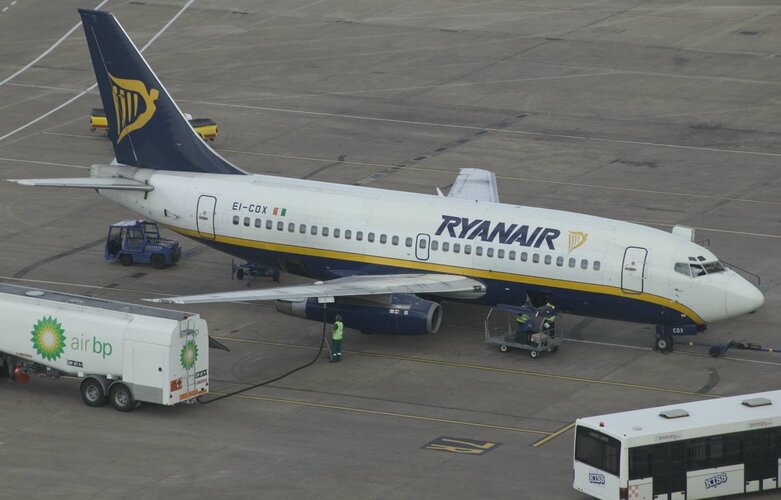
Identifying the perpetrators is a Herculean task, since the source of the threats is difficult to pinpoint. There is hardly an act easier to carry out without risking being identified, than informing police, aviation authorities, airlines, or airport operators – by phone or electronically – that there is a hidden explosive device on board of Flight XY of Airline ABC. Those mainly affected by this series of threats, have been Air Lingus, KLM, Air Europa, Iberia, SAS, Wizz Air, Aegean, Ryanair, EasyJet, Finnair, Air Serbia, and the Polish airline, LOT. Aside from the fact that they are, without exception, European companies, there are no direct similarities between the carriers that would allow for conclusions about who is behind these criminal acts. Cargo flights operated by integrators or cargo airlines, have so far not been affected by verbal or electronic bomb threats.
Repeated attacks
In contrast, some passenger airlines have even been targeted three or four times already. In some cases, military jets escorted affected passenger jetliners, while other aircraft landed directly at nearby military premises, after receiving a bomb warning. However, as things stand, no explosives were found during any of the security checks and inspections; so all threats have turned out to be false alerts or part of coordinated actions.
There is a possible initial clue as to who might be responsible, but experts believe this is more likely a case of free riding. Bomb warnings received in Sofia and Rome were allegedly sent from a criminal organization named ‘Fighters of the Male State’. This is the pseudonym of a Russian far-right movement which is known for distributing misogynistic content, indicates news agency, Agence France Press. Yet so far neither AFP nor investigators have delivered hard facts to prove the assumption.
Bomb threats are expansive – for airlines
Any bomb threat forces the crew to abort the flight and land at the nearest reachable airport. After passengers have disembarked and cargo shipments unloaded to undergo thorough security controls, the passenger cabin and the lower deck holds are searched as are the individual freight items. If nothing is detected, the aircraft can continue its journey.
All costs resulting from the unscheduled landing must be borne by the airline. This includes the possible rebooking of passengers and cargo shipments onto other flights, and hotel accommodation for travelers where necessary.
According to Bulgarian officials, last week, three aircraft were forced to make emergency landings due to threats. Flights from Copenhagen and Madrid landed in Sofia, as the Bulgarian government confirmed. A third jetliner coming from London was diverted to Plovdiv, local media report. In France, air traffic controllers advised Aer Lingus flight EI402, on way from Dublin to Rome, to land on Evreux Air Base, Normandy, located halfway between Le Havre and Paris, after receiving a bomb threat
Next: Cruise ships are being targeted
Just days ago, a cruise ship also became the target of a bomb alert. According to Greek authorities, an unknown individual claimed to have attached an explosive device to the hull of the vessel. The ship flies the Panamanian flag and was scheduled to sail from Greece to Haifa. It is operated by the Israeli shipping company, Mano Maritime. According to Reuters, there are 940 passengers and 597 crew members on board.
A special unit of the Greek Coast Guard searched the ship, assisted by sniffer dogs and a private diver. According to Reuters, no explosive device was found during the controls.