
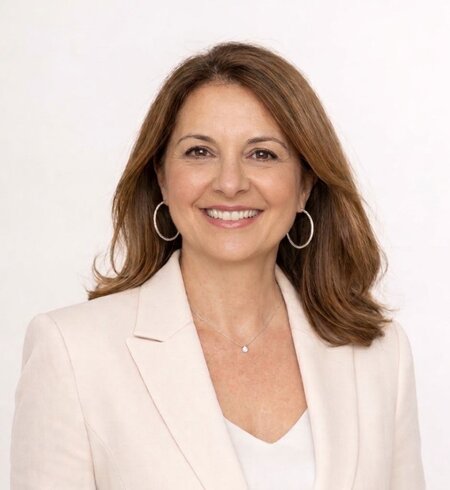
CargoForwarder Global’s ‘Spotlight On…’ focuses on a different part of the air cargo industry every week, to show how varied the career opportunities are that it offers. Just how crucial digital communication is for today’s business world, has been illustrated more than once in recent news events. And given the highly fragmented environment within air cargo, with all its stakeholders and shared process responsibilities, companies that can enable more seamless collaboration and secure, reliable, functioning connectivity, play a key role. Cargo Start is one such air cargo industry-dedicated technology provider. This week, we hear from Giovanna Cardinali (GC), Director of Strategy & Business Development and a Board Member at Cargo Start, and Circle Group’s Air Cargo Business Unit Lead. She shares insights as to her responsibilities and offers advice to those looking to join the air cargo industry.
CFG: What is your current function and company? And what are your responsibilities?
GC: I am Director of Strategy & Business Development and a Board Member at Cargo Start, and I lead the Air Cargo Business Unit of our parent company, Circle Group. My responsibilities cover strategy, international development, partnerships and digital transformation. Sitting on the Board, my role is to connect governance and the market: to make sure strategic choices are sound and then turn them into results. Much of my career has been about building new businesses and entering new markets, and that remains the core of my work today.
CFG: What does a normal day look like for you? Or is there such as thing?
GC: Not really. My time is divided between strategic work, such as Board matters, planning and performance review, and direct engagement with the market: partners, customers, tenders and negotiations, often abroad. I also dedicate time to industry associations and institutions, because many of the issues we face can only be solved at sector level. Air cargo operates around the clock and across time zones, and that inevitably shapes the working day.
CFG: How long have you been in the air cargo industry, and what brought you to it?
GC: I joined the industry in 1995, after a degree in Business Administration in Venice. My first assignment was a feasibility study for an off-airport cargo service requested by Lufthansa Cargo. That project became Air Cargo Venice, which I co-founded and led.
I then worked at SAVE, the Venice Airport Authority, as Air Cargo Business Unit Manager, and subsequently as Investor Relator, and spent fifteen years with Emirates SkyCargo before moving into logistics services. Having worked for an airport, an airline and the logistics side gives me a broad view of the value chain and of the different, often competing, interests within it. I consider that one of my main strengths.
CFG: What do you enjoy most about your job?
GC: Building things and making them work. I enjoy taking an idea, structuring it, finding the right partners and turning it into a sustainable business. I also value the international nature of this industry. Negotiating across different cultures and business practices requires preparation, patience and credibility, and I find that challenge stimulating. Finally, I teach supply chain and temperature-controlled air cargo on Master’s programs. I consider passing on knowledge to the next generation part of my professional responsibility.
CFG: Where do you see the greatest challenges in our industry?
GC: The first is digitalization. The industry has made progress, but a significant share of processes still relies on manual exchanges and fragmented data. Large operators have the resources to invest, while small and medium-sized forwarders, which make up much of the Italian market, risk falling behind. Ensuring access to shared standards and real-time visibility across the whole chain is a priority.
The second is sustainability. Reducing aviation’s emissions while maintaining competitiveness requires coordinated action between carriers, airports, forwarders and policymakers.
The third is human capital. Air cargo has limited visibility outside its own community, which makes it harder to attract talent. At the same time, a generation of experienced professionals is approaching retirement. Recruiting, training and transferring know-how must be treated as a strategic issue, especially in a market shaped by geopolitical and trade volatility.
CFG: What advice would you give to people looking to get into the air cargo industry?
GC: My first advice is to learn the business from the ground up. Time spent in operations, whether in a warehouse, at an airport or handling bookings and documentation, gives you an understanding of the processes that no course can replace. It is also what gives you credibility later, when you move into commercial or management roles.
On training, a solid foundation in logistics and supply chain management is essential, and today there are good, specialized Master’s programs. IATA’s professional courses are a recognized standard, particularly in dangerous goods and special cargo handling such as temperature-controlled shipments. I would add two skills that are increasingly decisive. The first is digital and data literacy, because the industry is changing quickly and those who can work with data will have an advantage. The second is languages, starting with English: this is an international business, and the ability to communicate and negotiate across cultures makes a real difference.
Finally, build your network early. Air cargo is a relatively small community, and relationships and reputation carry a lot of weight.
CFG: If the air cargo industry were a film/book, what would its title be?
GC: ‘Night Flight’, after Saint-Exupéry’s novel. It tells the story of the early airmail pilots, the true pioneers of air cargo, and of the people on the ground who made sure the mail kept moving through the night. Almost a century later, the spirit is the same. Much of our work happens while the world sleeps, under constant time pressure and with a strong sense of responsibility, and when we do it well, nobody notices.
Thank you, Giovanna!
If you would like to share your personal air cargo story with our CargoForwarder Global readers, feel free to send your answers to the above questions to cargoforwarderglobal@kopfpilot.at We look forward to shining a spotlight on your job area, views, and experiences.