
A production facility is set to be built soon at Nairobi’s Yomo Kenyatta International Airport, with the goal of producing 32,000 metric tons of Sustainable Aviation Fuel annually. A memorandum of understanding has now been signed by Kenya Airways and Rubis Energy Kenya, a pan African downstream oil company. The project is estimated to require an investment of between €60 million and €70 million. It will be the first 100% dedicated SAF refinery on the continent and is expected to become operational in 2028.
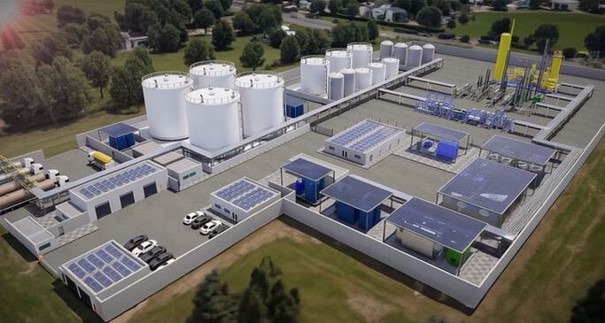
So far, Africa’s SAF market has relied predominantly on imports and pilot projects, with a lack of large-scale domestic production. The decision to build the facility at Jomo Kenyatta Airport is considered strategic, given that JKIA is among the continent’s most important and busiest aviation hubs.
Reducing fuel imports
The planned refinery marks a major milestone for Africa’s aviation industry and toward supply of greener fuel. So far, the continent is dependent on imported aviation fuel because a purpose-built, commercial-scale refinery dedicated to SAF production does nowhere exist.
So far, the African aviation sector is underrepresented on a global scale, accounting for just 2% of the total traffic. This figure sharply contrasts with the fact that Africa accounts for 18% of the world’s population. The 38 member states that have signed the Single African Air Transport Market Agreement (SAATM) alone are home to 1.4 billion people – a population comparable to that of China or India. China’s share of the global passenger market currently stands at 18% and, according to forecasts by Airbus and Boeing, is expected to rise to 23.3% by 2041. India follows at a considerable distance but with higher annual growth rates in comparison.
Wide range of available feedstocks
Since SAF is derived from sustainable feedstocks – such as various sources of renewable biomass, including agricultural waste, crops, and forest waste – Africa offers a wide variety of primary sources, says Bernard Onguso, head of the initiative “Fueling African Aviation”. His organization has set itself the goal of establishing a new form of division of labor between Africa and Europe. “Thanks to sufficient feedstocks, we are able to produce enough SAF in Africa, a portion of which we can then transport to Europe for use by airlines there to reduce their carbon footprint. This could open a new source of income for the agricultural sector in Kenya and neighboring East African countries, such as Tanzania or Uganda,” Onguso reasons by taking a more holistic view. His expertise can be read here: Fueling African Aviation – Green Sustainable Energy & Investment Platform.
“We intend to replicate the Nairobi project,” Bernard Onguso
At the same time, he notes that the project is in the crosshairs of oil producers and their governments in the Gulf region. “If we produce our own SAF in Sub-Saharan Africa, it will reduce our dependence on other markets, particularly the Middle East.” He sees the Nairobi refinery as only the first step. His initiative is already working on plans to replicate the Kenya project across Africa.

Growing concerns over global fuel supply disruptions – triggered by tensions in the Golf region and the temporary closure of the Strait of Hormuz – are also likely to contribute to this. This has renewed calls across Africa for stronger local refining capacity to reduce dependence on imported fuel. East African countries currently import virtually all their refined oil products, mostly from the Middle East, making the region highly vulnerable to supply shocks and price spikes.
The Mombasa project
One of the pioneers in the campaign for changed trade relations in Energy supply is Aliko Dangote, founder and CEO of the Nigerian Dangote Group. According to Forbes, his estimated net worth is currently $28.5 billion, making him the only African among the world’s 100 richest people. Dangote’s latest plans call for the construction of a refinery in Mombasa, which, thanks to the port’s water depth of 17.5 meters, can be accessed by the largest ships and is strategically located near the East African fuel market. There, his company plans to build an oil refinery with a production capacity of 650,000 barrels per day. It is not clear from the current plan whether SAF is also part of the project.
Fueling Africa’s industry
Simultaneously, the Nigerian investor has tabled plans to build a transnational pipeline from Namibia to Zimbabwe. According to Zimbabwe’s presidential spokesman, George Charamba, “the sub-regional pipeline project combined with an oil refinery is a key transnational matter for Zimbabwe which could change the country’s production structure with fuel costing less to import.“ This is complemented by Dangote Petroleum’s intent to set up a large fuel storage facility in Walvis Bay, expected to hold 1.6 million barrels of gasoline and diesel, thereby reducing Southern Africa’s reliance on fuel imports from the Middle East or Asia. The country of origin for both projects is Nigeria, from where the oil is transported to Namibia by tanker.