
Morocco has quietly built one of Africa’s most effective aviation assets: an open-skies framework with Europe that has turned Casablanca into a genuine cargo gateway. Most of the conversation around African aviation focuses on passengers. But the cargo story is where Morocco’s strategic advantage really shines.
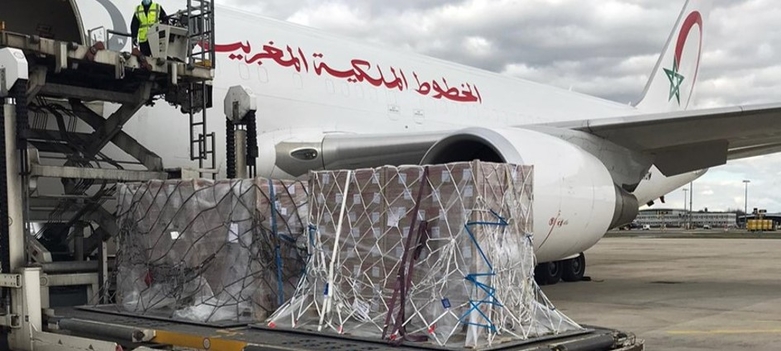
Casablanca’s rise as a cargo hub
Mohammed V International Airport (CMN) has become the primary air freight hub for North and West Africa. This didn’t happen by accident; the ingredients are straightforward:
- Geography – sitting at the narrowest point between Africa and Europe
- Infrastructure – dedicated freight terminals and cold chain facilities
- Liberalized traffic rights – thanks to the EU–Morocco aviation agreement
- Royal Air Maroc Cargo – a carrier that has grown with the opportunity
The result? A hub that serves Morocco’s domestic economy and the broader West African market – moving goods from Dakar to Dubai, from Lagos to London, through a single efficient transit point.
Open Skies delivers predictable market access to cargo players. Liberalized airspace replaces ad hoc permits with stable rules. For cargo operators, that means predictable scheduling and the ability to build long-term logistics partnerships.
Seamless Africa–Europe connectivity avoids detours via other hubs such as in the Middle East. Today, there is no more need to route shipments through non-African hubs. Hence, particularly time-sensitive goods – fresh produce, pharmaceuticals, high-value electronics – move faster and at lower cost.
Cold chain logistics
Africa’s agricultural export sector depends on reliable air freight. Morocco’s gateway status has made it a critical node for moving perishable goods to European supermarkets. This also applies to e-commerce, which is growing constantly. Cross-border e-commerce needs fast, reliable air cargo services. Morocco’s framework positions Casablanca as a natural sorting and redistribution hub for the entire macroeconomic region.
RAM Cargo: The carrier that makes it work
Royal Air Maroc Cargo has been the primary driver of Morocco’s cargo strategy – and is its main beneficiary. The airline has:
- Expanded its freighter fleet to meet growing Africa > < Europe demand
- Built dedicated cargo routes to key West African markets
- Formed partnerships with European and Middle Eastern carriers for seamless
interline connectivity
- Invested in ground handling at Casablanca to support perishable, e-commerce, and high value cargo throughput, including the transfer and distribution of the goods to final destinations.
This alignment between the national carrier and Moroccan aviation policy is a model other African nations could learn from.
The Bigger Question for Africa
Morocco’s success raises a structural question: If liberalized airspace with Europe has delivered such clear cargo benefits, why is the full implementation of the Single African Air Transport Market (SAATM) for intra-African cargo still lagging?
The answer is not technical capacity, it’s political will – and the willingness to move beyond bilateral control for continental gain. African Continental Free Trade Area‘s vision (AfCFTA) of seamless intra-African trade will remain incomplete without an integrated air cargo framework to match. Morocco’s experience proves three things:
- Liberalized skies drive cargo volume
- Cargo volume drives infrastructure investment
- Infrastructure investment drives economic integration
For cargo operators, financiers, and logistics providers, the message is clear: the routes exist, the demand is growing, and the regulatory frameworks are available. What remains is the decision to implement this opportunity and vision on a larger scale.
Bottom Line
Morocco’s open skies framework is not just a passenger aviation success story. It’s primarily a cargo gateway strategy that has made Casablanca one of the most important freight hubs connecting Africa to Europe and vice versa.
As the continent moves toward deeper integration under SAATM and AfCFTA, Morocco’s model offers a practical blueprint for what liberalized air cargo markets can deliver. The opportunity is now. The infrastructure is ready. The next move belongs to the policymakers and cargo operators who will build the next generation of African air freight networks.
UPDATE
Royal Air Maroc enlarges European network
The Moroccan national carrier is adding four European destination to its current summer schedule. These areBilbao, Alicante, Verona and Lille. They will be served with Boeing 737 aircraft, offering up to 3 tons of cargo capacity in the lower deck compartments of the passenger jetliners per flight. The new services feed seamlessly into Royal Air Maroc’s long-haul widebody and freighter network out of its Casablanca hub.
The new routes strengthen the carrier’s role as a North–South logistics bridge between Europe and Africa and are in line with its goal of scaling toward a global hub model, combining regional narrow-body connectivity with intercontinental widebody and freighter operations.
“As a key strategic gateway into Africa, our focus at Royal Air Maroc is on connecting high-potential regional markets in Europe, that can generate consistent point-to-point demand and feed cargo flows through Casablanca to destinations across Africa and other international markets in the Americas and Asia,” Rita Chraibi, Vice-President Cargo, Royal Air Maroc, explains. HS
Author: Bernard Omboto Onguso
Bernard is the author of the Fueling African Aviation series, a two-volume (with a third volume due end 2026) practitioner guides to aviation fuel markets, first of a kind guides in infrastructure development, and continental integration, endorsed by aireg for use in European institutions and frontier markets. He presented on the Global SAF Perspective Panel at ILA Berlin 2026 and has worked across African aviation markets for over three decades.