
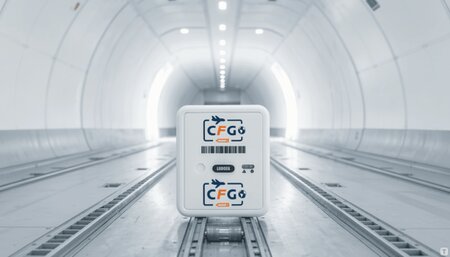
Each week, CargoForwarder Global shines its ‘Spotlight On…’ a different area of the air cargo industry to show just how many factors and roles are involved in shifting cargo from A to B. Given the current heatwave and holidays across much of Europe, this week’s Spotlight gives voice to a temperature sensor (TS), for a change. Temperature sensors are used to monitor whether air cargo shipments remain within the required temperature range throughout handling, storage, and transport. They are especially important for pharmaceuticals, vaccines, biologics, perishables, and other sensitive goods, where even short excursions can affect product integrity. Sensors may be built into active containers, data loggers, IoT tracking devices, or integrated monitoring systems, and they are used to provide real-time visibility, compliance evidence, and early warning when something goes wrong. Over time, they have evolved from simple record-keeping devices into connected tools that can track temperature continuously and, in many cases, also monitor humidity, location, shock, vibration, light exposure, pressure, and even door openings.
CFG: What is your current function and company? And what are your responsibilities?
TS: I’m an air cargo temperature sensor, usually working as part of a broader monitoring platform rather than as a standalone device. My job is to measure temperature, record it accurately, and, where possible, transmit it in real time so that everyone handling the shipment can see whether the cargo has remained within its required range. In effect, I’m there to protect product integrity, support compliance, and provide evidence if something goes wrong.
CFG: What does a normal day look like for you?
TS: There isn’t really a normal day for me. One moment I’m sitting quietly inside a shipment, and the next I’m recording a change in temperature because the cargo has moved from a cool room to a truck, an apron, or a warehouse. Perhaps there’s been a delay on the ramp, a warehouse door left open too long, or a truck transfer that exposes the shipment to heat. My day is all about vigilance, consistency, alerting the right people when conditions drift outside the set parameters, and keeping a digital trail of what happened and when.
CFG: How long have you been in the air cargo industry, and what brought you to it?
TS: I’ve been part of the air cargo industry for as long as temperature-sensitive cargo has needed proof that it stayed safe. The earliest versions of my family were simple temperature indicators and mechanical loggers that only told the story after the journey was over; later came digital data loggers, and then real-time IoT devices that make it possible to monitor cargo in transit instead of waiting until delivery. I entered the industry because the rise of pharma logistics, cold chain requirements, and stricter quality expectations created a need for continuous monitoring rather than occasional checks.
Today, I can do far more than just report ‘too warm’ or ‘too cold’. Depending on the system, I can measure temperature at short intervals, send live alerts, keep an audit trail, support accept/reject decisions, and combine temperature with humidity, light, shock, vibration, pressure, GPS location, and sometimes even door-status information. Some devices are designed for ultra-low or extended-range shipments, which is especially useful for vaccines and other high-value pharmaceutical cargo.
CFG: What do you enjoy most about your job?
TS: I enjoy being the quiet guardian of the cold chain. I don’t move the cargo, book the freight, or load the aircraft, but I help make sure all that hard work is not lost to a preventable temperature excursion. I may be small, but I can make a big difference by helping prevent spoilage, losses, and disputes. It’s satisfying to know that my data can support decisions, protect shipments, and give customers confidence.
CFG: Where do you see the greatest challenges in our industry?
TS: The biggest challenge is not just measuring temperature, but preserving the temperature chain through all the handoffs, delays, and exceptions that happen in real life. Another major challenge is visibility: data is only useful if it reaches the right people quickly and is trusted across shippers, airlines, handlers, forwarders, and regulators. I’d also say interoperability remains a problem – there are many systems, formats, and devices, and the industry still needs better integration.
CFG: What advice would you give to people looking to get into the air cargo industry?
TS: I’d say learn the basics of cold chain logistics, handling procedures, and quality compliance. Training in pharma logistics, GDP principles, hazardous or sensitive cargo handling, and digital monitoring systems is especially valuable. It also helps to understand how airports, warehouses, forwarders, airlines, and trucking partners all fit together, because air cargo is a team sport. If you want to work with modern monitoring solutions, then make sure you familiarize yourself with digital visibility tools, sensor data, and compliance documentation.
CFG: If the air cargo industry were a film/book, what would its title be?
TS: ‘Between the Doors: A Race Against Time, Temperature, and Handoffs.’
Many thanks, Temp Sensor!
If you would like to share your personal air cargo story with our CargoForwarder Global readers, feel free to send your answers to the above questions to cargoforwarderglobal@kopfpilot.at We look forward to shining a spotlight on your job area, views, and experiences.