
Cargo operations at Caracas’ Simón Bolivar International Airport (IATA code: CCS) resumed last Wednesday (05AUG26) following its complete the closure caused by the earthquakes on 24JUN26.
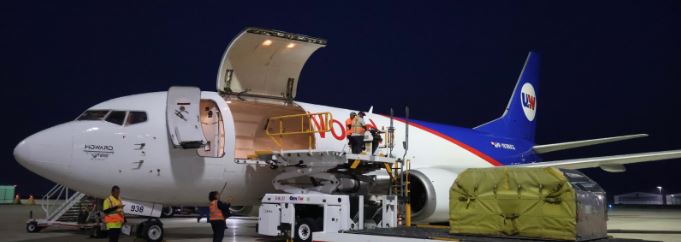
The devastations forced airlines to divert their passenger and cargo operations to alternate airports or to cancel their regular schedules until aviation authorities could once again guarantee safe conditions at the airport facilities. At least for freighter flights, the officials have now given the green light.
The 7.2- and 7.5-magnitude quakes were felt in Colombia, Venezuela and across the Caribbean and caused building to collapse in the Venezuelan capital Caracas. It severely damaged the South American country’s main air hub Simón Bolívar International Airport in Caracas Videos circulating on social media show travelers and airport staff, as they flee the building in a panic. Inside the passenger terminal collapsed, thick clouds of dust clogged the air within minutes and parts of the ceiling paneling fell on the floor. It’s almost a miracle that no one was badly injured.
As a precautionary measure, all flight operations were suspended immediately and halted until now.
IAIM gives the green light for cargo flights
Through Circular IAIM-DG-2026-0000631, issued on 31JUL2026, the Maiquetía International Airport Institute (IAIM) formally confirmed the restart of cargo flights, directing cargo airlines, customs agencies, freight forwarders, and warehouse operators to reactivate concessions ahead of the forthcoming reopening. The Ministry of People’s Power for Transport subsequently announced that both arriving and departing cargo flights would resume under full compliance with Venezuelan civil aviation regulations, international operational safety standards, and aviation security (AVSEC) requirements.
Cargo comes first
The local authorities decided to reopen cargo before passenger service as only the runway and cargo infrastructure are required, whereas passenger operations depend on fully functioning terminal facilities, security screening, immigration, and baggage sorting systems. Commercial passenger flights are scheduled to restart on 24AUG26, with a temporary terminal currently under construction. The phased reopening reflects a deliberate operational strategy that prioritizes infrastructure readiness and aviation safety rather than a simple return to everyday business.
Already before the double earthquakes, the Venezuelan cargo market had for years been served only to a very limited extent. Lately, however, international air freight companies have returned and expanded their activities in Venezuela, following the fall of the Maduro regime. Among the carriers that started serving the country since are Avianca Cargo, Cargojet, Amerijet, DHL and Latam Cargo.
Will 7 Air Cargo survive?
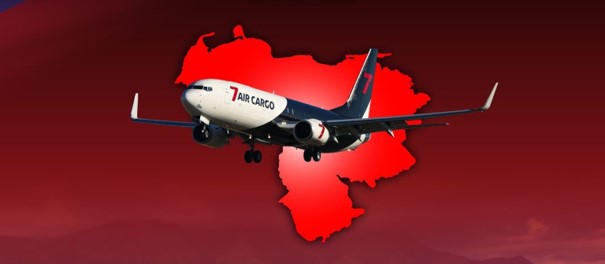
As the latest capacity provider, on 08MAY26, Miami-based 7 Air Cargo planned to launch a charter chain to Caracas, deploying B737-800BCF aircraft. Their decision marks a significant milestone for the U.S. cargo airline and is seen as a signal for Venezuela’s cautious return to international logistics networks. The new connection announced by 7 Air underscores the growing interest in Venezuela as a gateway for north-south traffic within Latin America as well as for connections to the USA and the Caribbean. However, the quakes have so far prevented any flights from taking off.
Whether 7 Air’s plans will ever come to fruition is now questionable. A few days ago, lessor Aircastle filed a lawsuit seeking repossession of their two 737-800BCFs after the U.S. freight carrier missed over US$ 900,000 in payments.