
No sooner had the group’s quarterly figures released last Tuesday (04AUG26) than the company’s stock price plummeted sharply – by more than 8% on a daily average, from €9.27 to €8.50. Even though the stock price is only one indicator of an actor’s situation, it does show that the airline urgently needs to take action to improve its outlook.
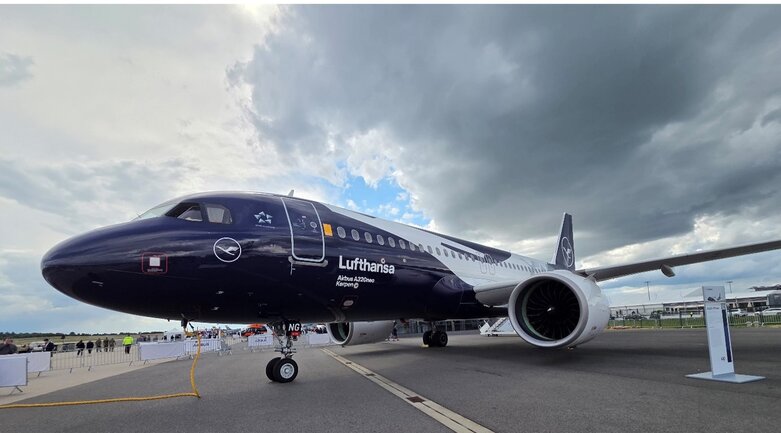
This is because the result is not solely attributable to unfavorable external factors, such as the skyrocketing fuel prices due to the Hormuz conflict. There are also significant internal reasons for the poor quarterly performance, particularly high operating costs. These are caused by a bloated administrative workforce, extremely high pilot salaries, very complex flight operations with multiple hubs in Europe, and – due to Boeing’s long-standing production and delivery problems – a passenger fleet that is, in part, outdated compared to Lufthansa’s competitors. Consequently, LH is losing market share to its main European competitors, the IAG Group (British Airways / Iberia) and Air France-KLM.
Losing market share
IAG posted an operating profit of €1.41 billion (US$1.62 billion) in the second quarter. Despite a 25% decline from the first quarter, this result was significantly higher than the €1.37 billion analysts had expected.
Air France-KLM reported a second-quarter revenue increase 9.9% to €9.3 billion, while adjusted operating profit reached €484 million (down 250 million from Q1). The company’s passenger business remained the main driver of growth, with passenger unit revenues up 8.9% for the quarter. Cargo also performed strongly, with unit revenues up 26.7% and an estimated €100 million contribution to profitability.
Over in Frankfurt, Lufthansa Cargo contributed €116 million to its parent company’s balance sheet in fiscal Q2 (up 58% year-over-year). Klick here for Lufthansa Cargo story written by Anastasia)
Austerity program is under way
To prevent further losses, the Lufthansa Executive Board has approved a turnaround program aimed at achieving annual savings of €2.5 billion by the end of 2028. At the earnings conference, CFO Till Streichert announced that non-essential projects will be canceled, which is expected to yield an additional €200 million in savings. In addition, the administrative structure will be streamlined, and a severance program is currently underway. Management has not disclosed how many jobs are to be cut.
In contrast to the parent company, however, the other members of the airline group – which include Swiss, Austrian Airlines, and Italy’s ITA, among others – are growing. The problem children are Eurowings and Sun Express, which specialize in European and Mediterranean routes, respectively. They reported an a combined or each? EBIT of minus €252 million for the first half of the year.
SN deepens losses
Lufthansa subsidiary Brussels Airlines is also burning money. The Belgian carrier reports a loss of €70 million for the first half of the year, which is €24 million more than in the previous year.
The main reason, in addition to high aviation fuel costs, is the Ebola epidemic in the Congo and East Africa. This has hit the airline massively, which serves a multitude of routes between Europe and Africa. Due to this difficult market situation, the expansion of the fleet has been halted. Brussels Airlines was set to receive two additional A330-200 passenger aircraft from parent Lufthansa, complementing its existing fleet of eleven long-haul aircraft, which were to be operated primarily on African routes. This plan is currently off the table.