
… and return to 24/7/365 operation to give air traffic a much-needed boost? This question arises because air traffic growth in Germany has still not reached pre-COVID levels and is growing at a significantly slower pace than in other EU countries. CargoForwarder Global (CFG) asked Thorsten Hölser (TH) whether there is a realistic chance that the ban on night flights might be lifted as part of the government’s infrastructure reform package for Germany. He is the Managing Director of the Hesse/Rhineland-Palatinate Freight Forwarders Association.
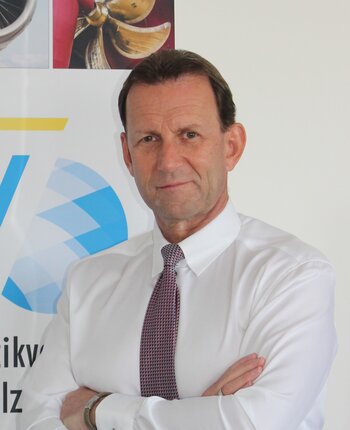
CFG: Due to high costs, bureaucratic hurdles and night flight restrictions, cargo traffic has shifted from German hubs to neighboring EU airports – such as Liège, Budapest and others. Wouldn’t it therefore be time to lift the night flight restrictions for air cargo, particularly at Frankfurt Airport (FRA) – Europe’s largest cargo hub – and return to 24-hour operations?
TH: I have my doubts as to how much a return to 24-hour operations would actually lead to a significant increase in volume. Large volumes are transported by rail and road today, and will continue to be so in the future. Regardless of this, I do not believe this project would currently receive political and, above all, public support. Considering the limited infrastructure resources, the air cargo industry should instead focus on achieving a more even and optimized distribution of traffic throughout the week. This is because there is still capacity available, while problems arise particularly during peak times at the weekend.
CFG: In the medium term, major airports such as FRA or MUC are reaching their infrastructural limits. Could smaller airports like Nuremberg or Hahn play a more significant role in the cargo business – that is, more than just a supporting role – by taking on a portion of the cargo volume from the major airports? After all, they have plenty of slots and – unlike FRA or MUC – operate around the clock (24/7).
TH: As is the case across the economy, small and medium-sized enterprises have opportunities for growth because of their specific structures, which allow for faster response times, more personalized customer relationships, etc. This also applies to smaller airports, which do not have a huge administrative structure and benefit from more cost-effective structures and more flexible operational processes. However, competition will ultimately determine who succeeds, and I do not believe that all regional airports will play a significant part in this growth.
CFG: A new large-scale facility is being built at Frankfurt Airport. Once completed, the project will lead to a massive increase in truck traffic. Is the surrounding road infrastructure capable of handling the additional traffic volume for incoming and outgoing shipments – including the transport of goods via the access roads between the airport’s various cargo facilities?
TH: If one were to evaluate only the current road infrastructure in relation to the volume planned for the final phase of CargoCity West, there would be reason for considerable concern. The transport infrastructure in the Rhine-Main region is already operating at full capacity during peak hours. Process optimization, improved and real-time control through digitalization and AI, the expansion and smarter use of transport infrastructure, and adjustments to the legal framework – such as exemptions from the Sunday driving restrictions – still offer potential for the future. To achieve this, however, politicians and the air cargo industry must work together to consider potential solutions at an early stage and implement them promptly.
CFG: According to Statista, the global online platform for statistics and market data, truck traffic accounts for 10% of global CO2 emissions. Although trucks and buses make up only 2% of the vehicles on European roads, they are responsible for 27% of CO2 emissions caused by road traffic. What measures is your association taking to encourage RFS (Road Feeder Service) members to meet the EU’s target of a 55% reduction by 2030?
TH: We have set up dedicated working groups both within our national association (www.dslv.org) and our regional association (www.slv-spediteure.de), to support and guide small and medium-sized transport companies through the transition to new driving technologies. However, I do not see any need to put pressure on our members, as I have noticed that they are consistently willing to engage with the issues of the drive system transition and the reduction of CO₂ emissions. The greater barriers at present are, rather, the political sphere – with its misguided regulatory framework and unsuitable funding programs – and the energy sector, with its insufficient and too-slowly-expanding charging infrastructure.
CFG: Finally, due to low water levels in the Danube, Rhine, and Elbe, inland waterway shipping in Central Europe has come to a near standstill. Is truck transport a viable alternative to freight transport by inland waterway vessel?
TH: A clear NO! One inland waterway vessel currently replaces around 150–200 lorry journeys. If we were to shift these volumes back to the roads, the road infrastructure would collapse. It is to be hoped that, in the context of the low-water crisis, politicians will finally wake up and allocate more and better-targeted funding to waterway infrastructure. However, these funds must then be planned and spent quickly, because infrastructure projects in Germany take decades – and we simply do not have that kind of time left!
CFG: Thorsten, thank you for your time and input.