
Having shared his plans regarding the AfA’s presence in Washington, along with thoughts on succession, continuity, and policy priorities in the first part of this 2-part CargoForwarder Global (CFG) interview series, Steve Smith, Chief Executive Officer, Airforwarders Association, now reveals how he intends to lead the AfA. Among other things, discussions center around the potential need for a formal crisis-response framework, how the seemingly endless number of issues facing US forwarders can best be approached, what metrics of success the AfA goes by, and finally – how to balance advocacy with life.
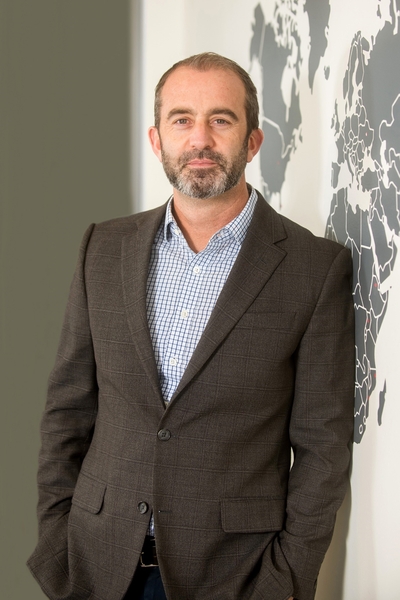
CFG: Crisis coordination: Given your Airlink experience, will the AfA formalize a crisis-response playbook with airlines and forwarders for disasters or geopolitical disruptions (or does this perhaps already exist?), and how would that interface with humanitarian airlift?
SS: Forwarders are already the industry’s first responders. When a hurricane hits or airspace closes, our members are rerouting freight within hours, often before any formal response is organized. What can be strengthened is the structure around that instinct. A more formal coordination framework is something I want to develop with our members and board: clear lines of communication with airlines, airports, the Transportation Security Administration (TSA) and U.S. Customs and Border Protection (CBP) during a disruption, so members get timely, consistent information on capacity, restrictions and screening changes.
On the humanitarian side, the biggest lesson I took from my years building Airlink is that the private sector’s most valuable contribution isn’t goodwill; it’s being organized before the crisis hits. Forwarders bring exactly what humanitarian airlift needs: capacity, customs and regulatory expertise, and last-mile know-how. I’d like the AfA to be the connective tissue that helps members plug into established humanitarian channels quickly, rather than reinventing the wheel every time disaster strikes.
CFG: Digitalization, RFS security, dangerous goods regulations, aging airport infrastructures, self-driving trucks, AI challenges and opportunities, etc. – the list of topics that may require the AfA’s involvement, is likely endless. How do you prioritize and which three topics are top of your list?
SS: I prioritize using three tests: how directly an issue affects members’ costs, reliability and security; whether the AfA can realistically influence the outcome; and whether the forwarders’ voice would otherwise be missing from the debate. By those tests, three issues stand out right now.
First is trade and regulatory predictability. Forwarders are already under considerable pressure from rising fuel and operating costs, while geopolitical tensions are disrupting established trade routes and straining capacity.
Second is infrastructure and operational resilience. That covers aging airport infrastructure, congestion around cargo facilities, the reliability of air traffic systems, and the road connections that move freight into and out of airports. Air cargo is built around speed, so infrastructure that adds hours of delay undermines the value of the service.
Third is security across the supply chain. Beyond cargo theft, that means modernizing the Transportation Security Administration’s Known Shipper program so it keeps pace with how freight moves today, alongside our work on road feeder service security, dangerous goods regulations, and cargo screening requirements.
Digitalization, artificial intelligence and autonomous trucking matter too. Our Technology Committee is tracking them closely, and members will hear more as those issues mature.
CFG: Metrics of success: What KPIs will you use to measure the AfA’s impact (e.g., policy wins, member retention, training uptake), and how will you report progress to the board and members?
SS: Members pay their dues because they expect the AfA to represent their interests and deliver value for their businesses. I want every member, from the smallest independent forwarder to the largest logistics company, to see a clear return on that investment.
Forwarders are contending with rising operating costs, unpredictable trade policies, geopolitical tensions, cargo theft, and creaking infrastructure. These challenges directly affect their margins and ability to compete, and many cannot be addressed by individual businesses acting alone. That is why having an experienced, effective voice in Washington matters.
Our success must therefore be measured by the results we achieve for members. That includes influencing legislation, improving regulatory requirements, securing clearer guidance from federal agencies, and challenging proposals that would impose unnecessary costs on forwarders. Not every success makes headlines, but preventing a burdensome regulation can deliver considerable value to members.
We will also look at membership retention and growth, participation in committees and events, engagement with our briefings and resources, and direct feedback from members. These are important indicators of whether we are addressing the issues that matter to the businesses we represent.
I want the board to have regular, transparent reporting on these measures, and members to understand what the AfA is doing on their behalf. I intend to communicate our progress regularly, including through my monthly CEO Letter to members and at the AirCargo Conference, and be equally clear about the challenges that remain. Ultimately, the strongest measure of success is whether members believe the AfA makes their businesses stronger and that their investment in the Association is worthwhile.
CFG: And finally, how does Steve Smith relax at the end of a long day of advocating for the industry? What offers the best balance?
SS: Usually on two wheels. I ride an Indian Scout Bobber, and there’s nothing like a ride on the Virginia back roads to clear your head after a long week. Most mornings start at CrossFit, which turns out to be good preparation for Washington: both reward stamina and punish shortcuts. And at the end of the day, it’s family. My wife and our three kids keep me grounded, and they are refreshingly uninterested in air cargo policy.
Thank you again, Steve.
Part 1, last week, looked into plans regarding the AfA’s presence in Washington, along with thoughts on succession, continuity, policy priorities, and helping members with trade volatility. Please view: https://cargoforwarder.eu/2026/11/01/steve-smith-on-leading-the-airforwarders-association-part-1/