
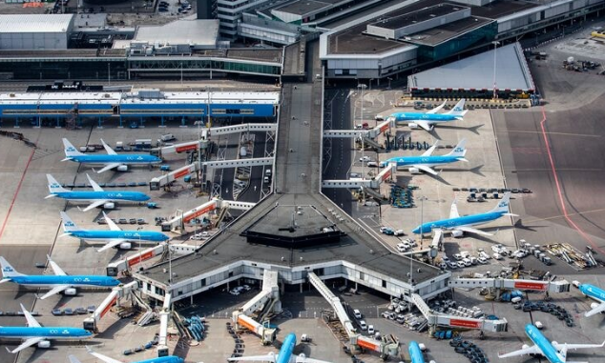
As KLM is looking to slim down its organization to boost its margin, it is planning a 15% cut in personnel. Approximately 5,000 positions have been or will be reorganized with the work carried out differently. The operation will also impact its cargo business and belly capacity.
According to the company’s press release, “KLM Cargo will consolidate all cargo handling in its own warehouse at Schiphol, covering freight carried on both passenger and cargo aircraft.” The background is a new strategic approach that focuses on outsourcing business to external service providers, combined with job cuts. Some activities, other parties can perform better, faster, or more efficiently, the company’s press release reads. This means certain activities will be carried out with external partners, reorganized, or further consolidated within Air France-KLM, including SAS after its integration into the Franco-Dutch Airline Group.
Bas Brouns, CFO of KLM: “We need to strengthen our financial foundation to make KLM more resilient in the face of uncertainty and better prepared for the future. We need a KLM that can invest in a new generation of aircraft, better customer service, and our people.” These measures will help us increase revenue and further reduce the carrier’s structural costs. Brous: “We need to make a major leap forward. Improving our annual earnings by €1 billion is essential to delivering our strategy and focusing on what sets KLM apart.”
More volume, reduced staff?
CFG asked company press spokesman Gerard Roelfzema for some clarification about the present situation and what is to come. “At the moment cargo transported on the Martinair full freighters ex Amsterdam is handled in the WFS warehouse at Schiphol-Southeast. Belly cargo on board of KLM flights is handled in KLM’ Cargo’s own premises at Schiphol-Centre.”
“The intention is to integrate these activities step by step as from next year, so that the complete handling of the freighters can take place in the KLM Cargo warehouses by 2028 at the latest. In this way, all the cargo handling activities will be brought under one roof.”
Reading between the lines, one can conclude that KLM Cargo is supposed to process more volume. However, some staff will be reorganized. This indicates that less staff will be available for processing.
New cargo terminal
According to the press release, the new scheme “will help prepare KLM Cargo for the new cargo terminal, scheduled for completion in 2035, and enable it to attract more transfer cargo passing through Schiphol.” The increased cargo volumes will ultimately be handled without hiring additional employees. This will be achieved by simplifying processes, working smarter, increasing automation, and deploying employees across different activities, the carrier announces.
Less belly capacity in Europe
In its European network the company plans to change its aircraft type. “The A321neo will remain part of the fleet, while smaller Embraer E195-E2 aircraft will replace the planned A320s.” This could, of course, have an impact on the belly capacity, with which Mr Roelfszema agrees.
“The replacement of the Airbus A321neo by the Embraer E195-E2 has, indeed, an impact on the available belly capacity per aircraft. If this will have actual commercial consequences for our cargo activities, is not clear at the moment. The amount of cargo transport as belly in our European network is relatively limited.”
KLM had already downsized its staff by some 5,500 in 2020-2021, mainly due to Covid-19. The cargo business, which proved to be the economic ‘silver lining’ at the time, was, however, excluded from the measures.