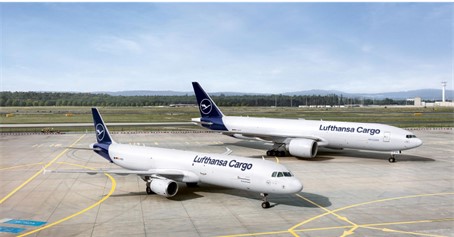
Driven by positive annual figures, the Frankfurt-based cargo airline managed to join the club of the leading top five global air freight carriers. This ranking is confirmed by business data cited in its annual balance sheet presented by Lufthansa Cargo management on 06MAR26.
In fiscal 2025, the company generated an operating profit of EUR 324 million (2024: EUR 251 million). This represents a strong increase of 29% compared to the previous year. Lufthansa Cargo thus made an important contribution to the Lufthansa Group’s adjusted EBIT of around EUR 2 billion in 2025 – up 19% compared with 2024.
New strategy pays off
The main driver of Lufthansa Cargo’s positive results was the BOLD MOVES strategy implemented in 2023. The scheme concentrates on three pillars: A competitive core business, profitable growth, and a focus on employees and corporate culture. According to the scheme, Lufthansa Cargo should rank among the world’s top five cargo airlines by the end of 2026, based on Revenue Freight Kilometers. But data shows that this goal was already achieved in 2025 – a year ahead of schedule. Now, management has raised the bar for success even higher: the goal now is to secure a rank among the three largest freight carriers worldwide, come 2030.
Satisfying results
When taking a closer look at the 2025 balance sheet, it becomes evident that Lufthansa Cargo succeeded in improving most of its business targets: Revenue increased by 4% to EUR 3.4 billion (previous year: EUR 3.26 billion), the adjusted EBIT rose by 29% to EUR 324 million. Available freight capacity also went up, reaching 14.45 billion freight ton kilometers (+ 5.4%). Sales increased by 7% year-on-year to 9.1 billion freight TKM. The average load factor improved slightly, reaching 63% (+1.1% year-over-year). Furthermore, quality measured in ‘delivery on time’ increased by 5% compared to 2024. However, management omitted to disclose the overall satisfaction level.
Multi airline and hub concept
In 2025, Lufthansa Cargo grew both organically and through M&A activities. In mid-2025, the German freight carrier began marketing the cargo capacities of Rome-based ITA Airways. This includes nearly the entire continental and intercontinental network of the Italian airline. However, routes to and from the U.S. and Canada are excluded until regulatory approval is granted. With Rome as its fifth hub, Lufthansa Cargo strengthens its presence in Southern Europe and will expand global lower deck capacity by around 20% in the long term, its release states. Already today, Lufthansa Cargo is the home carrier in five of Europe’s ten most important air freight markets including Germany, Switzerland, Italy, Belgium, and Austria.
Success has many fathers
Ashwin Bhat, CEO of Lufthansa Cargo, commented: “Being back among the top 5 global air freight providers already in 2025, is proof of the impact of our BOLD MOVES strategy and of the outstanding commitment and ambition of our team worldwide. We have taken decisive steps in a short period of time to continue improving quality, customer satisfaction, and efficiency at the same time – exactly where our customers experience the greatest value. In parallel, we are advancing our network in a targeted way: Our partnerships with ITA Airways and Swiss WorldCargo open additional opportunities for our customers. Both bring us closer to our goal of making Lufthansa Cargo one of the world’s top three air freight providers by 2030.”
Gregor Schleussner, CFO and CHRO of Lufthansa Cargo, added that the annual result “impressively underscores the quality, reliability and economic strength of our business model. It is particularly noteworthy that we also exceeded our margin target – a clear sign of our consistent cost management and the high profitability of our operating business. This strong performance gives us additional financial leeway to continue investing in future technologies, infrastructure and high-quality services for our customers. At our hub Frankfurt alone, we are currently investing EUR 600 million in our new, modern freight center.”
Network grew further
Further to this, the carrier managed to expand its own regional and intercontinental network during the last 12 months, both in terms of long-haul routes and routes within the EU to North Africa and the Middle East. These are served by leased A321P2F aircraft. New destinations include Katowice (KTW), Rome (FCO), and Beirut (BEY). However, flights to Lebanon have been suspended until 28MAR26, due to the war in Iran.
In intercontinental traffic, freighter connections to Almaty (ALA) and a new route from Shanghai (PVG) to Los Angeles (LAX) across the Pacific were launched, complemented by a broad offering of up to 50 weekly frequencies in Asia-Pacific and more than 30 destinations served in North and South America.
Level playing field still not in sight
The freight carrier also strengthened its competitive position in the fields of high-value products such as pharmaceuticals, automotive components, aviation items, and semiconductors. But like its European peers, Lufthansa Cargo is constantly facing headwinds resulting from unfair competition by airlines based in the Middle East, Turkey, and China. Thanks to government subsidies, these cargo players are facing a lower cost base compared to their European rivals, Lufthansa Cargo, Air France-KLM Cargo, Finnair Cargo, or SAS Cargo.