

For years, the Gulf states were considered guarantors of good business, attractive tourist destinations and, thanks to world class airlines like Emirates and Qatar Airways, global hubs for passenger and air freight traffic. The rule of autocratic Monarchs ensured peace and security. That picture has now been shattered, possibly for a longer period.
Russia’s war on Ukraine and Israel’s bombing of the Gaza Strip were terrible occurrences, but far away. The Gulf region believed itself to be a haven of stability and peace. Until the morning of 28FEB26, when Israel and the U.S. launched joint military strikes against Iran.
Deserted streets
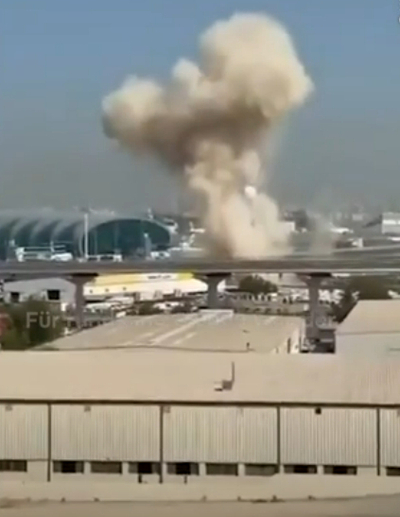
Since then, nothing has been the same in the neighboring United Arab Emirates with its strongholds of Dubai and Abu Dhabi, as well as in Bahrain, Kuwait, and Qatar. Iranian Shahed drones repeatedly struck the vacation and business centers of neighboring Arab countries, with grave consequences. The airspace over the entire region was closed, and visitors tried to get away as quickly as possible. Some countries sent charter planes to safe airports in Oman or Riyadh, Saudi Arabia, to fly their citizens out of the war zone.
In the long term, the damage to the well-maintained reputation of Dubai, Doha and other Gulf cities as hotspots of prosperity, leisure, and security, is likely to be more serious than the impact of some Iranian drones and missiles.
Image of a glittering metropolis has been tainted
Investors should invest, tourists should relax, and businesspeople should be able to do business undisturbed. This is how the Gulf states presented themselves at trade shows and in the international media, backed by paid influencers who sang the praises of the easy life there and lauded the limitless business opportunities. The fact, that the daily cleanup is mostly done by low-paid workers from Pakistan, India, or Sri Lanka, is widely ignored in the Gulf states’ own public image.
Resembling a ghost town
Air traffic is symbolic of the current standstill and expression of the shock which has befallen the Gulf rulers, paralyzing their business model with the tendency to erode it long-term. Meanwhile, some isolated passenger and cargo flights haven taken off again after days of airspace closures in the Gulf region. But the aura of a safe harbor for visitors, traders or foreign investors, and a well-working hub for transit passengers and air cargo shipments alike has been severely tarnished, to say the least. Currently, the metropolis of Dubai, which was vibrant just a few days ago, resembles more of a ghost town. And it wasn’t rainfall in the middle of last week that was to blame.
Maritime eye of the needle
To make matters worse, the conflict disrupted maritime traffic in the Strait of Hormuz, widely cutting the Gulf states off from supply. This narrow passage between UAE/Oman and Iran is a key corridor for global trade, through which about a quarter of the world’s crude oil as well as large quantities of liquefied natural gas and high volumes of fertilizers, are transported. There is no alternative to the passage.
The combination of military escalation in the Persian Gulf area and the ongoing threats in the southern Red Sea by Yemen’s Houthis, is creating a continuous risk zone along key maritime trade routes between Europe and Asia. Further escalation of the conflict poses significant risks to commercial shipping and aviation throughout the region and severely affects trade in the Gulf area with no end in sight.


Hey Heiner
It’s unfortunate that the countries in the Gulf region have been drawn into a conflict that isn’t their own. While some people have chosen to leave, conversations with friends still there suggest that, despite occasional disruptions to airline operations, daily life continues largely as normal. The international media coverage has been rather harsh, but the regional defense forces are doing an outstanding job, instilling a strong sense of confidence among residents. Having lived in Dubai for many years, I’m certain the city, and the country, will bounce back stronger than ever. Its proven resilience and ability to adapt to crises have always seen it emerge on top, and this time will be no different. Hopefully, reason will prevail, and this conflict will not be prolonged.
Best regards,
Ram