
While Lufthansa captured headlines in April 2026 with its centenary celebrations and the opening of Terminal 3 at Frankfurt Airport, a quieter but strategically significant development unfolded in Madrid.
Iberia, part of International Airlines Group (IAG), and CFM International announced the launch of a new maintenance facility for LEAP engines at Madrid-Barajas Airport. The move coincides with Amparo Moraleda’s appointment as Chair of Boeing’s Board, reinforcing Spain’s growing presence in the aerospace sector.
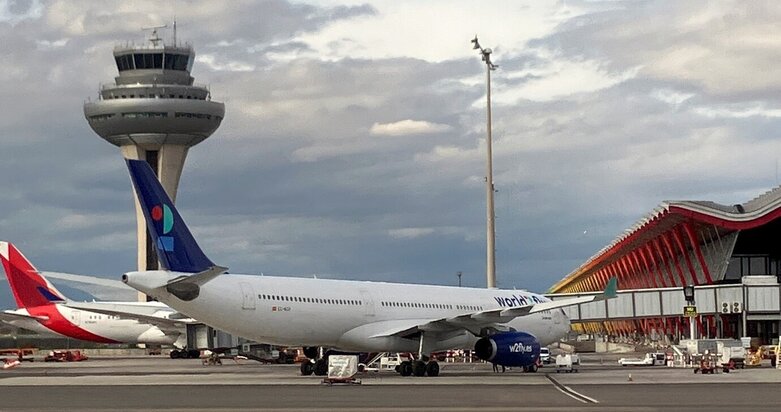
Madrid is unlikely to challenge Frankfurt’s position as Europe’s leading cargo hub. But it will take a piece of the power behind it, because Madrid is turning into a global aircraft engine maintenance hub.
The agreement grants Iberia a CFM Premier MRO (Maintenance, Repair and Overhaul) license covering both LEAP-1A and LEAP-1B engines. These engines are widely used across Airbus and Boeing aircraft. The airline is pursuing high-return investments and diversification amid geopolitical volatility and rising fuel costs.
With approximately 4,600 aircraft worldwide operating LEAP engines, demand for maintenance capacity remains high. CFM International has already established six specialized centers for LEAP engine maintenance, and the addition of Madrid expands that network further.
Iberia’s MRO division at La Muñoza spans around 220,000 m² across five hangars – four are located in Madrid and one is in Barcelona. The new capability will support IAG airlines – including British Airways, Aer Lingus, Vueling, and Iberia – as well as third-party carriers operating LEAP-powered fleets.
In addition to the agreement with CFM, La Muñoza will take on training for heavy maintenance of the Airbus A350 starting next October. This aircraft type plays a central role in the long-haul fleets of International Airlines Group.
The site will also support the transition of Vueling from a pure Airbus-based fleet toward Boeing aircraft, further reinforcing Madrid’s role within both Airbus and Boeing ecosystems.
Moving up the aerospace value chain
This expansion reflects a broader shift in Spain’s role within aviation. Historically focused on component manufacturing, the country is moving into higher-value segments such as maintenance and lifecycle support.
By servicing both Airbus and Boeing platforms, Madrid is positioning itself within a critical layer of the global aviation system – keeping aircraft operational in a market where availability is increasingly constrained.
Growing influence within Airbus
Amparo Moraleda is set to become Chair of Airbus in October 2026. For the first time in the company’s history, its leadership will not be dominated by France and Germany, but by Spain. The announcement has been positively welcomed by the local industrial sector, which understands the political and industrial weight of this appointment, as well as its potential influence on future aircraft programs, supply chain decisions, and defense and logistics platforms.
Moraleda brings extensive board-level experience across different industries, with a particularly strong background in technology, innovation, and international management. According to the Spanish newspaper, ABC, internal sources also highlight that the appointment reflects Spain’s strategic position within Airbus, together with the industrial footprint of Airbus’ Spanish subsidiary, which produces key structural components, hosts military aircraft assembly, and includes major R&D and engineering centers.
The real power shift in air cargo
Madrid’s MRO expansion will not redirect cargo flows directly, but it will increase usable aircraft capacity and reduce disruptions.
For forwarders such as DHL and Kuehne+Nagel, it will mean better capacity planning, fewer last-minute reallocations, and improved rate stability. This will translate into more stable operations and fewer network disruptions.
DSV is structurally positioned to benefit the most as it doesn’t own planes, and monetizes volatility rather than being constrained by it. Its operations are based on multi-layer procurement, combining local, regional, and global sourcing of capacity. Spain’s MRO expansion will reinforce its strengths by adding more routing flexibility, greater pricing leverage, and less dependence on any single hub.
Lufthansa Cargo, while not a forwarder, will directly be affected as a capacity provider, shifting part of the technical dependence away from Germany.
The link between where aircraft are maintained and where cargo must flow will become weaker, benefiting forwarders more than airlines or airports.
Even if Frankfurt is not always the most efficient routing option, it is often used because aircraft require maintenance and access to parts, minimizing downtime.
Airlines will gain efficiency as routing constraints tied to maintenance weaken. They will no longer be able to anchor traffic around maintenance bases. The same applies to airports, including Frankfurt, if aircraft can be serviced elsewhere.
Sweet spot Spain
Cargo will not move out of Frankfurt, or Germany. The airport’s geographic centrality in Europe ensures the shortest average trucking distances, supported by massive infrastructure such as Cargo City North and South, as well as strong intercontinental connectivity – particularly on high-profit Asia–Europe lanes. Airlines do not relocate easily, which further reinforces Frankfurt’s structural position.
The global shortage of maintenance capacity and engine bottlenecks is reflected in turnaround times that can stretch from weeks to months, with LEAP engines being a known bottleneck. Spain is inserting itself directly into this bottleneck, becoming relevant in a segment where Germany has strong engineering capabilities but does not dominate.
Madrid will handle more technical stops and maintenance-linked flows, attract Latin America–Europe cargo – where it is already strong – and act as a relief valve when Northern hubs are congested.
A shift toward deconcentration
The real threat to Frankfurt is not displacement. It is deconcentration.
Madrid is taking away part of the dependence on Frankfurt in keeping aircraft operational. And that matters.