
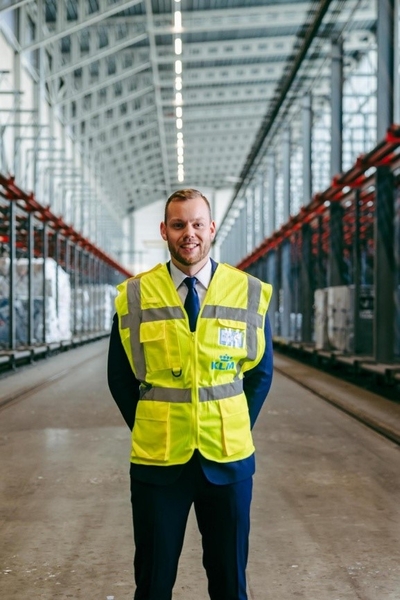
Every week, CargoForwarder Global’s ‘Spotlight On…’ gives the stage to an individual working in a particular segment of the industry, to showcase their function and demonstrate how varied career paths can be in air cargo. Airlines naturally play a central role in the industry, because without aircraft, there would be no air cargo. There are passenger airlines offering belly cargo, pure cargo airlines with freighter fleets and then there are airlines offering both. Air France KLM Martinair Cargo is one such example. The dedicated cargo arm of Air France-KLM offers belly capacity plus freighter lift and is often innovative in its approach to industry focus topics such as digitalization and sustainability. Today, Sean Wismann (SW), Business Development Manager at Air France KLM Martinair Cargo, takes us through his responsibilities and shares views and advice on getting into the air cargo industry.
CFG: What is your current function and company? And what are your responsibilities?
SW: I am currently a Business Development Manager within the Sales & Distribution team of Air France KLM Martinair Cargo. My role focuses on performance management and supporting our European markets, in close collaboration with central Pricing & Revenue Management teams, to optimize network performance across our Air France, KLM and Martinair operations. I also ensure alignment across teams on central developments such as digital innovations and network opportunities.
CFG: What does a normal day look like for you?
SW: A typical day revolves around connecting teams across functions to build a clear understanding of both micro- and macro-level dynamics across Europe. My week usually starts with reviewing industry developments, competitor activity, and key commercial successes from the previous week.
While there are recurring responsibilities, the focus of each day evolves depending on seasonal trends and emerging priorities, which keeps the role dynamic and engaging.
CFG: How long have you been in the air cargo industry, and what brought you to it?
SW: Following the Covid downturn, I transitioned from my previous role in aviation in the UK and reconnected with my Dutch roots. I began my cargo journey as a Commercial Support Executive at IAG Cargo in Amsterdam, where I gained hands-on experience across a wide range of activities, from quoting to strategic BSA negotiations.
I later moved to KLM as part of the AFKLMP Cargo Group and have now been working in air cargo for five years in a broader, more strategic role supporting our European markets.
CFG: What do you enjoy most about your job?
SW: What I enjoy most is the collaboration and problem-solving that comes with navigating new challenges. Whether a situation requires operational, digital, pricing or marketing adjustments, working together across teams to find the right solution is very rewarding.
I also value the opportunity to explore new business cases with our Network teams, which provides early insights into future developments for both Air France and KLM passenger networks as well as our full freighter operations. Above all, this is a people-driven industry, and the strong relationships built along the way are a big part of what makes the job so enjoyable.
CFG: Where do you see the greatest challenges in our industry?
SW: One of the key challenges is the ongoing transition of global freighter fleets, with many aircraft approaching retirement. At the same time, this creates opportunities for the next generation of aircraft, such as AFKLMP’s A350F, which are quieter, more fuel-efficient and capable of longer ranges.
These developments not only improve operational efficiency but also support broader sustainability ambitions and may enable access to new markets that were previously less viable.
CFG: What advice would you give to people looking to get into the air cargo industry?
SW: I would recommend starting with a solid understanding of the fundamentals of the industry: who the key players are, how forwarders operate, and core concepts such as tonnage, yield, and product segments. Having this foundation will help you stand out early on.
Gaining hands-on experience is equally important. Starting in an operational or support role allows you to understand the full process of moving freight from A to B and builds a strong base for future development.
Finally, don’t be guided by outdated stereotypes. The industry is evolving rapidly, with significant advancements in digitalization and sustainability. Air cargo plays a vital and distinct role within the aviation sector, offering many opportunities for growth.
CFG: If the air cargo industry were a film/book, what would its title be?
SW: It may sound lighthearted, but for me ‘Finding Nemo’ and the phrase “just keep swimming” comes to mind. The industry is constantly navigating challenges and disruptions, yet people consistently show resilience and creativity in finding solutions and keeping cargo moving against all odds.