
This maxim has held true since the days when Albert Ballin was CEO of the Hapag-Lloyd shipping line. In him, the globalization of trade and the exchange of goods found an early and staunch advocate. That was more than a century ago. Yet it remains true today, albeit on a vastly different scale in terms of volume and scope.
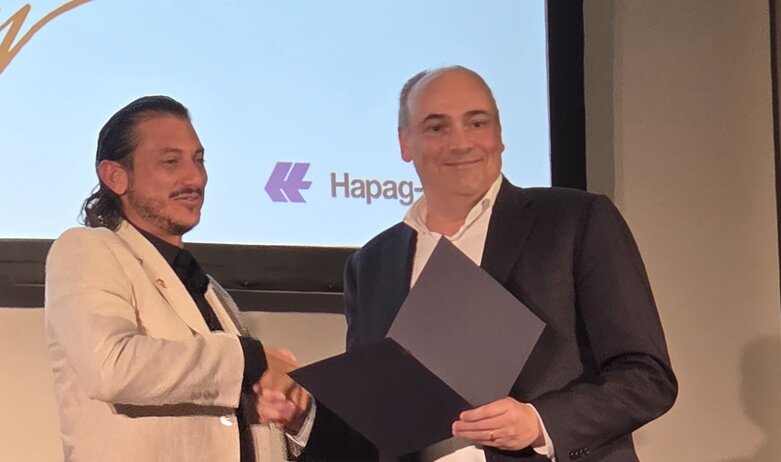
Hapag-Lloyd CEO, Rolf Habben Jansen recalled the long-term benefits of global trade, transport and division of labor for his company in his laudatory speech honoring Pedro Salazar, Founder and Director of the organization ‘Amigos del Mar’. The Colombian self-made man and his initiative were the main recipients of this year’s Albert Ballin Award for Outstanding Initiatives that benefit many, sponsored by Hapag-Lloyd. The award came with a generous prize of EUR 50,000. In addition, three further prizes were awarded to three outstanding young female scientists for groundbreaking pioneering work.
What would the world be without the single, by far most important mode of transport: the ship? An estimated 90% of all goods are transported by sea. Without shipping, supermarket shelves would remain empty, and vital raw materials such as oil, gas, ore and others could not be transported between origins and destinations. Construction materials for hotels planned to be built on an island, for example, would never reach the intended location.
Waste as a raw material
Which brings us to the topic of the ‘Albert Ballin Prize 2026’. The fact that Pedro Salazar was awarded the accolade is more a matter of chance. His original goal was to build a hotel as part of a beach club on the island of Tierra Bomba, off the coast of Cartagena, on the Colombian part of the Caribbean Sea. As he explained during the award ceremony, it was a child begging for food and beverages shortly after he had arrived at the island, that motivated him to familiarize himself with the location. For Pedro, the encounter was like a door opener to a different future. After careful consideration, he scrapped the hotel plans and founded the organization Amigos del Mar, which became deeply committed to coastal conservation and social development. A video clip played to the invitees at Hapag-Lloyd’s headquarters, clearly illustrated the multitude of initiatives the foundation has meanwhile kicked off.
Setting a positive example
The video shows a group of schoolchildren heading toward the beach, some of them carrying surfboards. As the children approach the waterfront, they begin picking up empty bottles, plastics and other waste. Their efforts are part of a project called ‘Olas Paz Programa’ (Clean Wave Project), which collects and transforms plastic bottles and bottle caps into surfboard fins. “The idea was that the people of Tierra Bomba, who had never removed plastic waste from the beach or recycled the items before, would start cleaning the seafront and turn waste into durable goods,” explained Pedro Salazar. In interviews with local media, he admits that “it is difficult in communities facing other challenges, to talk about pollution and try to change their minds on environmental issues”. Meanwhilehis Amigos del Mar have become ambassadors for a cleaner environment that is worth protecting and conserving. Although there is still junk on the island, the amount has been significantly reduced. Above all, however, the commitment of his organization – supported by numerous volunteers – is setting a positive example.
The prize awarded by Hapag-Lloyd will give the Friends of the Sea further opportunities to expand their scope of action, make a meaningful impact beyond the island, and thus contribute to a more respectful approach to nature. This concern was also emphasized in the brief speech by Yadir Salazar-Mejia, Colombia’s ambassador to Germany.
Three more prizes
In addition to the main prize, three further awards were presented to young female scholars at the Ballin Symposium. Clara Baumann received an award for her in-depth analysis of Latin America’s shifting dependencies on Chinese investors, which are no longer one-sided. Bertille James examined the European Community’s relations with China between 1978 and 1989, focusing on new expectations and their impact on EC decision-making. Finally, Marlene Gärtner presented her dissertation on the role of narratives in African societies and the consequences for their migration behavior, using Cameroon as a case study. The conclusion in a nutshell: Cameroonians still view Europe as a paradise, even if not every migrant has found happiness there.
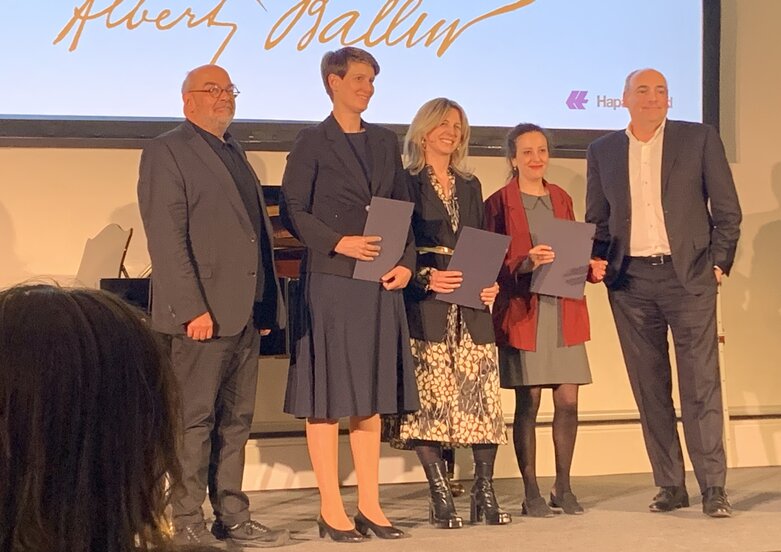
Each of the award winners received EUR 5,000 for their scientific works.