For years, ONE Record has been presented as the future of digital air cargo. It featured in conference presentations, pilot projects and industry roadmaps, but for many airlines and freight forwarders it remained just a vision. This is about to change.
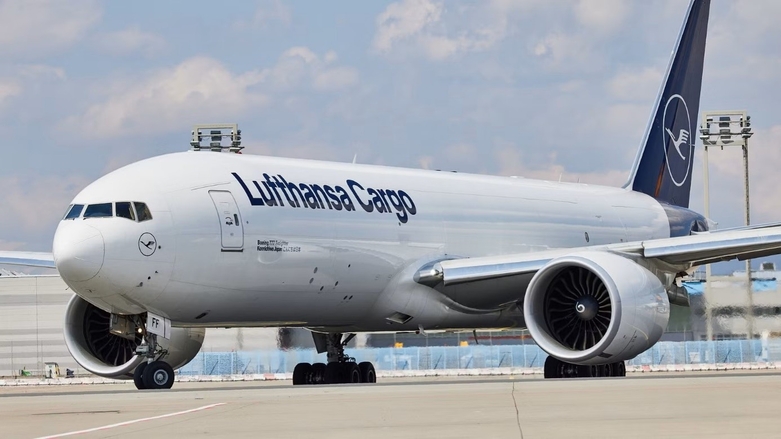
Lufthansa Cargo, together with WiseTech Global and IBS Software, has successfully completed one of the first large-scale production implementations of IATA’s ONE Record standard. Freight forwarders using CargoWise can now seamlessly exchange records with Lufthansa Cargo’s operational systems, and vice versa, via the IBS ONE Record Server
At first glance, this looks like another IT milestone. In reality, it could mark the beginning of a much bigger transformation.
More than a new data standard
For decades, air cargo has relied on message-based standards such as Cargo-IMP and Cargo-XML. While they enabled digital communication, they were designed for an industry that exchanged information through individual messages rather than through continuously shared data.
Today’s supply chains have become far more complex with shipment data often duplicated across multiple systems, while every stakeholder may be working with a slightly different version of the same software.
ONE Record replaces this fragmented approach with a single, standardized shipment record that can be securely shared via APIs. Instead of exchanging messages between disparate systems, authorized partners work with the same live dataset throughout the transport process.
From pilot projects to daily operations
What makes this project particularly significant is that it moves ONE Record beyond demonstrations into live production.
Shipment records created within CargoWise are now successfully processed inside Lufthansa Cargo’s operational environment through IBS Software’s ONE Record platform. It proves that standardized shipment data can flow seamlessly between freight forwarders and airlines in day-to-day operations instead of controlled pilot environments. This is an operational step change because implementation (not technology) has always been ONE Record’s biggest challenge. The standard has existed for several years but industry-wide adoption has been lacking. The joint announcement from Lufthansa Cargo, WiseTech Global, and IBS Software suggests the industry may finally be reaching the tipping point.

The industry Is catching up
IATA officially introduced ONE Record as the preferred standard for air cargo data exchange in January 2026 ( https://cargoforwarder.eu/2025/09/21/one-record-building-momentum-for-2026/ ) encouraging airlines, freight forwarders, and technology providers to move away from traditional messaging standards toward API-based data sharing. The association now supports implementation through industry working groups and an expanding network of production projects.
Momentum is clearly building, with more airlines investing in ONE Record connectivity. Technology providers are integrating the standard into their platforms, and freight forwarders are beginning to see practical business benefits beyond regulatory compliance.
The real challenge starts now
Technology alone will not transform air cargo, industry experts hold. ONE Record can only rise to its full potential if airlines, forwarders, handlers, and technology providers adopt common standards and commit to sharing data across organizational boundaries.
This requires investment, trust, and a willingness to rethink long-established processes.
Legacy systems will not disappear overnight, and hybrid environments will remain part of the industry for years. But the direction is becoming increasingly clear.
For a long time, the question was whether ONE Record would become the industry’s digital standard. That question is gradually being answered. The more relevant question now is how quickly the rest of the industry will follow. Because digital transformation in air cargo is no longer just about replacing paper. It is about creating a connected data ecosystem capable of supporting the next generation of intelligent logistics.