
DHL Express has further expanded its air freight network to and from China by adding an additional cargo flight between Shanghai and Brussels. At the same time, the integrator announced the opening of a large hub in Shenzhen. Construction costs amounted to €177 million, DHL’s largest investment in mainland China to date.
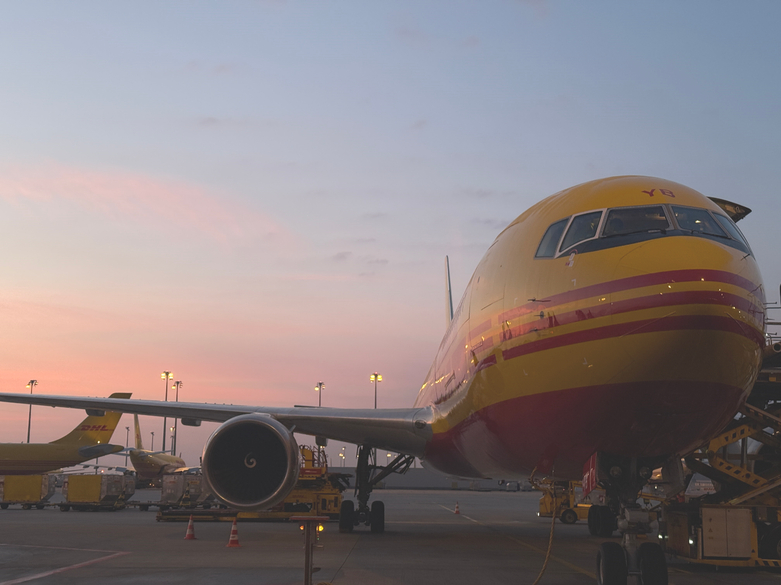
To start with, the new Shanghai-Brussels flights are operated by DHL Air UK who provide the B767 freighter aircraft, offering a capacity of 50 tons. The route includes stopovers at Bangkok and Bahrain on way to Brussels. Does it stop in the same places on the way back, or is that leg direct? “Thailand is an important growth market in East Asia, so are Indonesia and Vietnam. That’s why it makes sense for us to integrate the country more closely into our flight network,” a DHL spokesperson emphasizes, responding to a query from CargoForwarder Global.
Diverse product portfolio
The freighter aircraft enables greater schedule flexibility and increases uplift opportunities for heavier shipments moving across key trade lanes. In addition, the cargo flights support the company’s growing Heavyweight Express offering, enabling customers to move larger shipments through the DHL Express international time-definite network with door-to-door visibility, customs clearance and predictable transit times. Demand is growing among customers in sectors such as technology, industrial manufacturing, semiconductors, healthcare, data center infrastructure, and new energy, many of which rely heavily on manufacturing and supplier networks in China and across Asia, reads a DHL release.
Cargo is like water. It always finds a way
“Global supply chains continue to adapt to changing economic conditions, geopolitical disruption and evolving customer requirements,” states John Pearson, CEO of DHL Express. The executive went on to say: “Our focus is on ensuring customers have the flexible, reliable and high-quality logistics networks they need to connect with suppliers, production locations and consumers around the world. These investments enhance the connections between China and global markets and reinforce DHL’s role as the logistics partner of choice for international e-commerce and fast-growing sectors such as data center and semiconductor logistics, life sciences and healthcare and new energy.” Although supply chains are becoming increasingly diversified, China remains an important hub for manufacturing, sourcing, innovation, and consumption, and continues to play a significant role in international trade and regional supply chains, the integrator stresses. Consequently, DHL Express has expanded its logistics infrastructure and air network in China, strengthening its ability to support customers operating in, and trading with, one of the world’s largest manufacturing and consumer markets.
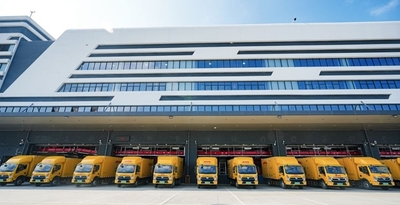
Shipments travel from SZX to HKG and vice versa
As part of this expansion,the integrator has grown its “Super Gateway,” located at Shenzhen Bao’an International Airport, by tripling its processing capacity to approximately 900 tons per day. Serving one of China’s most important manufacturing and export regions, the facility supports growing cross-border trade, e-commerce shipments, and time-definite international express services. The gateway will also create more than 1,000 jobs and further strengthen DHL’s network capabilities in Southern China. The flow of shipments to international destinations is routed through the neighboring Check Lap Kok Airport in Hong Kong (HKG), which is only 28 km away from Bao’an (SZX).
“China plus one (or two)”
Despite growing political concerns by Brussels and Washington, China remains an important hub for manufacturing, sourcing, innovation, and consumption, and continues to play a significant role in international trade and regional supply chains. However, the freighter’s stopover in Bangkok also shows that DHL doesn’t put all its eggs in one basket. Relying solely on China as a production center would be unwise given the ongoing geopolitical uncertainties and Beijing’s continued threats to invade Taiwan. To minimize risks, the integrator favors the “China plus one” strategy. The “ones” could be either Thailand, the Philippines, Indonesia, Malaysia or Vietnam.