
The answer depends on the criteria used for the ranking. These could include profitability, geographic reach and network footprint, or the brand value that analysts attribute to each logistics provider. From this perspective, there is no clear number one in global logistics. What applies equally to all three, however, is that they are all facing headwinds – to varying degrees – due to U.S.-imposed tariffs, geopolitical tensions, and supply chain disruptions.
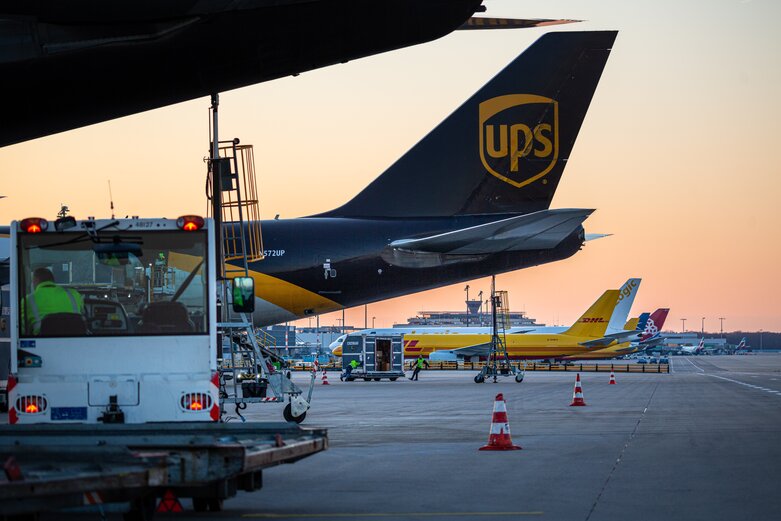
A renowned analyst that constantly keeps a close eye on the logistics industry, is London-based Brand Finance, one of the world’s leading brand valuation consultancies. According to its latest survey, U.S. integrator, UPS was able to defend its position as the most valuable logistics brand in the first half of 2026 – a title it has held continuously since 2015 – despite an 8% dip in brand value since JAN26. The decline stems primarily from the decision made by UPS management two years ago, to reduce its dependency on Amazon, by cutting down more than 50% of Amazon’s shipments since the parcels are high-volume but margin dilutive. The last-mile packages and parcels kept clogging its sorting facilities and generated lower profits than longer-range deliveries.
Profits come first
Therefore, UPS was willing to sacrifice its near-term revenue to stabilize its long-term margins. Amazon has been UPS’s largest customer for nearly 30 years and contributes almost 11% of the integrator’s consolidated revenue. Meanwhile, the courier giant aims to focus more on profitable ventures such as healthcare logistics, which generated more than USD 11 billion in the brand’s 2025 revenue.
According to Brand Finance’s latest survey, UPS’s rival, FedEx ranks second in brand value. The company’s sustained performance can primarily be attributed to the success of its cost-efficiency strategy, which has enabled it to weather most of the headwinds facing the U.S. package delivery company and the industry as a whole. The cost-cutting program announced in JUN25, through which FedEx saved USD 5 billion, significantly improved the service provider’s financial situation, followed by a similar savings initiative in MAY26, that reduced costs by an additional USD 1 billion. At the same time, FedEx expanded its revenue channels and solidified its position within the industry as its spin-off brand, FedEx Freight, was established as a new publicly traded company on 01JUN26.
Yet, global presence is just as important
In terms of reach, volume of shipments, and local presence, DHL remains clearly ahead of UPS and FedEx. Last year, the Deutsche Post subsidiary generated revenue of USD 96.9 billion (UPS: USD 88.7 billion, FedEx: USD 82.5 billion). DHL runs own stations in 220 countries and is the logistics provider with the highest revenue in its core markets Europe, Asia-Pacific, the Middle East, and Africa. Rivals UPS and FedEx, on the other hand, generate a significantly higher share of their revenue in the domestic U.S. market, where they offer large-scale coverage through their own stations.
Upstarts are knocking on the door
However, the current ranking of logistics companies is likely to shift soon, as new heavyweights are emerging in China. Together, SF Express, China Post, and Jingdong Logistics already account for 14% of the sector’s total brand value. Particularly impressive is the upswing of SF Express (brand value: USD 6.3 billion), which has remained steadfast amid industry-wide headwinds this year. This is partly thanks to its partnership with cargo aircraft provider, AIR ONE, which enabled SF Express to expand its routes into Europe and broaden its global network. The partnership also streamlines transit times while supporting rising trade and logistics demand between the Far East and Europe.
Last, but not least, the Danish company, Maersk, and CEVA Logistics from Marseilles/France, must also be mentioned. In addition to their core maritime business, both now operate freighter fleets similar to their direct competitor, MSC from Switzerland. CEVA and Maersk, in particular, are on track to securing a place among the top five largest logistics companies, unless the global economy faces a fundamental crisis.