
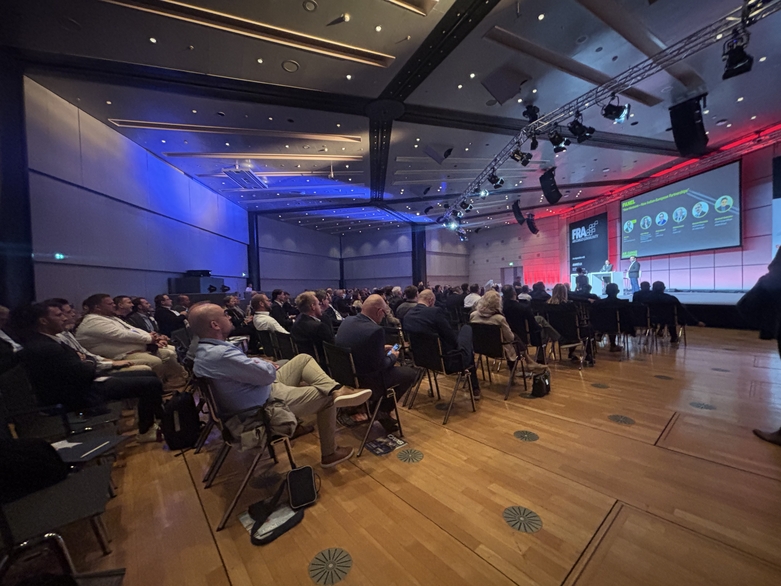
The 11th Air Cargo Conference in Frankfurt, which ran from 02-03SEP26, set its spotlight on an industry that is undergoing significant structural change. Over the two days, the discussions focused on market resilience, global trade, digitalization, artificial intelligence, security, automation, and the competitiveness of the European air cargo sector, including Road Feeder Service. At the event, a kaleidoscope of exciting topics was presented, and new developments were outlined by industry experts.
A clear message throughout the conference was that the future of air cargo will not be shaped by a single technology or market trend. Instead, competitiveness will depend on the industry’s ability to combine operational excellence with digital innovation, resilient infrastructure, strong partnerships and highly reliable customer service. At the same time, industry is facing a fundamental challenge: how to increase efficiency and intelligence without creating additional complexity, energy demand or operational dependencies.
Highlights
The conference focused on the following key topics:
- Trade between India and Germany, and emerging India–Europe partnerships as a growing strategic opportunity with long-term potential.
- Innovation pitches demonstrated that AI innovation is becoming an integral part of the air cargo system. These included digitalization and data-driven solutions that deliver measurable operational and commercial value, and practical solutions that can be integrated into daily operations.
- Cargo security and premium services with insights from DHL and Fraport, demonstrating the need for close cooperation across the entire supply chain. Customers expect reliability, discretion, professional expert handling and seamless communication in addition to physical security.
- Air cargo competitiveness and supply chain resilience and flexibility. Why it is key to respond quickly to changes in global markets, adapting to disruptions and customer requirements.
- Ground connectivity and the critical role of trucking, challenges and operational issues inside and outside the airport fence, directly linked to the performance of surrounding infrastructure. Better coordination between all stakeholders is paramount to overcoming existing loopholes.
- Data as a competitive asset – a use case demonstrated that data is moving from being a by-product to becoming a strategic asset.
- AI is becoming a major opportunity for the air cargo industry but needs clear business objectives, reliable data exchanges, appropriate technology, operational readiness, and measurable ROI. It was one of the strongest topics at the conference.
- Another was robotics which is moving from concept to reality. The most promising approach is likely to be human-machine collaboration, rather than simply replacing human labor.
Conclusion
The Cargo Conference Frankfurt 2026 evidenced that industry has reached an important crossroads. Air cargo remains essential to global trade, but the competitive environment is becoming more complex and technology driven. Adverse geopolitical factors such as the Hormuz Strait conflict, which has driven fuel prices to new heights; Russia’s ongoing attack on Ukraine and Putin’s hybrid war against Europe; the Trump administration’s erratic tariff policy; and extreme weather conditions resulting from global warming pose immense challenges for the air freight and logistics industry. Added to this are fundamental changes of the industry through robotics, AI and digitalization. Growing labor shortage across much of Europe, particularly in land transportation, poses another risk for supply chains. This bottleneck is likely to worsen in the coming years because truck drivers don’t grow on trees.
Despite these and other challenges, the general consensus at the event was that against all odds, the aforementioned conditions for Frankfurt and the wider European air cargo market do offer significant opportunities. The reasons for this are Frankfurt Airport’s central geographic location, close-knit regional and intercontinental air networks, an experienced workforce, and opportunities for setting up new warehouses within the airport fence.
The next ACCF – it will be the 12th since Frankfurt’s Air Cargo Community was founded – is scheduled to take place again in early September of next year.
Isabella Zoerner