
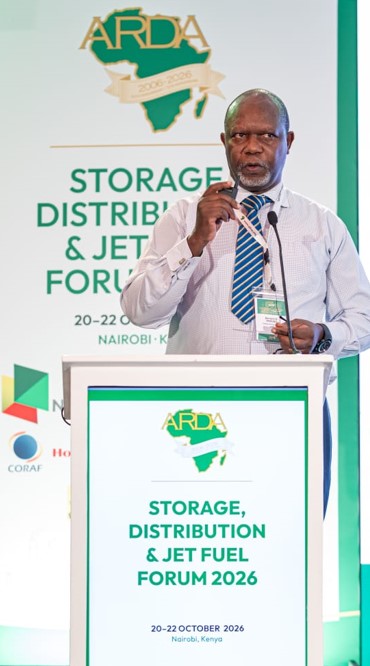
At the African Refiners and Distributors Association (ARDA) Storage, Distribution & Jet Fuel Forum 2026 in Nairobi (20–22OCT26), a framework addressing a critical bottleneck choking African aviation was presented: fuel security and refining infrastructure. This article sets out that analysis, with particular attention to what it means for air cargo.
Policy frameworks – Single African Air Transport Market (SAATM), with 38 signatory nations, and the African Continental Free Trade Area’s (AfCFTA) 90% tariff elimination target – are expanding continental trade potential. But the missing link remains downstream energy infrastructure. For cargo operators, forwarders and perishable exporters, that deficit translates directly into inflated costs, supply chain vulnerability and compliance exposure.
The Operational Paradox
Africa holds 18% of the global population but generates just 2% of worldwide air traffic. IATA projects passenger demand growing 3.6% annually through 2050, with intra-African routes at 4.9% — the fastest globally. For 16 landlocked nations, air freight is the only viable trade corridor.
African carriers face three structural disadvantages. First, a 17% fuel premium on Jet A-1, driven by reliance on imported distillates and single-corridor routes. Second, reserve fragility: Gulf corridor disruptions left Johannesburg with only five days of cover. Passenger airlines face delays; cargo operators face cancelled consignments and contractual penalties. Third, cold-chain exposure: at Nairobi JKIA, where daily burn reaches roughly 2.9 million liters, a fuel shortfall breaks the cold chain outright. Perishable freight cannot be warehoused or rebooked without total loss of value.
Pricing Mechanics: The West African Pivot
A central argument was the shift from European price benchmarking to localized discovery. On 01JUN26, Platts (S&P Global Energy) launched a daily FOB West Africa assessment for jet fuel meeting DEFSTAN 91-091 specifications ***1), time-stamped 16:30 London in $/mt and reflecting 20,000–40,000 mt cargoes loading out of Lekki and Lagos. Complemented by the established STS Lomé offshore assessment***2) for 5,000–10,000 mt parcels, these benchmarks eliminate unnecessary European freight netbacks for African buyers.
Platts data also shows Nigeria’s Dangote Refinery — expanding from 650,000 to 700,000 b/d — re-orienting middle distillates toward regional hubs. With West Africa–Europe freight rates spiking, Dangote priced coastal offers at small discounts to STS Lomé, shipping direct to South Africa (45,000 mt) and Namibia (46,000 mt) to cover acute regional tightness.
Upstream Blending and Hydrant Limits
As refiners expand — Dangote’s distillates, Ethiopia’s $12.5 billion Bishoftu hub, Egypt’s 200,000-tonne Bio-SAF Suez facility, and Kenya Airways’ €60–70 million MoU with multinational RUBiS SCA standards, which focus on environmental safety, industrial risk mitigation, and structural certifications, dictate where blending occurs. Pure SAF must be blended upstream at the refinery with fossil Jet A-1 to produce Semi-Synthetic Jet Fuel certified to ASTM D1655 ***3) Gateways like JKIA are engineered for bulk storage, not inline chemical blending.
Cargo is the offtake anchor. Refiners will not finance upstream blending without guaranteed throughput, and JKIA’s ~2.9 million liters daily makes cargo operators and perishables exporters the demand anchor that renders refinery investment bankable.
The SAF Compliance Trap
The EU operates volume-based mandatory mandates — 2.0% in 2026, 6.0% by 2030 (including 1.2% PtL), scaling to 70% by 2050 under ReFuelEU. The UK is energy-based: 2.0% in 2026, 10.0% by 2030. Germany mandates 0.5% PtL. The U.S. relies on supply-side tax incentives without penalizing uplift.
The consequence is a 4–7x price multiplier: carriers uplifting at EU airports must buy SAF at four to seven times conventional Jet A-1. African airlines lack the scale and subsidies to absorb this. As previously warned, if regional carriers are financially weakened by European mandates, local refiners lose their primary anchor offtakers. Cargo operators, running thinner margins than passenger lines, risk losing volume to foreign hubs if costs are passed to shippers.
Monetizing Attributes, Building Resilience
Book & Claim (SAFc) accounting lets African operators keep locally refined physical fuel on the continent while selling environmental attributes to global corporations for hard currency — avoiding the value-destroying cycle of exporting raw feedstocks only to buy back processed SAF at inflated rates. Carbon credits from waste feedstocks require a government Letter of Authorization; as described in the presentation, “No LoA = No Transaction Clarity.”
COVID-era lessons now shape resilience architecture: contracted continuity for essential cargo flights during commercial groundings; Book & Claim revenue continuity when physical uplift plummets; joint Health, Energy and Transport ministry governance from Day 1; and expanded on-site storage at key cargo hubs.
Closing the Gap
Drawing on 31 years in the sector – 18 across Eni, Shell and TotalEnergies, plus 13 in sustainability consulting – I framed the solution around three pillars: technical experts (JIG, IATA, ICAO, refiners) provide the standards; policy architects (SAATM, AfCFTA) provide the market; financial institutions provide the capital. What was missing was an operating manual connecting them into bankable deals – now addressed by The Fueling African Aviation Trilogy, recognized by Germany’s aireg at ILA Berlin as a world-first practitioner text.
For African air cargo to convert its 4.9% growth forecast into durable capacity, refiners, airport authorities and forwarders must align around localized refining, Platts-indexed pricing, upstream SAF blending and Book & Claim trading.
Physical fuel stays on the continent; green attributes bring foreign value home.
***1) Defence Standard 91-091 outlines the specifications for aviation turbine fuel, particularly Jet A-1.
***2) The STS Lomé offshore assessment refers to the daily commodity price and market evaluations for ship-to-ship (STS) petroleum product transfers conducted in the offshore anchorage zone of Lomé, Togo. ***3) ASTM D1655: The baseline specification for conventional, petroleum-derived commercial aviation turbine fuels (Jet A and Jet A-1).
Author:
Bernard Onguso, Kenya-based Independent Aviation Energy Strategist