

The latest news from California is likely to have been noted with interest by Airbus, Boeing, and China’s state-owned company Comac. Two newcomers are on the verge to turning their blended wing aircraft from vision into reality. Their names: Natilus from San Diego and JetZero from Long Beach. Both have a similar focus: designing delta wing aircraft for next-generation passenger and cargo transport.
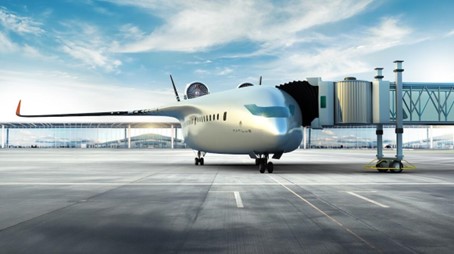
With their latest announcements, both newcomers are throwing down the gauntlet to established aircraft manufacturers that keep sticking to traditional tube-and-wing jetliners. Should their models be commercially successful, it would significantly increase the pressure on Airbus and Co. to develop blended wing aircraft themselves. And that point in time is not far off anymore. Seen by the cargo version KONA developed by Natilus that is expected to fly within the next 24 months. Currently, the developer is actively pursuing FAA Part 23, Amendment 64 certification for its blended wing aircraft and is determining a location for a new 23,225-square-meter manufacturing facility to build 60 KONA freighters per year, the company reports.
There is no shortage of investors
Progress is also being made in financing the development programs. Natilus has closed a US$28 million Series A round led by Draper Associates with participation from Type One Ventures, The Veterans Fund, and Flexport. And new investors are taking notice, including New Vista Capital, Soma Capital, Liquid 2 VC, VU Venture Partners, and Wave FX.
The fundraising is complemented by a PR offensive initiated by Aleksey Matyushev, co-founder and chief executive of Natilus: “There’s a shortfall of 15,000 commercial airplanes. We need to modernize the United States to build a modern Original Equipment Manufacture [OEM]. We bring cutting-edge technology to increase the product margins while increasing the manufacturing base in the United States.”
Demand is remarkable
According to its website, the frame maker has collected 570 orders from commercial airlines for its blended wing aircraft worth an aggregate of US$24 billion. It presented and operated a prototype last year and conducted testing, giving customers confidence in its program.
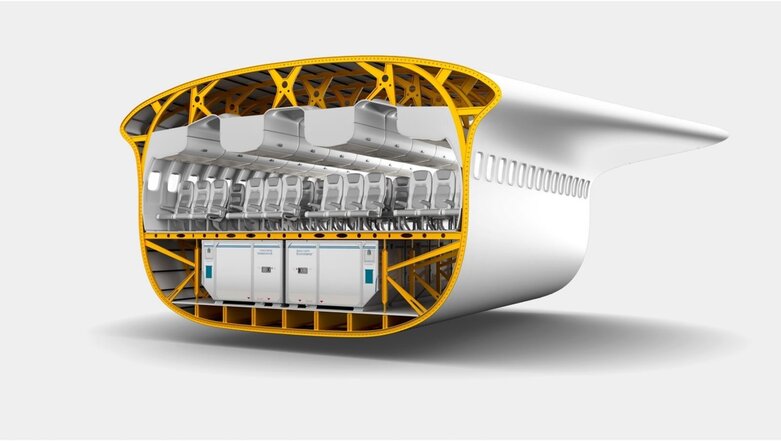
Meanwhile, Natilus has introduced significant design changes to its passenger aircraft HORIZON EVO. The updated version of the variant shifts from a single-deck to a double-deck configuration. This allows air freight to be taken on board, ups revenues, speeds up turnaround times while maintaining compatibility with existing airport infrastructure.
HORIZON EVO is designed to accommodate up to 250 travelers as well as standard cargo containers. It combines the ability to carry both passengers and freight at lower fuel burn. Natilus aims to achieve FAA certification for the EVO and launch commercial flights in the early 2030s.
JetZero claims to set a new benchmark with its Z4
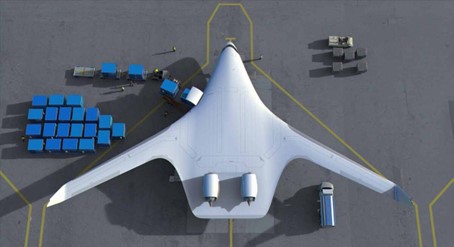
Simultaneously, Aerospace startup JetZero from Long Beach has also successfully tapped into new sources of funding. The newcomer has raised approximately US$175 million in its Series B financing, led by global multi-stage investment firm B Capital. 3M Ventures, United Airlines Ventures, Northrop Grumman, Trucks VC and RTX Ventures, the corporate venture capital arm of RTX, participated in the round. Thanks to the new capital, JetZero can speed up the development of a prototype expected to achieve 30% improved aerodynamics compared to traditional aircraft.
Long range at cheaper costs
“JetZero is redefining aviation with its all-wing aircraft, setting a new benchmark for efficiency, cost and the passenger experience,” stated Jeff Johnson of investor B Capital. “As aviation faces rising emissions and fuel costs, the need for a step change in efficiency has never been greater. JetZero is positioned to reshape the industry, and we’re proud to partner with the team as they advance this groundbreaking technology.”
According to the manufacturer, the Z4 can transport 250 passengers over 9,000 kilometers – equivalent to a nonstop flight from San Francisco to Frankfurt – with significantly lower fuel consumption compared to today’s aircraft variants. The company has not disclosed the role air freight plays for the configuration of its aircraft.
JetZero further announced to set up a plant in Guilford County, North Carolina, to manufacture its Z4 jetliner, creating up to 14,500 jobs. Its design studios will be kept in Long Beach.