

The World Bank has bid farewell to its Lead Air Transport Specialist, Dr. Charles Schlumberger. After 27 years with the financial institution, he left on 01JUL26, to become head of the Guatemalan project developer, consulting firm, and agribusiness, Grupo Integral Basilea S.A. Symbolically, it is a leap from the lofty heights of the UN affiliate to the branches of Central American coffee bushes.
With Schlumberger’s departure, the World Bank loses one of its most profiled experts in air transportation and logistics. When he started his career in the late 1990s, there was no dedicated air transport practice at the World Bank. “Building and developing it into a recognized area of development work has been one of the great privileges of my professional life,” he says in retrospect, in a farewell letter to the staff and members of the press who have been in constant or occasional professional contact with him.
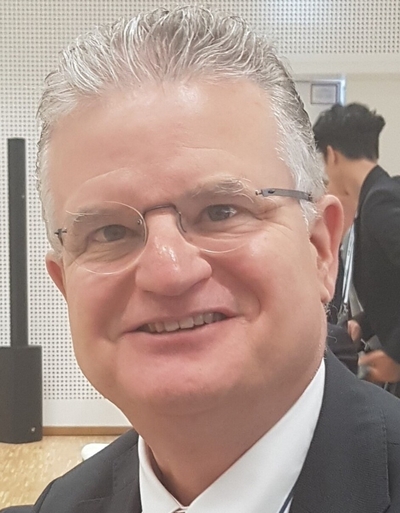
The World Bank relies on efficient cargo services
In SEP22, the Swiss-born executive illustrated the practical role that air freight plays for the World Bank in a presentation to members of the Frankfurt Air Cargo Community and the press. Without reliable and fast air freight transport of machinery, equipment, or instruments, some of the projects funded by the World Bank – such as infrastructure developments in Africa or Central Asia, as well as improvements to the water supply for people in arid regions – would come to a standstill. In this regard, the UN subsidiary has set a goal of creating a network by 2030, to ensure a secure supply of potable water for 400 million people in areas that are currently underserved. Without a network of functioning supply chains spanning continents, such projects would not be possible.
A multitude of projects
In the aviation sector in particular, the modernization of airport infrastructure is a key focus of the financial institute. For example, it funds a program enhancing the safety, security, and operational reliability of Rurrenabaque Airport (RBQ) in Bolivia. This regional hub, equipped with two runways, is located in the northwest of the country and provides passenger and cargo connectivity to other parts of the Andean state.
In Africa, one of the World Bank’s top goals is the decarbonization of the aviation sector through the scaleup of Sustainable Aviation Fuels. The initiative comprises three key components: (1) scoping SAF development opportunities and conducting deep-dives in selected countries using a robust screening methodology; (2) engaging stakeholders and building partnerships, particularly through support to ICAO’s net-zero goal and capacity-building platforms; and (3) assessing and bridging financing gaps, exploring both traditional and innovative mechanisms to mobilize investment in SAF infrastructure and policies.
A third example among many, illustrating Schlumberger’s world-spanning projects, is the modernization of Tajikistan’s aviation sector. There, the World Bank finances parts of the country’s reform agenda aimed at transitioning air traffic to an Open Skies regime. Building on a preceding diagnostic, this final phase focuses on liberalizing the market and enhancing sector performance through targeted reforms.
Taking a coffee break in Guatemala
Charles Schlumberger will monitor the results of this and many other World Bank programs in the aviation sector – which he has overseen or helped launch – from his office in Guatemala City, “where I will take over the management of Grupo Integral Basilea S.A., a company active in sustainable agriculture, tourism, and advisory services. While I may spend a bit more time around coffee plants than airports, I intend to remain professionally engaged and will continue to provide advice and support on aviation, connectivity, infrastructure, and development issues, whenever opportunities arise. After all, once aviation gets into your bloodstream, there is no known cure.” Christopher J. De Serio will succeed him as head of the World Bank’s Air Transport Team. Chris holds an MA in Transportation Policy, Operations and Logistics from George Mason University, Virginia and a BA in Political Science from Clemson University, South Carolina. So “the World Bank’s aircraft remains safely airborne, the flight plan is filed, and a highly qualified pilot is taking over control,” is stated in the last sentence of Schlumberger’s farewell letter.