Home Blog Page 186

Lufthansa Cargo – small cracks, big noise

0

Boeing and the increasing number of MAX incidents send their regards. If there are technical problems with an aircraft or even minimal safety-relevant issues are spotted, some media switch to alarmism. After all, this increases the number of clicks, and their brand ends up at the top of Google or other search machines. This is also the case here.

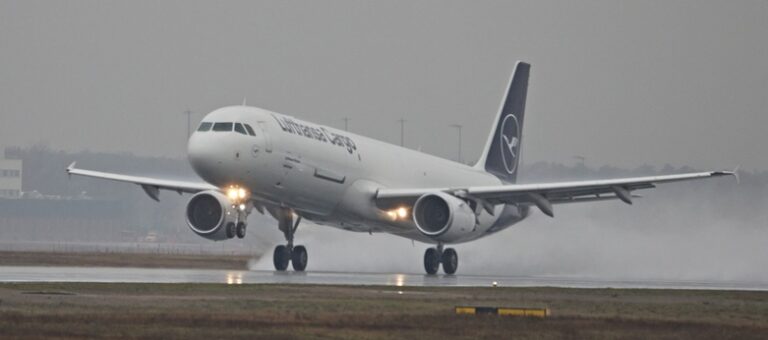
Two of the four A321 freighters operated by LH CityLine on behalf of Lufthansa Cargo are currently being repaired due to cracks  –  courtesy LHC

Here is what happened: A tiny crack was discovered on the aft section of one of the freighters in Lufthansa Cargo’s A321P2F four-unit sub-fleet. This occurred during one of the obligatory technical checks, i.e. during a routine inspection.
As a result, the three remaining freighters of this Airbus type which belong to Lufthansa Cargo’s regional fleet, but are operated by the Group’s subsidiary, City Line, were also immediately inspected. The outcome: a similar problem was discovered on a second freighter. Consequently, the aircraft was promptly taken out of service to rule out any risks and enable the damage to be rectified.

Only minor effects on the regional network
So far, so normal. It is currently unclear how long the repairs will take. According to Nicole Mies, Lufthansa Cargo’s Head of Communications, her company expects the first aircraft (D-AEUC) to be repaired within the planned layover time. She did not deliver any time estimate as to how long the fixing and overhauling process of the second aircraft might take.
Both freighters are now being repaired with only a very limited number of flights needing to be cancelled, leaving little impact on Lufthansa Cargo’s regional European network. This is currently even less of an issue since freight volumes are always relatively low at the start of a new year. 
Ms. Mies went on to say that the cracks had resulted from a weight shift affecting the aircraft, since a heavy new cargo door had been installed in the rear section of the fuselage to enable the fast loading and unloading of shipments.
Asked who will foot the bill for the repairs – whether this will be the lessor, Lufthansa Cargo, the converter, or an insurance company – she remained tight-lipped, stating that “Lufthansa Cargo does not provide any information on financial matters.”

One aircraft, many lives
The above-mentioned D-AEUC freighter has had an eventful history. It initially belonged to the Air Berlin fleet and was subsequently passed on to the Austrian subsidiary, Niki, when Air Berlin bit the dust. After that, it was bought by Lufthansa and operated by Lufthansa subsidiary, Eurowings. Finally, it was sold to San Francisco-based lessor, Babcock & Brown Aircraft Management (BBAM), which had it converted into a freighter in Singapore by the local conversion company ST Aerospace and Airbus. Since spring 2022, Lufthansa Cargo has been operating the leased aircraft on scheduled services within its regional network, which also includes North Africa. This also applies to the three other leased A321-P2F freighters.
To conclude: compared to the massive Boeing 737 MAX problems mentioned before, these two routinely discovered cracks should not be a real cause for any alarmism.

AeroLogic: FRA flights have been upped
Asked about the role of freight carrier AeroLogic, a DHL Express/Lufthansa Cargo JV (50/50%), Ms. Mies said that the former work-sharing model had been abolished. Originally, the Deutsche Post subsidiary used AeroLogic’s B777-F exclusively on weekdays for services originating and ending in Leipzig, its largest global hub. On weekends or public holidays, however, Lufthansa Cargo utilized the capacity of the AeroLogic B777F fleet for its own purposes, with flights beginning and ending at its home base, Rhine-Main Airport.
This logical but somehow relatively rigid operational model was already skipped back in 2019, Ms. Mies confirmed, resulting in a shift of some of the freight carrier’s B777F flights from Leipzig to Frankfurt. Yet, this operational adjustment has never been officially communicated to date.

Italian Post and Railway face privatization

0

The rightwing Meloni government which took power in OCT22, intends to privatize key Italian service providers. This would be a breach of her program presented during the electoral campaign. In Meloni’s appearances and speeches, the party leader of the far-right Fratelli d’Italia party placed great emphasis on securing existing state assets and infrastructure in logistics and transportation. However, now she has made a U-turn. In addition to the Poste Italiane, she also plans to partially privatize the State Railways, Ferrovie dello Stato, as declared last week.

The Italian Postal Service operates four B737-400 freighters  –  credit: Poste Italiane

The State should control what is of strategic interest, but this does not mean it should close the door to private investors or attractive market initiatives, Ms. Meloni pronounced at a recent press conference. On this occasion, the head of State identified two logistical heavyweights that her government is willing to open up to private investors: Poste Italiane and Ferrovie dello Stato.

Eying private investments
The Italian Postal Services already includes private capital since investors hold 35.74% of the company’s capital shares. The other owners are the Finance Ministry (29.26%) and the Cassa Depositi e Prestiti, which is controlled by the Ministry of Finance, holding 35% in Poste Italiane. Hence, either the savings bank or the Finance Ministry would have to sell parts of their shares, perhaps even both. So far, Meloni has not revealed any detailed plans about the greater involvement of private capital advocated by her government.

Large network, aging freighters
Poste Air Cargo, the aviation arm of the Italian postal services, would also be affected by the intended partial privatization. From its hubs at Brescia Montichiari Airport and Rome Leonardo da Vinci-Fiumicino Airport, it serves a domestic network that includes Cagliari, Olbia, Catania, and Palermo, among other cities, and thus ensures fast mail and parcel transportation between the northern and southern parts of Italy with night flights. Poste Air Cargo operates a fleet of four Boeing B737-400 P2F converted aircraft, with an average age of 25.3 years. In view of the aging aircraft, the rollover of the fleet is becoming a pressing issue. Hence, the higher the proportion of private stakeholders at Poste Italiane, the more financially advantageous the fleet rollover will be for the state budget.

A welcome windfall
Compared to Italy’s Postal Service, the situation of the Italian railroads is much more complex, as all companies that are part of the Ferrovie dello Stato Group are entirely public. It remains unclear which parts of the railway group the Meloni government wants to sell, and what share Rome wants to keep. An “Il Sole 24 Ore” report speculates that between 4.7 and 6.7 billion euros could be cashed in by the Italian State, if 49% of Ferrovie dello Stato and up to 30% of Poste Italiane are sold to private investors. Money that is much needed in view of the high national deficit.

Condor rolls over its fleet

0

Within the next two years, Frankfurt-based leisure carrier Condor intends to take their entire fleet of Boeing 757 out of service. Currently, nine out of eleven of this aging Boeing variant are still operated by the airline. The last B57 will be retired in 2025.

On closer examination, Condor’s fleet decision is another blow for Boeing. Instead of ordering new models from the U.S. frame maker, such as the B737 MAX for medium-haul operations, the carrier placed orders for Airbus variants. These include 28 A321neo and 13 A320neo aircraft. They will replace aging models of the A320 and A321. Some of the 41 new Airbus aircraft ordered by Condor will be leased from the  Los Angeles-based lessor Air Lease Corporation (ALC).

A330 replaces B767
In addition to the B757, Condor is also gradually phasing out its long-haul B767 fleet, even before retiring the smaller Boeing sister 757. The fleet renewal will be completed by spring this year. Here too, Airbus is ahead of the game. This is because the B767s will be replaced by 21 A330neo.

The A330s order was placed by Condor already in summer 2021, with the long-haul aircraft to be delivered successively from end of 2022 onwards.

The A330 decision in particular is music to the ears of Condor Head of Air Freight, Thilo Schäfer and his team. This is because the A330-900 is a very cargo-friendly aircraft. Besides the given 6 standard pallet positions in its forward cargo compartment additional pallet and/or container positions are available depending on passenger luggage. Thanks to this capacity, it almost resembles a small freighter. But in comparison, the Boeing B787 “Dreamliner” offers similar space for transporting cargo in its lower deck compartments.

“The A330neo is a very cargo friendly passenger aircraft,” lauds Head of Air Freight, Thilo Schäfer – photo: courtesy Condor Flugdienst

Commonality is Airbus’ USP
This said, the decisive criteria for Condor’s management when placing the order were that the A330neo offers a lot of flexibility thanks to its commonality with other Airbus variants. This reduces maintenance costs and allows easier provision of spare parts – one of Airbus’ key selling points.

“We are particularly delighted that our new offering to business destinations such as New York, Los Angeles or Toronto is highly appreciated by our cargo customers,” says cargo manager Thilo Schäfer. “Especially on these routes cargo demand is rather strong and non-stop operations put Condor in a much stronger competitive position. In addition, Condor’s new long-haul fleet provides for an extension of services, starting with but not limited to temperature sensitive perishables, e.g. from South Africa.”

Thilo Schaefer heads Condor Cargo since 01NOV23 – photo: credit Condor

Record orders
Over to Airbus again. The European frame maker delivered a total of 735 aircraft to 87 customers in 2023. That is 203 more than arch-rival Boeing, which reported 528 deliveries. This continues a streak, as Airbus has now produced more aircraft than its U.S. competitor Boeing for five years in a row.

Airbus is also ahead in terms of orders. Airlines placed firm orders for a total of 2094 jetliners in 2023, while Boeing received orders for 1314 aircraft. A difference of 780 sales.

And potential new Boeing customers might be driven away after an Alaska Airlines flight was forced to conduct an emergency landing in early January caused by a cabin panel blowout on a brand-new B737 MAX 9 aircraft. Following this incident, the U.S. regulator FAA grounded a number of MAX 9 for safety checks. Positive news sound differently.

Cargolux adds water to its cargo commodity portfolio

0

Aviation and climate protection – until now, this has been a contradictio in adjecto. According to statistics from IATA, ICAO and scientific institutes, aircraft currently account for around 3% of global greenhouse gas emissions. However, an interesting initiative by freight carrier, Cargolux shows that airplanes can also help in preventing the release of climate-damaging fossil gases – by helping to put out fires.

The fleet of Air Tractor firefighting aircraft deployed by Cargolux is intended to contain forest and wildfires and thus also prevent the release of large quantities of CO2 – courtesy: Air Tractor, Inc.

Last Friday (12JAN24), the Luxembourg-based airline announced the launch of a new business unit: Aquarius Aerial Firefighting (Aquarius AFF). The carrier’s aim is to help control forest and bush fires. These are increasing every year in Europe, North America, Australia, and in the Far East, and are mostly caused by the effects of global warming. Cargolux’s project is based on the assumption that greenhouse gas emissions can be limited or hampered when wildfires are extinguished right after they have been spotted.    

The “Fire Bosses” are coming
According to Cargolux, the amphibious aircraft, AT-802F “Fire Boss”, is an ideal firefighter from the air. Manufactured by Air Tractor, Inc from Olney, Texas, the plane has proven to be very efficient in many operations against wildfires. Equipped with amphibious floats, the AT-802F can land on and scoop water from nearby lakes, rivers or reservoirs. Provided a close water source is available, the plane can deliver up to 14,000 gallons per hour (53,000 liters), for extended attack or ground support. According to Air Tractor’s website, all it requires is a basic runway or water-side ramp, and fuel. The aircraft is propelled by a 1600 horsepower strong Pratt & Whitney PT6A-67F turboprop engine, enabling the AT-802F to haul its payload and maneuver in mountainous and/or challenging operational environments.

Alleviating capacity shortfalls
Cargolux has ordered 12 Air Tractor AT-802F, which will be acquired over a period of three years. The first three Air Tankers have already been delivered and are expected to be ready for deployment by May 2024. Through its entrance into service, Aquarius AFF will alleviate some of the capacity shortfall for aerial firefighting in Europe and further afield, which has been a severe problem in recent years.

Deployment in different hemispheres
The carrier emphasizes that its new business unit, Aquarius AFF, will enable the company to drive a solution-oriented project forward by tackling wildfires; a root cause of growing greenhouse gas emissions. “Aquarius Aerial Firefighting is an exciting new chapter in the company’s history. Over the past years, we have witnessed wildfires becoming a growing global issue that requires a rapid response. Not only do such fires emit significant amounts of CO2, but they also pose a significant danger to lives and livelihoods. As a responsible corporate citizen, I see it as our obligation to help tackle this problem. I look forward to Aquarius Aerial Firefighting becoming an integral part of the solution,” says Richard Forson, President & CEO of Cargolux.

The executive told local media that the amphibious aircraft will be based in the southern hemisphere during the summer season – for instance in Australia – and transferred to Europe to extinguish wildfires as soon as summer begins there.

New Year, New Look!

2

Did you notice any change with our first newsletter of the year, last week? Or this one? And have you been on our website, recently? CargoForwarder Global has started 2024 the way we mean to go on – with a fresh, modern, and upbeat look to our www.cargoforwarder.eu website and newsletter. Plus, we’re offering a special advertising deal, too, for contracts signed this month.

The start of the new year is often a time of new year’s resolutions, where people plan targets and actions designed to take them to the next level of fitness, knowledge, health, etc. Over at CargoForwarder Global, we had similar plans for our website and overall image. Our aim: a clear, crisp, corporate identity look, an agile, user-friendly interface, and a number of improvements on what had gone before.

So, what’s new?
Our New Look website went online last Sunday, with a few tweaks still being done here and there, but already we’re jolly pleased with the results. What are they? First and foremost, our site is Smartphone-friendly. Our full-name logo appears on the website to users using a computer, whilst on the phone, you’ll see the abbreviated ‘CFG’ logo. Our corporate colors of orange and blue are used to offer a cheerful, neat look, and the individual articles are not only visually separated by a discreet line, but also clearly display the author, the date of publication, and the relevant content category.

Simpler search function…
In fact, these categories – 15 in total – allow readers to quickly navigate to articles of interest to them. In addition, we now offer a more intelligent search function that lists relevant articles in order of publication, with the newest story at the top of the list. This is a major improvement on the old website, which was unable to sort its results. One point, however, needs mentioning here: our article database only goes back a few months. Unfortunately, we will not be able to offer a full archive dating back to our beginnings in 2012. This means that you might end up with an Error 404 page if you click on our LinkedIn posts referring to older articles. Given that news is a perishable commodity and always needing to be updated, this should not pose much of a problem. We are forward-looking and can now build up a much smarter archive from here on.

… and easier article sharing
Another large bonus with the new website: All of our articles have their own link. In the past, our Short Shots shared a single, common link. Now, each Short Shot can be shared individually, if so desired. Also, every article has its own comment section, so that readers can provide feedback directly under the respective story.

Our footer has been neatened up. Here, you not only find the subscription box, but can also see at a glance which articles are the most recent and which are the most popular.

What do you think?
So, what do YOU think? Do you like our new look? What, in particular? Or do you have further improvement suggestions that you would like to share with us? Simply comment underneath this article on our website and let us know. And what articles would you like to read more of?

Certainly, one (fake logistics) website appears to have taken a fancy to what we write, since we discovered last week that every one of our articles from our new platform, is appearing on a fake logistics website. Whilst we are delighted when readers share links on their social media pages to what we publish, this kind of mass theft where the fake website is made to look as if its owners are the authors of our articles, is illegal and will be followed up on.

Special deal for those wanting to advertise with us
Such a smart, friendly website as ours now is, provides the perfect backdrop for your adverts. So, if you’re looking to be among the first advertisers on our New Look platform, we’re offering to do you a special rate valid for all confirmed ad contracts made before 31JAN24 for placements starting 01FEB24. Just mention NEWLOOK24 in your message to either Olga Romanova or@cgofor.eu or Heiner Siegmund hs@cgofor.eu .

Be quick! Otherwise the best places will be gone.

JD Logistics planning international express delivery

China’s JD Logistics which carries out integrated supply chain logistics for JD.com, announced last month, that it was launching an international express delivery service. It has set its sights on 23 countries across North America and Europe, bringing faster one-way deliveries out of China.

Planning to serve 23 countries across North America and Europe. Image: JD Logistics

The new service marks a significant milestone for JD Logistics, representing both an expansion of its renowned logistics services to the global stage and a key phase in the company’s broader international market expansion,” the release explains. It continues with: “JD Logistics’ venture into international express delivery is a natural extension of its existing capabilities. Over the past decade, the company has transformed the delivery landscape in China by pioneering same- and next-day delivery, setting a new standard of service for hundreds of millions of consumers. This achievement was made possible through JD Logistics’ six highly synergized logistics networks, encompassing warehousing, line-haul transportation, last-mile delivery, bulky item delivery, cold chain logistics, and cross-border logistics.”

To begin with, the international express service will be available to individual customers based in Shenzhen and Guangzhou, but this is planned to cover the rest of China, going forward. In true and simple digital fashion, those customers will be able to arrange doorstep pick-ups using JD Express’ mini program on WeChat. Parcels are picked up within an hour using in-house couriers within JD Logistic’s broad express delivery network. Also, customers can track the movement of their shipments in real-time throughout the journey.

The international express delivery service is the latest in JD.com’s expansion of its international supply chain and logistics capabilities. Other developments include last year’s strategic collaboration with Geopost to offer comprehensive shipping solutions for consumers and businesses between China and Europe. Also, the company’s warehousing operations have and are being improved “to meet industry demands in Europe, North America, the Middle East, Australia, and Southeast Asia. Notably, JD Logistics’ overseas warehousing operations already offer same-day fulfillment services in key European markets, including Germany, the Netherlands, France, the U.K., Spain, and Poland, while ensuring rapid two-to-three-day delivery across 90% of regions in the United States,” the release summarizes the JD Logistics’ focused improvement plans.

SASI World expands to the UAE in partnership with IAS

With all the innovation and growth in air cargo happening in the Gulf region (see also CFG’s article on Flying Whales in this week’s NewsMail), it makes more than good sense to ensure that, as industry advisors, you operate out of a local base there. SASI World had long set its sight on the region – in fact “since the very beginning of the company”, according to its press release, and recently realized its goal with the opening of its first regional office in the UAE, in partnership with long-established IAS – Inter Aviation Services, which has been active in Dubai since 1997. The Dubai Airport Free Trade Zone was chosen as its location, and IAS’ Niels Boelens is the regional representative for SASI World in the UAE, reporting to Peter Lonsdale.

Left to right: Charles Edwards, Mark Diamond, Stan Wraight (all SASI World), IAS’ Peter Lonsdale and Niels Boelens, SASI’s Roy Douthwaite. Image: SASI

SASI World’s CEO, Stan Wraight, stated at the opening, that: “It was only natural to open the office and it’s long overdue. The original plan was to open earlier, but the global pandemic slowed that down. Our commitment to the region is unquestioned, and we are extremely happy to make this announcement of our partnership with IAS, who also have decades of Gulf experience as well.”

Jacques Heeremans, CEO of IAS, commented: “IAS and SASI World have been associated in various ways over the years, and this representation of their services locally will assist both companies’ clients as we move forward. The need for a broad-based portfolio of value-added logistic services and knowledge is a must for any company to succeed going forward.”

Turkish Airlines appoints new Chief Cargo Officer

Indications were made a couple of months ago, that a change would happen at the head of Turkish Airlines Cargo. This was then officially announced on 29DEC23: Turhan Özen who had successfully led the airline’s cargo fraction since 07OCT16, as its Chief Cargo Officer, has opted to leave the airline on his own volition, stating on LinkedIn that 7 years was a long time to hold the same position and that it was time to ‘hand over the flag’. He stepped down on 01JAN24, handing that flag over to Ali Türk. Summarizing his achievements, which included a significant cargo revenue and global market share increase, the development and inauguration of SmartIST in 2022, and firmly establishing Turkish Cargo within the industry, he wrote on LinkedIn: “Turkish Cargo is now recognized in the world as one of the fastest growing and most successful cargo brands, reaching the level of success that its main brand has achieved in other areas of aviation. In 2023, as promised, it rose to 5th place in the world with a market share of 5.3%. Today, I am proud to have worked at Turkish Airlines, which was founded 90 years ago with Mustafa Kemal Atatürk’s motto ‘The future is in the skies’ and has become Turkey’s most valuable and successful institution over the years. Thus, I enter the year 2024 with peace and joy, pride, and happiness. I wish this peace and pride to everyone who produces value by making efforts and strives in similar ways…”

Ali Türk has replaced Turhan Özen as head of Cargo – courtesy: TK

Ali Türk has a strong logistics and supply chain background since 1999, working for companies such as Başak Hayat Insurance, Ülker Group of Companies, and Ceva Logistics. He joined Turkish Airlines in 2011, becoming Head of Cargo in 2012. Between 2016 and 2023, he held positions at Turkcell, latterly that of Deputy General Manager of Supply Chain Management, where his responsibilities included procurement, logistics, leasing, contract data management, transition rights, construction, and real estate processes.

Turkish Airlines also communicated further organizational changes: Its Chief Commercial Officer, Kerem Sarp has become General Manager of Ajet Air Transport A.Ş., and his previous position is now called Chief Operational Officer, and is held by Mehmet Akif Konar. Konar also joins the airline from Turkcell, where he latterly held the position of Deputy General Manager in charge of Strategy.

Menzies Aviation opts for more friendly BioNatur Plastic

Every (rare) time I read a press release regarding the switch to greener plastic, I ask myself why it is taking the industry so long to make a difference? This plastic wasn’t invented just yesterday, and air cargo has a major negative impact when it comes to single-use plastics. Every step in the right direction is encouraging, but this needs to happen much faster than it is. Following an initial transition start in AUG23, Menzies Aviation announced last month, that it will now be successively switching its cargo operations to M&G Packaging’s sustainable BioNatur Plastic™. This step is part of its All In sustainability plan set up to achieve net zero in scopes 1, 2 and 3 by 2045. It will begin deploying the biodegradable cargo wrap in its cargo operations at Los Angeles International Airport (LAX), San Francisco International Airport (SFO) and Miami International Airport (MIA). This first step will be the annual equivalent of five million water bottles in plastic waste savings as BioNatur Plastics are properly biodegradable in landfills, disintegrating in the space of 8-12 years as opposed to 1,000 years. They also do not result in microplastics, are both stronger, more resistant, and lighter than conventional plastic, and versatile in their use (including for food products or temperature-controlled items). Next in the roll-out schedule are all US cargo operations, followed by Europe and the UK.

Plastics in the background of the delivered press picture. Image: Menzies

Menzies Aviation’s Head of Sustainability & Corporate Responsibility, Katy Reid, commented: “Waste is a top priority for many of our stakeholders, and the introduction of BioNatur will not only help make our cargo operations more sustainable, but also ensure we’re working in partnership with our customers to meet their own ESG goals. Our cargo operations utilize various packing materials, and our priority is to continue reducing the volume of plastic use and waste, increase recycling, and source materials that minimize any impact on the environment. Adopting BioNatur represents a key milestone for our cargo operations as we continue to grow our business responsibly and sustainably.”

Beau Paine, Global Head of Cargo, Menzies Aviation, stated: “Our cargo business has expanded rapidly, growing from 49 locations in 2021 to 75 this year, and we have ambitious plans to take this even further. Our cargo operations utilize various packaging materials and replacing our cargo-use plastic products with BioNatur Plastics will not only dramatically reduce waste levels but supports our long-term sustainability targets.”

New Year, new AOC: Camex Adria is ready to fly

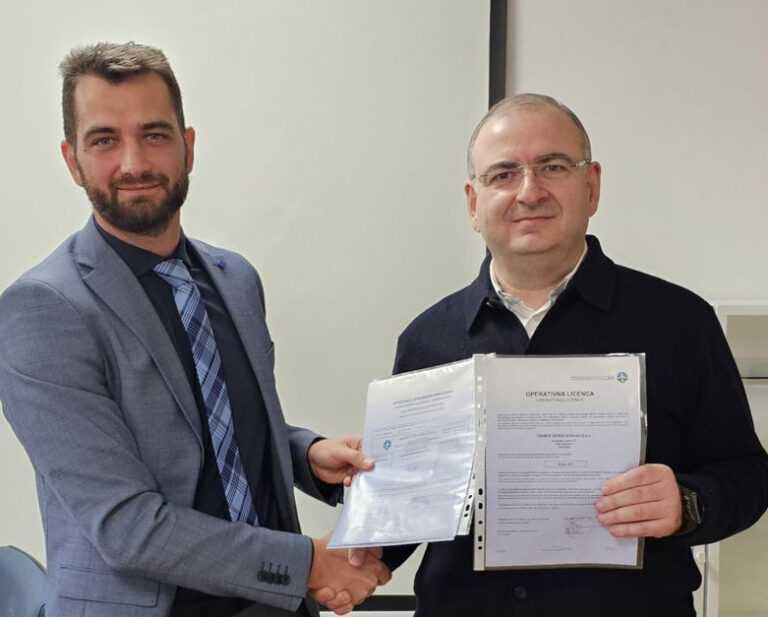
The best things come to those who wait. Slovenia-based Camex Adria Airlines was initially planned to take to the air in APR23, according to announcements made this time last year. This year, and this month in particular, should see the subsidiary of Georgia’s Camex Airlines (founded 2021) finally begin operations with its Boeing 737-800 BCF; having now received its Air Operator’s Certificate (AOC) from the Slovenian Civil Aviation Authority. It aims to serve destinations in Europe and the Middle East.

Have AOC, will fly. Image: Camex Adria/LinkedIn

The joy on LinkedIn at the end of 2023, was palpable:We are proud to share our biggest achievement yet in our journey – Today CAMEX ADRIA AIRLINES has officially obtained the European Air Operator Certificate (AOC)!,” the company page published.

This achievement is a testament to the unwavering dedication and hard work of our incredible team. With the AOC in our possession, we are ready to provide the highest standards of safety, reliability, and excellence for our customers and partners. CAMEX ADRIA AIRLINES team would like to especially express heartfelt appreciation to the CAA.si for the exceptional level of cooperation and support we have experienced in our process of obtaining AOC. Stay tuned for exciting developments as we continue to redefine the skies!”

The freshly authorized airline took delivery of its Boeing 737-800 BCF in June last year, after the 19-year-old aircraft had undergone freight conversion in London-Gatwick. It has since received Slovenian registration at Maribor Airport.