
Home Blog Page 195

ECS Group expands in Africa

The French cargo sales and service agent sees considerable growth opportunities in parts of Africa. The Kingdom of Morocco serves as a springboard for its planned market penetration. There, it has just taken over the leading local GSA, EFIS Maroc (100%). EFIS is represented at all major airports in the country and has built up a leading position over the years, particularly in air freight. CargoForwarder Global (CFG) spoke to Adrien Thominet (AT), CEO of ECS Group.

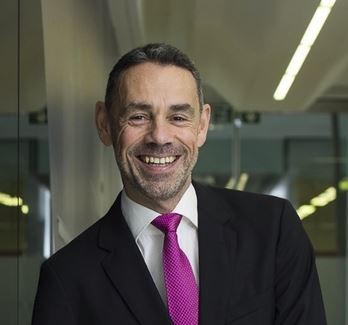
Adrien Thominet is heading the ECS Group – picture: company courtesy

Adrien Thominet (AT), CEO of ECS Group, does not want to reveal any financial matters. It therefore remains unclear how much his company paid for the acquisition of the Moroccan company. Both companies have been working closely together since 2001, with EFIS acting as a sub-agent for ECS in Morocco. Based in Marrakesh, the GSA is strategically well positioned since it covers all major Moroccan airports such as Casablanca, Agadir, and Tangier, providing extensive commercial coverage to its customers.

Leading market position
It is not just because of this broad presence in the northwest African country that ECS gains a dominant market position, but especially because EFIS Maroc is the only local agent there that is fully focused on the air freight business. Others offer cargo services en passant, as subdivisions of forwarding agents.

EFIS Maroc Chief Pierre Fougerouse knows all facets of the GSSA business  – image: Pierre Fougerouse, Linkedin

Pierre Fougerouse, Founder of EFIS MAROC, stated: “Our journey began with ECS Group’s support in 2001, and after becoming self-owned in 2003, merging into ECS Group now feels like a fitting evolution of our partnership. I am also pleased to welcome Bouazza El Hantiti as Managing Director, bringing valuable experience from North Africa and Europe to enhance network synergies between Morocco and ECS Group’s European representations.”

CFG: So, does the acquisition of EFIS Maroc give ECS a monopoly position in the country?

AT: No, because there are other players out there. But our position is very strong. Especially because EFIS MAROC has emerged as the market leader in commercial air cargo services, uniquely positioned as the region’s sole GSA with substantial air freight experience and a loyal customer base. Others have multi-functions, so are less focused on air freight matters.

CFG: What are the main products exported by the Moroccan economy, that will play a significant role in ECS’s cargo business?

AT: These are of course perishables, but increasingly also electronic goods, automotive parts, and components for the aviation industry. Economic development is progressing rapidly, which is illustrated by the establishment of industrial companies. In addition, and this should not be concealed for reasons of piety, human remains are an important factor for air freight.

CFG: What distinguishes Morocco from the situation in some of the neighboring countries?

AT: Morocco stands out due to its economic expansion. It’s a country with a young and highly dynamic population. Consequently, it offers fertile ground for rich and promising partnerships. With its vibrant energy and potential, Morocco presents an enticing prospect for long-term economic growth.

CFG: Is aviation also a beneficial factor?

AT: Absolutely. Royal Air Maroc, for which we have a GSA mandate in some markets, has an outstanding position, which also applies to its air freight business. According to our analyses, the country will successively develop into a hub for air traffic. This also applies to international and intercontinental connections.

Outsourcing tasks
Monsieur Thominet further emphasizes that part of his company’s diversification strategy is to outsource some tasks by transferring them to Morocco. These include administrative responsibilities, invoice controlling or customs issues. Due to the favorable framework conditions, the country will act as a springboard for ECS Group to penetrate other African sub-markets. In this context, the executive mentions the Ivory Coast and Senegal, i.e. countries in West and Central Africa. “Now that we have become the market leader in Morocco, thanks to the acquisition of EFIS, we intend to become active in the neighboring regions as well. This will take time, but our analyses show that it offers good growth prospects,” he reasons.

Green Airports Silicon Valley in jeopardy

0

What was created as a role model for all future green airports, is now on hold due to sudden budget cuts of dedicated state funds. Germany had granted that funding with the objective of enabling aviation to start using sustainable fuels in the near future. However, struggling with budget problems, Berlin has frozen the financial resources originally promised to support the project. As result of the funding cuts, participating companies are considering migrating abroad.  

Spark e-Fuels experts Julia Bauer, Arno Zimmermann and Mathias Bögl intend to revolutionize the production of e-fuels – image: courtesy Sparks e-Fuel

Speeding up SAF availability
The regional airport, Schönhagen near Berlin, was previously referred to as “Aviation Silicon Valley” in this publication, due to its innovative drive and first mover qualities. While larger airports are creating scenarios to be turned into reality sometime in the 2030s, when petrol giants finally transition to sustainable e-fuels for major airlines, the pioneer Schönhagen was planning to start rolling out its infrastructure this very year, 2024. As a key element of this concept, the start-up, Spark e-Fuels, co-financed by BASF among others, has the role of delivering Sustainable Aviation Fuel (SAF), for use by all regional and business aircraft flying from Schönhagen. Home to flight schools and even creators of (hydrogen) electric aircraft, Schönhagen and its twin airport, Strausberg, have significantly increased in flight movements during the pandemic due to lack of commercial line flights, but also because Berlin’s international airport ‘Willy Brandt’ (BER), needs to concentrate its capacities on long-haul flights of global airline operators.

Silicon Valley not so far away
Spark e-Fuels was founded in 2021 by the climate tech expert, Dr. Arno Zimmermann, who already extensively analyzed the techno-economics of e-fuels at the prestigious MIT Energy Initiative in 2018. Together with co-founders, Dr. Mathias Bösl, an Ex-BCG consultant and experienced climate tech business builder, and Dr. Julia Bauer, a brilliant chemist and e-fuels enthusiast, they made it to the next level. Together, the young German team has the proper setup to start its journey into revolutionizing how e-fuels are produced.

Key factors: Local beats Global
The locally generated renewable energy is produced using a process that can cover fluctuating electricity levels, and green hydrogen in combination with sustainable CO2. The technology makes e-fuel an affordable alternative to fossil kerosene and will demonstrate that Europe has the capabilities to reach the climate objectives for aviation, starting in 2025 with minimum 2% SAF on all flights that touch the continent, and rapidly increasing that proportion over the following years.

Will EAGLE fly?
E-fuels for Aviation, Generated from Local renewable Energy, in short EAGLE, started as a 180-page feasibility study in 2021, financed by the state of Brandenburg and the European Union. Like Otto Lilienthal with his first flight, EAGLE must move from theory into reality, and show that it can be done. Lilienthal’s tragic accident happened after he proved to the world that humans can make it off the ground. Will EAGLE die before it even flies? “That would be a tragedy”, says Prof. Dr. Andreas Timmermann, Managing Director of Berlin-Brandenburg Aerospace Allianz (BBAA), the organization that groups sustainable aircraft and engine manufacturers such as APUS, RS.aero and Rolls-Royce, amongst other companies and institutions. EAGLE was presented by the professor and his team of experts at the ILA Berlin International Airshow in 2022, resulting in growing interest all over Europe. Regions and their airports in France, The Netherlands and Norway, started building a consortium to speed up their own local SAF production based on the model created in Berlin.

Sustainable propulsion
On top of SAF, hydrogen aviation will also benefit from such an international network of innovative regional airports. Locally produced green hydrogen is part of the concept. Fueling standards will be developed, so that flying hydrogen pioneers like APUS, ZeroAvia and Dronamics can establish regular routes for individual flights and commercial services. Hydrogen Experts such as the authors, Dr Klaus Herwig and Erik Schäfer, with their newly published ‘Hydrogen Horizons’, promote the idea of leading by example when it comes to implementing hydrogen infrastructures. Change management is the hardest part of the energy transition, and inertia has caused many brilliant concepts to remain in the drawer for far too long. But, as was mentioned by a panelist at the EU Hydrogen Forum last June: “to create innovation we need real Power Plants, not just PowerPoint.” To which one could add: “and to introduce a realistic way of significantly reducing carbon emissions in aviation”.

Hugo Duchemin

The author is Managing Director Comworxx S.A.S., France

A breath of fresh air…

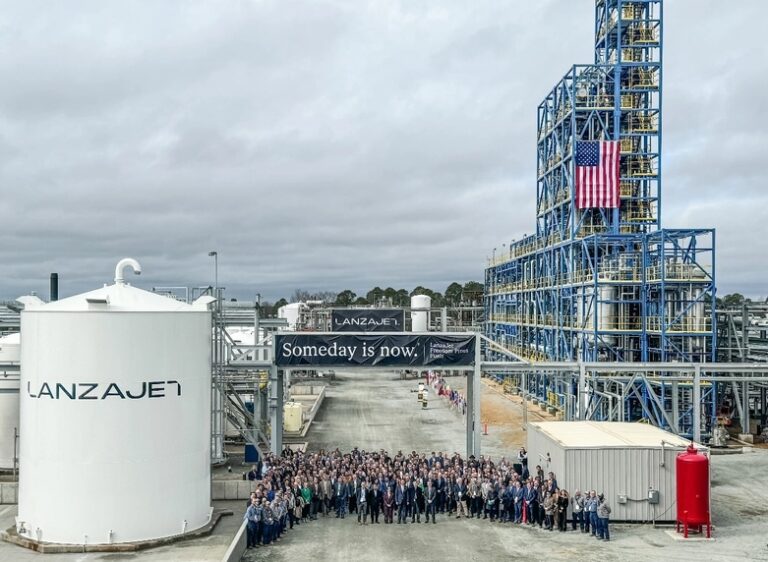
A glimmer of hope this week, and a celebration of innovation and science which will increasingly benefit the aviation world, all going well: Congratulations go to the sustainable fuels technology company, LanzaJet, which opened the world’s first ethanol-based SAF plant over in the U.S. on 24JAN24.

A tangible first step for a better future. Image: LanzaJet

If ethanol-SAF literally takes off, the world can look forward to fresher air in future. The name of the world’s first ethanol-SAF production facility also incites thoughts of air fresheners: Freedom Pines Fuels Plant. An historic moment on 24JAN24, and one that is hopefully a solid foundation on which to build an adequate production network. As Haldane Dodd, Executive Director, Air Transport Action Group (ATAG), pointed out: “We will need around 23 Mt of SAF production capacity by 2030 and almost 500 Mt by 2050. Every production facility that opens – such as LanzaJet’s Freedom Pines plant – helps us get closer to those objectives,” if the industry is to meet its Net Zero goals by 2050.

Not just SAF production, but also jobs and revenue
LanzaJet’s Freedom Pines Fuels production plant, the first in the world to generate alcohol-to-jet (ATJ) SAF using low-carbon-intensity ethanol, will start producing 10 million gallons of SAF and renewable diesel per annum, for the United States. Used as drop-in fuel for existing aircraft in an aviation industry, this particular SAF is capable of reducing greenhouse gas emissions by more than 70% and is produced from a variety of sustainable feedstocks including agricultural waste, municipal solid waste, energy crops, or carbon captured from industrial processes, for example.

The plant is fully funded and has committed offtake agreements for all fuel produced in the next 10 years. The plant in Treutlen County, Georgia, will also employ more than 250 staff and is estimated to annually generate around USD 70 million for the local economy.

Jennifer Holmgren, LanzaJet Board Director and Chief Executive Officer, LanzaTech, commented: “LanzaJet Freedom Pines Fuels is proof of the energy transition accelerating in real time. We are demonstrating the ability to establish secure supply chains domestically, create new jobs locally, and produce sustainable aviation fuel globally. This historic facility is an important pillar of a growing SAF economy in the United States and is a significant decarbonization milestone in the world.”

Tried and tested
“LanzaJet Freedom Pines Fuels plant represents the culmination of a history of firsts within the SAF industry, dating back to its origin in 2010 as the first ethanol to SAF technology to have derived in collaboration with the Pacific Northwest National Lab (PNNL). The technology’s first commercial flights were completed with Virgin Atlantic and All Nippon Airways (ANA) in 2018 and 2019, respectively,” the press release points out.

British Airways and IAG Cargo have a keen interest in the LanzaJet’s pioneering ethanol to SAF technology, as Luis Gallego, CEO, International Airlines Group (IAG), expressed: “The LanzaJet ethanol-to-jet fuel plant in the US is a demonstration of how government support and investment in green technologies can help make aviation more sustainable. At IAG, we look forward to bringing LanzaJet’s technology to the UK, with Nova Pangaea, to help the UK meet its target of five Sustainable Aviation Fuel plants in construction by 2025.”

Sean Doyle, Chairman and CEO, British Airways, urging speed in implementation, added: “SAF will play a critical role in meeting our net zero targets and especially in reducing aviation’s emissions this decade. It is the only viable solution for long-haul flights. […] This project acts as the blueprint for using this innovative technology right here in the UK, starting with Project Speedbird, and shows how quickly the US is moving ahead. We must continue to work with the UK Government to encourage investors to put money into SAF production and meet its own targets of having five commercial-scale SAF plants under construction in the UK by 2025. The Government has already started on this journey, and we welcome this, but what we need now is pace.”

A grand opening ceremony
Government officials, shareholders International Airlines Group (IAG), LanzaTech, Mitsui & Co, Shell, and Suncor Energy, and a number of investors including the Microsoft Climate Innovation Fund, Breakthrough Energy, British Airways, and All Nippon Airways (ANA), attended the opening ceremony on 24JAN24. LanzaJet’s CEO, Jimmy Samartzis, announced: “Today is testament to the conviction required by industry, government, and funders to advance innovation and stretch the boundaries of what is achievable to address decarbonization and tackle climate change. This is a historic milestone in a long history of firsts for LanzaJet, the United States, and the SAF industry globally Our novel LanzaJet ethanol to SAF process technology is now deployed at our commercial plant in Georgia which will convert ethanol into drop-in SAF. As we start-up the plant, we will continue to refine our technology, while launching our efforts to advance new sustainable fuels projects globally. Between feedstock versatility, efficiency, and economics that enable scale in the US and globally, we stand ready to meet aviation’s decarbonization goals established at the United Nations and country ambitions, such as the U.S. SAF Grand Challenge.”

Sir David King, LanzaJet Board Director, Emeritus Professor of Chemistry, University of Cambridge, Former UK Government Chief Scientific Adviser (2000−2007), summarized the historic moment: “LanzaJet is serious about urgently meeting the moment to decarbonize aviation and Freedom Pines Fuels is evidence of that. This facility will use innovative ethanol-to-jet technology and substantially increase the amount of SAF produced for the world’s airlines and aviation industry. In large part due to projects such as this one, we are making real climate progress in aviation.”

A positive step at the start of what will hopefully be a more positive year for SAF and the aviation industry.

MFAG is downsizing

0

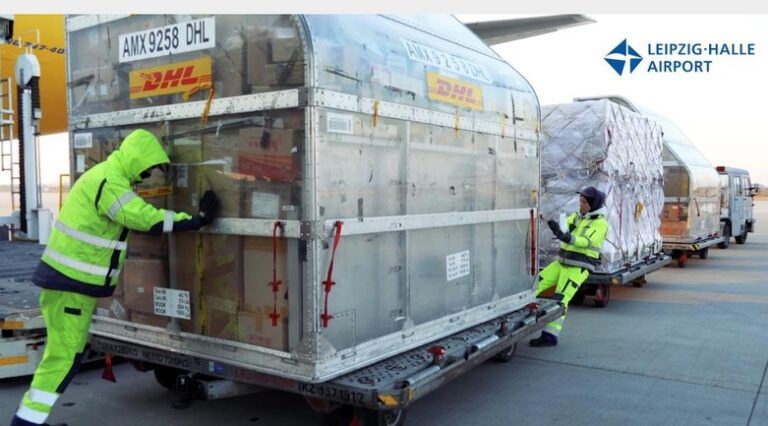
The Central German Airport Holding (MFAG), parent company of Leipzig/Halle and Dresden Airports, is in the red and needs to be restructured. This might lead to job cuts and the cancellation of allowances. The trade union ver.di blames the management for the financial misery. In order to persuade the MFAG bosses to shelve their cost-cutting plans, the union called on airport employees to go on a warning strike which lasted from Thursday afternoon until Friday morning (25-26JAN24). Cargo flights operated by DHL Express, AeroLogic and other freight carriers were not affected.  

The walkout of ver.di  unionists last Thursday and Friday disrupted passenger flights at LEJ, not cargo ops – picture: courtesy  LEJ

“The Central German Airport Holding is a fascinating place for your career,” the management trumpets on MFAG’s own website, eager to attract capable candidates to fill existing vacancies. However, recruiting new staff is currently not listed high on the agenda of its East German airports. Instead, topics like salary and even job cuts prevail.

Downsizing is the current motto.
It is unclear how many of the approximately 1,400 employees at Leipzig-Halle Airport and its smaller sister Dresden Airport, could be affected by job axing. Much will depend on whether the employees reluctantly accept the management’s cost-cutting program dubbed “Z30”.

“They will not!” emphasizes trade unionist, Paul Schmidt. He points out that the starting wage at MFAG is 12.50 euros per hour, which is only 9 cents above the statutory national minimum salary payable to any employee. Conversely, the Management Board recently approved a salary increase of a whopping 26%. “That doesn’t go together: less money and more work for the employees, higher salaries combined with bonuses for the already richly paid board members,” remarks unionist Schmidt indignantly.

The conflict is not just about wage issues
“The management is responsible for steering the business processes; the employees’ job is to do their daily work. For this, they deserve to be paid a decent wage and be part of social programs. The fact that it has not been possible to put the MFAG airports on a solid financial footing despite below-average wages is not the fault of the staff. Instead, the responsibility lies with the Executive Board,” is the trade union’s message. ver.di is demanding a one-off wage increase of EUR 650, followed by an annual percentage salary increase thereafter, with the amount still pending tariff negotiations.

Prime Air came – and exited LEJ again, shortly after
The dispute was preceded by a transformation concept called “Zukunft” (Future), on which auditor KPMG tabled a comprehensive report asked for by banks (around 300 pages), concluding that the planned restructuring of the airport holding company opens promising business avenues for the future despite MFAG’s current deficit of 145 mn euros. This assessment is based on the high growth potential in the areas of logistics and space development as well as moderate growth in passenger volumes – particularly in tourist traffic at Dresden Airport, states KPMG. But the assumptions were already clouded by the exit of Prime Air, which only used LEJ as a hub for a short time.

This put additional pressure on MFAG’s finances. To get out of the red in the long or even medium term, the management is now considering “targeted measures to increase profitability. These include optimizing existing structures as well as streamlining strategic and operational processes,” reads a statement. However, the MFAG executives do not clarify exactly what these measures are.

According to ver.di’s Paul Schmidt, management intends to increase weekly working hours, cut vacation pay and reduce the number of free Sundays from 24 to 21 per year. In return, it offers staff a salary increase of 6.5% over a staggered five-year period.

A strike is looming
This lack of transparency is fueling mistrust among employees, an airport employee told CargoForwarder Global. In any case, the union insists on its claim for a wage raise of 650 euros for every MFAG headcount. Simultaneously, it turns down the extension of working hours or cuts in vacation. The next round of negotiations on collective bargaining and labor law issues, is scheduled for 08FEB24. However, according to information obtained by CargoForwarder Global, strike action is likely to take place before then.

If so, DHL Express, which operates its largest global hub at Leipzig/Halle, will only be affected indirectly at best. And only if the airport fire department joins the walkout or air traffic controllers take solidarity action. However, this is not to be expected.

At the moment, MFAG management and the ver.di union behave like two trains on a collision course – rushing towards each other at high velocity. Hopefully, both sides will still find a way to avoid a total crash which would not only harm the two airports, but also the country’s entire economy.

Fraport and Dakosy ink JV

1

The founders of the joint venture (50/50%), allivate GmbH, have set themselves the goal of establishing, operating, and further developing cargo community systems for air freight handled at Rhine-Main Airport. In addition to this, they intend to drive the digitalization of air freight processes swiftly ahead – both at Frankfurt Airport and beyond.

Dirk Gladiator and Martina Schikorr head the new JV  –  photo: courtesy “allivate”.

Dakosy is a household name within the European IT landscape as an enabler of advanced cargo communications systems, digital processes at airports and seaports, as well as for providing automated and tailored customs processes (eDeclarations) for clearing goods, entering or leaving the EU. The company is operator of the Port Community Systems that manages most processes at the seaport of Hamburg, and it runs the cargo platform FAIR@Link on behalf of its users, Hamburg and Frankfurt Airport.

Serving 1000 users
As far as Frankfurt is concerned, newcomer “allivate” will be managed on an equal footing by Martina Schikorr (Fraport) and Dirk Gladiator (DAKOSY) who have been appointed as Managing Directors. According to MD Schikorr “allivate” sends a strong signal to the cargo community: “A well-functioning digital infrastructure is a must-have for every modern cargo hub. We want to offer our customers the most efficient cargo community system possible so that their processes keep running simply, smoothly, and quickly 24/7.” She adds, that roughly 1,000 forwarding agents, trucking companies, ground handlers, airlines and general sales agents utilizing Frankfurt, will benefit because thanks to “allivate”, they all are offered a single point of contact onsite.

Processes will be faster and more efficient, claim the JV managers
Both executives emphasize that, the use of the cargo community system is not mandatory for Fraport’s freight customers. As soon as the scheme is established, the digital basis for even more efficient ramp control will be in place. Imports will be accelerated thanks to electronically transmitted authorization to pick up shipments, landside delivery processes will be coordinated more effectively, and the transport of paper documents by vehicle within the airport between the various interfaces would be eliminated completely. “In future, data will be transmitted via the new platform at the speed of light, with a single click,” enthuses Max Conrady, Head of Cargo Development at Fraport.

Not starting from scratch
Customers will benefit from the synergies resulting from “allivate”, predict Schikorr and Gladiator. Thanks to its long-time experience, operator Fraport contributes comprehensive airport know-how to the JV and acts as a neutral link between the local cargo players and the authorities. DAKOSY adds its wide-ranging IT expertise in all aspects of cargo handling and customs clearance, as well as many years of experience in the development, operation, and technical support of the Cargo Community System; states the company in a release.

“Pooling our strength”
MD Dirk Gladiator emphasizes that air freight handling and digital infrastructure are inextricably linked: “We are pooling our strengths and can therefore launch innovations and digital solutions onto the market faster. The active role of the Air Cargo Community in Frankfurt plays an important part, as together we jointly develop all digital processes along the supply chain right on the spot.” The community he mentions is growing continuously; it currently has 70 members from all sectors of the air freight industry.

e-Commerce is main beneficiary
According to the “allivate” managers, the platform has already taken a vital role in enhancing the processes in Frankfurt and will significantly improve the hub performance thanks to increased digital data transparency. Existing DAKOSY contracts with freight companies will be transferred to “allivate”. Especially for incoming e-commerce shipments on the East Asia-Europe Trade Lane, it will become a useful tool for deconsolidating and forwarding the packages thanks to the digitalization of processes, emphasizes Fraport manager Conrady.

There is no location exclusivity for “allivate”. The platform could also be established at other airports to optimize freight processes there.

Chapman Freeborn’s year of European expansion in 2023

1

‘Fighting fit and fifty’ could have been Chapman Freeborn’s 2023 tagline. In the year of its 50th anniversary, the global air charter specialist and member of Avia Solutions Group grew its sales team by almost one third. 29%, to be exact. In other words, it brought on 30 new employees, all within Europe and dispersed over its cargo, group passenger, and business aviation divisions. Eight new cities entered the Chapman Freeborn branch network, located in Austria, Finland, France, Italy, the Netherlands, Spain, Sweden, and Switzerland, thus increasing its European foothold.

Reto Hunziker, President – Europe,  Chapman Freeborn – Image: Chapman Freeborn

It also ended the year with successful ISO 9001:2015 certification for Chapman Freeborn Germany in December – proving the branch’s quality management. And the company has begun the new year with a host of award nominations and conference travel plans, as its active LinkedIn profile shows.

Eric Erbacher, Chief Executive Officer at Chapman Freeborn, explained: “We are investing significantly in the expansion of our international office network and teams to strengthen our truly global business. As well as this, we are always intensifying our network of partners, driving added value for our customers.”

Reto Hunziker, President – Europe at Chapman Freeborn, revealed: “As part of our 2030 strategy, we further invested and strengthened our commercial setup in Europe both for brokers and salespeople. This approach will also be integral this year as we will continue to expand into new markets and geographies to make sure we cover the needs of our customers and partners. At the same time, we will strengthen our existing setups in key markets such as the DACH region (Germany, Austria, and Switzerland), the UK, and Benelux (Belgium, the Netherlands, and Luxembourg).”

TIACA and ALTA sign MOU ahead of Latin American TIACA event

0

TIACA demonstrates good planning as it prepares to hold its first ever Latin America event, which will follow on from the Intermodal South America 2024, and be held at the Gran Estanplaza in Sao Paulo, Brazil, 04-06MAR24. How? With the signing of a Memorandum of Understanding with The Latin American and Caribbean Transport Association (ALTA). The two associations thus kick-off closer cooperation designed to cover a number of points together. These include a better understanding of aviation’s contribution to economic and social development within the Latin American and Caribbean region, increasing safety in air cargo and its larger supply chain, closer work with governments in terms of education and lobbying for better air cargo circumstances, and promoting sustainable air cargo along the lines of the 17 United Nations Sustainable Development goals.

The Latin American and Caribbean airline association ALTA, comprising of 44 airline members, and TIACA intend to collaborate – Image: ALTA

Steven Polmans, TIACA Chair, explained: “This agreement is vital as we continue our work to strengthen our presence within Latin American and the Caribbean. Working with ALTA will help us not only accomplish this, but it will help push the key issues agreed upon within the region. We look forward to a successful partnership with ALTA.”

Glyn Hughes, Director General, TIACA, emphasized: “The signing of this MoU allows us to get to work ahead of the upcoming TIACA Event – Latin America, where we can ensure that issues relevant to both organizations can be discussed. The event will bring together industry leaders to focus on what it takes to do successful air cargo business within Latin America.”

José Ricardo Botelho, Executive Director & CEO of ALTA, stated: “Air cargo is extremely important for Latin American & Caribbean region. In a continent with huge distances, intricate geography, and lack of other means of transport as safe and efficient, aviation plays a key role to carry essential goods and merchandise that move the economies and generate employment. This partnership with TIACA will allow us to jointly strengthen the work on this matter and achieve better understanding of the sector, therefore, pursuing informed decision making and smart regulatory environments. Currently 50% of international air cargo capacity corresponds to belly capacity in passenger aircraft. It is extremely important to work aligned and we very look forward to this alliance.”

Silk Way West Airlines augments ACL Airshop ULD agreement

0

Silk Way West Airlines and ACL Airshop announced this week that they have formally extended their long-standing collaboration. A further multi-year ULD agreement was signed, demonstrating the success of their partnership thus far. The two companies are continuing to improve ULD transports, whether this is on a technological level such as the introduction of Bluetooth to achieve real-time ULD tracking – “a revolutionary step towards optimizing cargo transportation,” according to the press release, or in terms of sustainability. “The partnership emphasizes an ongoing commitment to environmentally sustainable practices and will feature joint initiatives to reduce carbon footprint and promote eco-friendly solutions within the air cargo industry,” it outlines. The desired outcome is fast, efficient ULD management solutions that have a positive knock-on effect down the supply chain, in the form of “accelerated services, streamlined logistics, and substantial cost savings,” alongside, “enhance[d] cargo protection, tracking, and overall supply chain visibility.”

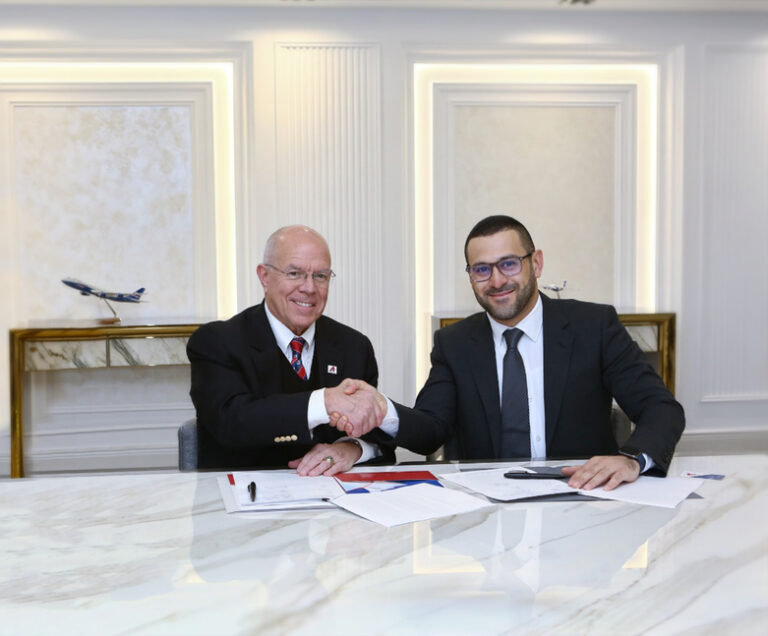
Steve Townes, ACL Airshop CEO, (left), and Vugar Mammadov, VP CIS & Central Asia of Silk Way West Airlines – Image: Silk Way West Airlines

Vugar Mammadov, Vice-President CIS and Central Asia of Silk Way West Airlines, said: “This strategic collaboration with ACL Airshop is a testament to our commitment to delivering exceptional service and value to our customers. By combining our strengths, we aim to set a new benchmark in air freight logistics and contribute to the growth of the global cargo industry.”

Steve Townes, President and CEO of ACL Airshop, enthused: “We are excited about the opportunities that this strategic partnership brings. Together with Silk Way West Airlines, we will drive innovation, enhance operational efficiency, and create a more sustainable and resilient air cargo ecosystem.”

Maurice van Terheijden, Managing Director EMEA for ACL Airshop, stated: “Both companies Silk Way West Airlines and ACL Airshop boast cultures of exceptional performance, making it an honor for us to evolve in tandem with our partner.”

LATAM group with cherries on top

0

Impressive year-on-year 32% increase in cherry exports out of Chile on the part of LATAM group, as announced earlier this week. In figures, that translates into around 7,546 tons and places LATAM group in first place on the list of airlines transporting the sweet fruit. Part of the increase was thanks to the group being able to increase its cargo capacity by 16% compared to previous year. The overall tonnage increase is all the more impressive given all the wet weather the country suffered, affecting its cherry production. The 2023-2024 cherry season began mid-OCT23, with a first shipment of Chilean cherries from Santiago to New Zealand and on to China through interline agreements. The airline group’s cargo subsidiaries operated a cargo fleet of 20 planes during the season (including a temporary new freighter), and offered 19 weekly frequencies from Santiago dedicated to cherries. According to its press release: “Chile leads in cherry exports in South America, and LATAM group plays an essential role, transporting 30% of the total volume by air. The majority of cherries, around 90%, are destined for Asia for Chinese New Year celebrations, while a smaller proportion is directed to other markets such as the United States and Brazil.” It goes on to point out the virtue of air transportation which enables the fast transfer of fresh cherries from Chile to China in just 45 hours – a key benefit when it comes to perishable products that the group carefully carries through its FRESH service.

Cheers to Chile for all its cherry cargo exports. Image: LATAM Group

Claudio Torres Faini, Commercial SVP in South America at LATAM Cargo Chile, underlined: “We are fully committed to providing our customers with solutions tailored to their needs. In response to a challenging season, we have implemented flexible measures, adjusting both flight frequencies and destinations. This has not only allowed us to offer our customers a greater variety of alternatives but has also generated growth opportunities, especially in the U.S. market.”

trilatec’s lightweight squAir elements gaining weight in importance

0

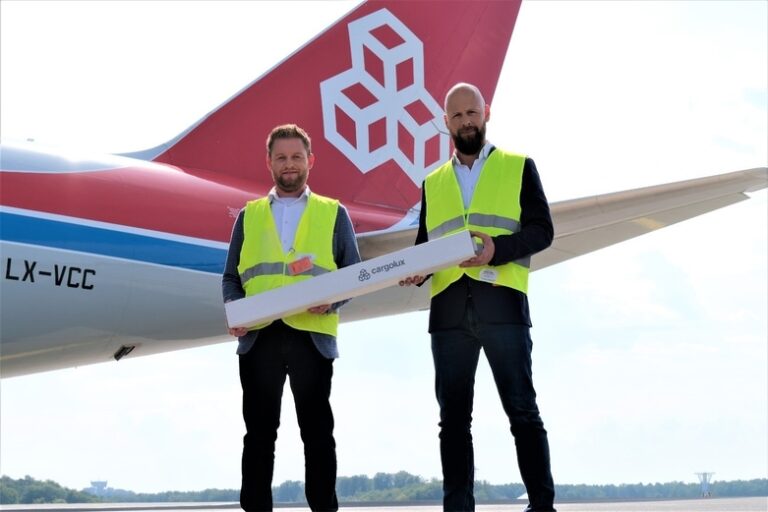
I was first introduced to squAIR-timber over at the ULD Care conference in Canada back in SEP19. At the time, it seemed very new and innovative, yet Cargolux had already begun using it already in 2017 following its branding in 2016 (trilatec exists since 1989, squAIR-timber since 2012), followed by another 25 airlines authorizing its use in 2018. Lufthansa Cargo got on board in 2020, authorizing its use within its BUP500. A look at the website shows 21 logos of companies deploying squAIR-timber to date. Given the many benefits the product offers, it is surprising that the list is still missing a number of other large players vocally intent on becoming more sustainable. Perhaps that was the reason for trilatec’s recent press release – to encourage more movement. The benefits, as enjoyed by DHL in Frankfurt and Paris, Kuehne+Nagel, Lufthansa Cargo, Cargolux, and Emirates SkyCargo, when using squAIR-timber instead of conventional wooden beams during pallet assembly are lower fuel costs and CO2 emissions, since the cardboard fiber composite material weight 80% less. It also saves on handling time and is easier to manage: “Only one person and no forklift truck is required for assembling,” the release states, explaining: “the innovative lightweight construction elements from trilatec are made of 100% recyclable paper and cold-glued joints, manufactured according to the carbon principle,” and that the certified for air freight, fully recyclable product can take the same load as real wood: “When loaded, one meter of the weatherproof material can carry up to 5 tons with a dead weight of just 1.2 kilograms per meter. When using wood, the dead weight is 3 to 4 kilograms per meter.”

trilatec GmbH’s MDs Stefan Trinkaus (left) & Andreas Langemann. Image: trilatec

Johannes Bruijs, Sr. Vice-President Global Logistics at Cargolux, explained: “We use the lightweight squAIR-timber elements as a substructure for all pharmaceutical shipments and they are fully integrated into the processes. They have no disadvantages compared to wood, but their significantly lower weight brings many advantages and helps to save a considerable amount of CO2.”

Andreas Langemann, Managing Director of trilatec GmbH, added: “squAIR-timber offers added value to leading companies in the air cargo industry. Our product has proven to be a reliable alternative in their global networks. According to calculations, airlines such as Cargolux can save around 1,200 tons of fuel per year by using our solutions – the equivalent of three fully loaded jumbo jets.”