Home Blog Page 204

LATAM Cargo strengthens long-haul services

0

With the integration of the 19th B767-300 Boeing converted freighter (BCF) into its fleet, the airline is once again growing its transport capacity. Compared to the pre-corona period in 2019, this is an increase of 70%. Due to this latest addition to its fleet, the carrier cements its role as the largest cargo airline group in South America.

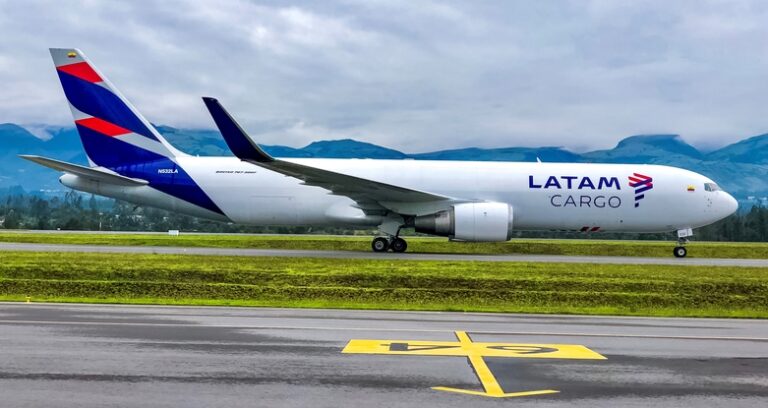
LATAM Cargo welcomes that there will be no slot reductions in AMS in the near future – picture of B767 freighter: company courtesy

According to the management, cargo operations will concentrate on flights between South and North America during the current peak season and until Valentine’s Day 2024 (14FEB24), thus supporting the export of fruit products and flowers harvested in Chile, Ecuador, and Colombia. However, during the upcoming summer flight schedule starting 31MAR24, the focus will shift towards strengthening long-haul operations from South America to Europe and parts of North America.

B767F is knighted by LATAM Cargo
Regarding its fleet of B767 freighters, the Santiago-based carrier claims that these conversions are “the ideal aircraft for operations in the regions currently served by LATAM Cargo, due to its efficiency, versatility, and transport capacity” and fit the market needs.

The arrival of the 19th freighter reflects LATAM Cargo’s commitment to customers and its focus on maintaining a sustainable, long-term operation. “This growth plan was structured collaboratively, with the aim of connecting the region’s export and import industries through a broad and reliable offering. At the same time, we considered the inherent volatility of air cargo and thus focused on efficiency, diversification, and flexibility. While the industry faces challenging times, we are pleased to have access to this new aircraft to take advantage of opportunities in the territory,” comments Gudny Genskowsky, Senior VP of Network and Alliances for Cargo at LATAM.

New passenger flights to London
Further to this, the management revealed to CargoForwarder Global that it will launch new passenger services from Lima to London and back the same way, ending in Santiago de Chile. The route will be served five times per week, with B787-900 aircraft. This Boeing variant can accommodate between 12 and 15 tons of cargo in its holds, depending on passenger luggage. The initial flight is scheduled for 03DEC23. “We will market the capacity of the passenger aircraft ourselves,” states Jorge Carretero, Sales Director Central Europe.

Concerns about Schiphol flights
Touching the European network of the carrier, Jorge said that, for the time being, LATAM Cargo does not intend to add a new EU destination to its routing. Currently, Amsterdam (AMS) and Frankfurt (FRA) are served daily with B767F, supplemented by twice-weekly landings at Brussels (BRU) and Liège (LGG), respectively. All AMS flights take-off to FRA, from where they cross the South Atlantic, serving different stations in South America, such as Sao Paulo or Curitiba, for instance.

The manager confirmed that Schiphol is the carrier’s main European hub due to the flower business and the geographical nearness of the Dutch flower auction, Royal FloraHolland, in Aalsmeer. “Our customers prefer Amsterdam as a location for importing their flower shipments from South America. A reduction in slots would have been detrimental to our route policy and product strategy.” He adds to this, however, that FRA is of equal importance for the airline’s cargo business where other products dominate.

AMS slots cuts are off the table
The manager reacted with relief to the Dutch government’s decision not to limit the number of flights for the time being. “This should put this issue off the table for the time being, and with it the need to rethink our routing,” he said when asked. Originally, The Hague wanted to reduce the number of slots from 500,000 to 452,000 annually for reasons of noise and environmental protection. Roos Bakker, Cargo Partnership Director Schiphol Airport, reconfirmed these plans to CargoForwarder Global at the recent TIACA meeting in Brussels (06-08NOV23).

Now, however, the Dutch government has made a U-turn following interventions by the USA and the EU Commission. Both claimed that the intent did not meet the „balanced approach” process. It demands from governments to consult affected parties to discuss and identify different solutions to reduce aircraft noise and CO2 emissions prior to intervening in the slot scheme. Hence, LATAM Cargo and other cargo airlines serving AMS can relax for the time being, unless Schiphol imposes a ban on night flights as alternative to slot cuts.  
Schiphol movements cap put on hold

0

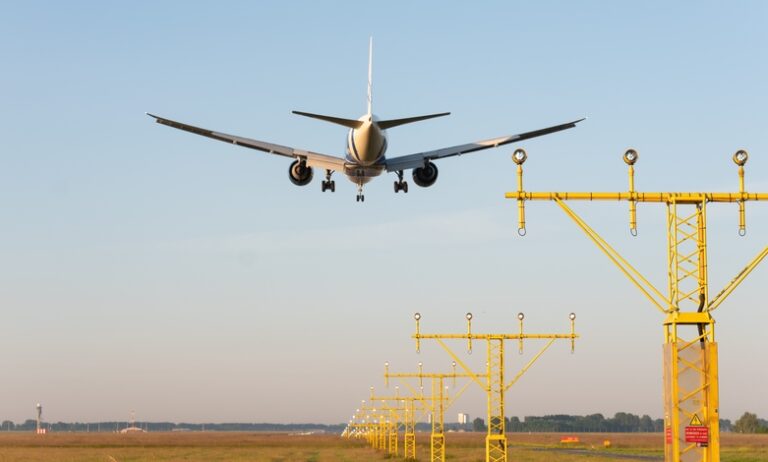
What a bitter slap in the face for the Dutch government! The Hague was forced to postpone its plan to reduce the number of flight movements at Schiphol Airport from 500,000 annually to 452,000 as originally intended. This will apply from 31MAR24 until further notice. Both the U.S. and the EU undermined the legal basis for their stop signal, much to the satisfaction of Air Cargo Netherlands (ACN).

Slot cuts at SCL are off the table for now – courtesy Amsterdam Airport

The decision to keep things as they are for the moment, was communicated by a letter from the Minister for Infrastructure and Water Management, Mark Habers, to the Second Chamber. The politician reminds of the fact that his decision was already the subject of legal action by both KLM and IATA, including a cassation appeal, the result of which is not to be expected before the second term of 2024.

Government has put slot cuts on the backburner
On top of this, both Canada and the U.S. have expressed their concern about the capacity reduction at Schiphol. In a letter dated 02NOV23, the American DoT issued an order making clear that the continuation of the plans for capping movements, without following the so-called ‘balanced approach’, would be regarded as a violation of the EU regulation and the U.S.-EU Air Transport Agreement of 2007.

The said approach implies that noise reduction cannot be enforced by merely capping movements. Before doing so, the enforcing authorities have to prove that they have also tried all other options and demonstrate that these have not worked.

The U-turn taken by the Dutch government regarding the intended slot cuts was communicated by a letter from the Minister for Infrastructure and Water Management, Mark Habers, to the House of Representatives (Second Chamber). In his note, the politician reminds of the fact that his decision was already the subject of legal action by both KLM and IATA, including a cassation appeal, the result of which is not to be expected before the second term of 2024.

U.S. retaliation
In the eyes of the U.S., capacity reduction would be unfair, discriminatory, and anti-competitive. Washington has made it clear that the order of 02NOV23 would be the first step in a series of counter measures.

It stipulates that Dutch airline companies must share their flight schedules in advance with the U.S. authorities. Further counter measures could be a second step. These views, which are actually a threat, were repeated and explained during a Special Joint Committee meeting under the U.S.-EU Air Transport Agreement on 13NOV23.

Secondly, also on 13NOV23, Mr. Hamers received a letter from EU Transport Commissioner, Adina Vălean, who expressed her extreme concerns about the balanced approach not being followed. This would enable the European Commission to start an infraction procedure against The Netherlands for violating the EU regulation.

ACN advocates broadly supported scheme
Air Cargo Netherlands (ACN) is happy that the Schiphol cap has been put on hold. “Earlier, we already made it clear that the chosen path to noise reduction at Schiphol is not the right and most efficient one,” ACN says in its comment. “The parties involved must now avoid standing back-to-back. We must collaborate towards a quieter and cleaner air transport. This mission remains firm and could be part of the broadly supported Sustainable Aviation Table [ms: a collaboration platform bringing together the airports, airlines, knowledge institutes, fuel producers and the manufacturing industry.]

ACN further commits itself to the protection of a number of slots for cargo aircraft at the leading national airport. “A strategic protection which has also been inscribed into Schiphol’s 8-point plan. Because, even without the cap, the demand for slots at Schiphol exceeds the availability, which may lead to a repression of cargo aircraft.”

Not to be forgotten, is the fact that Mr. Habers is part of a caretaker government. On the eve of the parliamentary elections in The Netherlands on 22NOV23, the issue will be moved to the agenda of the new government.

Pets conquer the skies

0

It has almost been 100 years since airlines began transporting animals. Today, there is a fast-increasing number of travelers who want to take their pets with them. Exact figures are not known but they are in the millions. The booking process is cumbersome for pet owners, indicates Unisys expert, Sabari Ramnath (RS). It takes perseverance on their part to get green light from airlines to take their animal companion with them.
We spoke with Unisys’ Bengaluru, India-based Senior Manager – Travel & Transport Solutions, at the fringes of the recent TIACA Executive Summit in Brussels, Belgium, to delve deeper into this subject.

Modern technology such as ChatGPT in combination with Optical Character Recognition (OCR), could help to set hurdles aside for passengers to take their pets with them, states Unisys executive, Sabari Ramnath – photo: private.

CFG: Booking and boarding a flight is easy – for a passenger. But not if the “guest” is a pet. Why?

RS: IATA offers a manual giving pet owners basic advice. But the entire process is very complicated. That said, the latest technologies such as Artificial Intelligence, Natural Image Processing Recognition, and Optical Character Recognition (OCR), could help to set hurdles aside and allow travelers to take pets with them, this way saving time, costs and avoiding hassle. The pet topic is becoming more pressing, given the rising number of travelers that value taking their pet with them.

This is made even more difficult by the fact that, in addition to the international framework, national regulations must also be observed, which often differ substantially from one another. In other words, the topic is extremely complex.

CFG: The pet topic is becoming more pressing, given the rising number of travelers that value taking their furry or feathered friends with them. Is this a global issue or does this apply to some countries in particular?

SR: Pet ownership is surging worldwide, exceeding a billion pets globally. In the U.S., Brazil, the EU, and China alone, households account for over half a billion pets. Moreover, over half of the world’s population is estimated to have a pet at home. This rise in global pet ownership intersects with the increasing number of global travelers, emphasizing the global demand for pet transportation.

In the aftermath of Covid-19, there has been a notable uptick in pet ownership, fostering an emerging ‘pet parents’ phenomenon, where pets are embraced as integral family members. With this shift, pet parents are increasingly unwilling to leave their pets behind while traveling, choosing instead to bring them along on their journeys. This shift represents a significant trend, highlighting the growing inclusion of pets in global travel plans.

CFG: Sabari, you claim that AI and modern technology such as ChatGPT in combination with Optical Character Recognition (OCR), could help to allow passengers to take pets with them, this way saving time, costs and avoiding hassle. Could you describe this option in detail and in understandable language, because not every traveler is an AI expert.

SR: Pet transportation, particularly by air, presents significant challenges due to diverse government regulations and airline policies. The extensive requirements, including health certificates and various kennel specifications, can overwhelm pet owners. However, advancements such as Generative AI and Machine Learning algorithms help streamline the process. These innovations guide pet shippers accurately through the necessary documents and compliance requirements, resembling the interactive process of querying ChatGPT and receiving answers.

Moreover, sophisticated tools like OCR and microchip scanners simplify document preparation by extracting information from microchip certificates or pet passports, significantly reducing effort, and eliminating hassles in pet transportation. Additionally, IoT technology empowers pet owners to monitor their pets’ comfort during travel in real-time, tracking humidity, stress, and CO2 levels using IoT devices. This ensures continuous comfort for pets throughout the journey.

CFG: How can Unisys help to ease the requirements for taking animals on board aircraft?

SR: During the early internet boom, we developed CargoPortalServices.com, a comprehensive platform for airlines and freight forwarders to seamlessly communicate and collaborate on air cargo transportation needs. This platform offers functionalities such as bookings, AWB capture, and tracking, even for pet shipments. Throughout our journey, we have continuously used technology to support our customers in air cargo transportation.

As technology advances, we are now embracing Artificial Intelligence, Machine Learning Algorithms, and OCR to transform the booking process on CargoPortalServices.com. This initiative focuses on modernizing the booking procedures, particularly for specialized shipments like pets, aiming to simplify what can often be a complex process.

Some pets, like these three dogs, fly first class on board AA, claims a promotional poster published by American Airlines  –  Courtesy AA

CFG: Are there any statistics available on how many of the animals travel with an implanted chip and how many do not?

SR: While not all countries enforce mandatory pet microchipping, there’s a growing trend in microchipping due to concerns about pets getting separated while abroad. Currently, all European Union (EU) Member Countries, the U.S., and the majority of countries have made microchipping mandatory for air travel.

CFG: It requires readers at airports capable of capturing the data from microchipped dogs, for example. Are the airports equipped with them or are there gaps?

SR: There are multiple types of microchips, each operating at different frequencies (125kHz, 128 kHz, and 134.2 kHz), and their acceptance varies by country, necessitating multiple reader devices at airports capable of capturing data stored within these chips. Due to variable reader availability, there may be gaps in implementation. As a result, not all airports globally, consistently have these readers available or operational, potentially leading to inconsistencies in scanning and retrieving data from pet microchips.

CFG: Sabari, we will keep this topic on our radar since an increasing number of travelers want to take their pets with them. Thank you for your valuable explanations.

AI in Air Cargo: Ethical, practical, crucial?

0

AI might not form part of everyone’s processes in air cargo right now, but it is certainly on everyone’s lips – whether they have good things to say, or bad. The Digital Innovation panel at TIACA’s Executive Summit was unanimous in its opinions. Moderated by Michelle Lawrence (Airline Services International), it featured Air Cargo Belgium’s Freek de Witte, Raft’s James Coombes, Nallian’s Sara Van Gelder, cargo.one’s Simson Demmer, and CHAMP Cargosystem’s Stéphane Noll. They discussed data monetization, the role of AI in replacing human tasks, and the challenges and opportunities in adopting AI within the air cargo industry.

AI’s Concept Art idea of an intelligent air cargo employee using AI. Image: Perchance.org – AI Photo Generator/CFG

The panel began by exploring the ethical considerations of data monetization. Freek de Witte emphasized the necessity of having a robust data infrastructure before reaping financial benefits. Simson Demmer added the perspective from a software company, highlighting the value of creating added value and selling it. “No one works for free and of course we want to profit,” he underlined, pointing out: “Data gets more value the more people touch it. Data is here for us to share, and we can work with it in different manners.” What happens is a certain ‘democratization’, was his opinion: “At cargo.one, whether small or large, you can access the same data.”

Incentivize and safeguard data
James Coombes stressed the importance of safeguarding data and addressing the misconceptions about its value: “As a company that processes a lot of data, we would never share or compromise data. Data and data-aggregation and who gets to profit from that data is often misunderstood: individuals overestimate data value on an individual basis, and underestimate its aggregative value.” Aggregated data is worth far more in value, he said. However, “you have to provide an incentive to gain data and earn the right to that data. You need to provide a service!” was his message. This was agreed by Stéphane Noll, who also underlined the importance of governance in handling industry data – particularly anonymization as a key strategy for obtaining market data for benchmarking and improvement. Demmer concurred: “Data in itself has no value. It’s what you do with that data to support business that counts. Sara Van Gelder summarized: “You need to be the expert and ensure that data stays under control.”

Should we use digital to remove people?
The discussion then shifted to the role of digitalization and automation in the air cargo industry, especially concerning job displacement. Stéphane Noll highlighted the distinction between digitization (removing paper) and digitalization (removing steps). Freek de Witte expressed concerns about the younger generation’s perception of a return to paper, and emphasized the need to embrace automation to stay competitive: “More and more people grow up digital and smart, so a return to paper is the best way to scare they away again,” he admonished, referring to those companies still struggling to remove paper processes from their business operations. Sara Van Gelder agreed, advising: “Replace what you can by automation and digital solutions. If we don’t do it, we would be non-competitive as other industries are replacing repetitive jobs by robots and AI.”

Man and machine
James Coombes stated that Raft, as an AI-focused entity, aims to understand and automate logistics steps intelligently. He outlined the goal of fully automating the shipment lifecycle for freight forwarders, emphasizing the need for industry-wide investment and time commitment. “Understanding what humans do at a basic level in order to automate on digital level is a learning processes [and now is a] brilliant time to do it. The industry struggles to attract talent because people are used to different technology. If you can automate, you can dramatically change the industry. Put in the investment and time!”

Demmer pointed out: “We don’t want to BE the machine, we want to RUN the machine. It is both exciting and scary as we are all moving to higher value tasks, new skillsets, new innovative ways.” Fundamentally, however, the air cargo is still human-centric industry based on business relationships and trust. “It is NOT YET a black box and will not work without humans!” he concluded. The panel also acknowledged the importance of critical thinking, with Stéphane Noll cautioning against overestimating the current capabilities of AI in this regard. Coombes agreed: “Critical thinking is emotions which AI doesn’t do yet. This industry is full of relationships, and they clearly won’t disappear.”

Challenges and Considerations in Adopting AI
Addressing concerns about the challenges of adopting AI, a question from the audience highlighted issues related to technology choices, legacy IT systems, and the financial burden of implementation, and the lack of process and data quality. James Coombes responded by emphasizing the difficulty of adoption and behavior change, advising “Make sure everyone is going into transaction with eyes wide open and knows that there is process to get there,” and ensuring a transparent process: “We show ROI and how we measure it, and constantly check this as we go through projects.” The other panelists highlighted the importance of small, measured steps, experimentation, and budget allocation for AI experiments. They collectively underscored the need for collaborative, open, and innovative approaches to AI adoption, stressing the importance of partnerships, integration, and sharing successful experiences to foster industry-wide advancement.

Data Challenges in Large Organizations
An audience member raised a crucial issue regarding the digitalization and digitization challenges in large organizations within the cargo industry. One such challenge is the multitude of systems across the different stakeholders, making collaboration difficult. Another big problem, addressed by an audience member, was the lack of data and data quality: “If you don’t have data or it is on paper, forget about AI!” he said. James Coombes acknowledged today’s reality: “We are a victim of multiple standards. You need to get the data first before you can get into the really cool stuff. So many shiny things that you can do, but there’s a real basic problem – data comes in in all these different types and formats, and that needs to be tackled first.”

Human Factor: Bridging the Gap between Technology and People
The discussion concluded with a reflection on the human factor in AI adoption. Sara van Gelder and Simson Demmer stressed the importance of effective communication, incentives, and diversity in addressing the perceived threat of AI. Sara Van Gelder explained: “We need to understand that all stakeholders have a different level of digital maturity. Our end goal is a smart digital network. We need to help all of our customers to reach that, step by step.” Demmer highlighted the need for a diverse audience to push critical thinking and innovation, emphasizing that success lies in combining knowledge and expertise. And diversity, Sara Van Gelder pointed out: “We can complain as much as we want that it is an old boys’ club, but things are changing,” she said, explaining the need for diversity at every level, as a more diverse audience will ensure faster success.

In summary: the journey toward a fully AI-integrated air cargo sector requires collaboration, transparency, and a commitment to continuous learning and improvement, the panel agreed.

That continuous learning applies to AI, too. In asking it to create images for this article, it is evident that AI is highly maritime-biased and does not yet recognize air cargo containers or air cargo processes in general. It requires clean, correct, and abundant data to deliver its full potential.

Drones are on the rise

0

… as demonstrated during the dedicated panel featuring Sal Ciotti from Air Canada and Peter Hewett, Dronamics, at the TIACA Executive Summit on 07NOV23, in Brussels. The development of unmanned aerial vehicles (UAV) has reached Phase 2, meaning that their use in regular operations is gaining traction. This applies to Canada-based provider DDC, but not (yet) to Dronamics’ ‘Black Swan’. However, with all flight licenses in place, it should only be a few months before Dronamicss’ first UAV commercial flight is launched.

Drone experts discussing latest developments. Sal Ciotti, Air Canada (far right), flanked by Peter Hewett, Dronamics, and moderator Sam Quinteller of BRU Airport (left)  – picture: CFG/hs

The key question for traditional air freight, is whether drones are competitors to cargo airlines and will capture increasing chunks of their business, or rather partners providing complementary services to common air transportation. The answer from both panelists was unanimous: partners, not competitors.

This is already clear from the areas of operation. In the case of Air Canada, which works together with the Canadian provider Drone Delivery Canada Corp (DDC), drones primarily cover remote areas such as in the Northern Territories along the Arctic Circle. There, the infrastructure for cargo aircraft is often suboptimal, which speaks in favor of the deployment of UAVs. The agreement between the two companies, signed back in 2019 already, stipulates that Air Canada markets and sells DDC’s drone delivery services within the country, using its inhouse marketing and sales platforms and resources. The initial term of the agreement is for 10 years from the effective date of 29MAY19.

Exclusive collaboration
DDC’s services will be marketed as a premium offering, and Air Canada Cargo has agreed that it shall not use or engage with any other drone providers. “We sell the capacity that the DDC drones can carry – an extremely important market and an extension of our current freight business. It gives us access to customers we would not necessarily interact with, and the possibility to open up new markets like airport-to-airport transports or airport-to-market,” explains Sal Ciotti, MD Cargo at Air Canada. The manager went on to say that, from a cost perspective, DDC drone operation is substantially lower compared to other types of air support and even road services. Due to harsh climate conditions and swampy areas, some places in Northern Canada only receive cargo in winter when lakes are frozen and then passable by trucks, which opens up new avenues for UAVs.

Spotters are to monitor the drone ops
Regarding flight permission, the manager said that Air Canada and DDC are closely working with regulators to get the green light to start operations. However, government bodies are very cautious because operating drones raises some critical technical and insurance law issues and related questions. Regulators worry that drones might fall from the sky and injure people. So, they demand that spotters are placed along the flight path to keep an eye on the drone in case something happens. However, once operations run smoothly, this will be overcome and open the market, enabling the establishment of a drone network spanning across Canada, Mr. Ciotti predicts.

First Black Swans will fly in Greece
Over to Europe and Dronamics, whose concept is based on different parameters than those of DDC/Air Canada Cargo. The company produces Black Swan drones, operates them, and markets the capacity in close cooperation with its customers, but on its own. “We obtained an LUC [comparable to an AOC, HS], which allows us to fly within Europe. We run under EASA 947 Drone regulations with OY as our call sign. Although the term ‘drone’ is embarrassing because the Black Swan [which is coated in white, HS] is actually an aircraft operating in controlled airspace,” Peter Hewett, Dronamics’ Director Global Cargo, Security & Network Operations, outlines. In contrast to Air Canada and DDC, regulating bodies do not stipulate positioning spotters along a route to monitor operations. “All they require is a risk assessment for our future operations.” Greece, he emphasizes, is a perfect place to start flying because there are many islands needing to be served. Flying across water minimizes risks and demonstrates to the authorities and customers that the Black Swan is a safe aircraft.

High loads, long range
“As we are a small airline, we have postholders talking to airlines today, because we believe we can be an extension of larger carriers, by offering first and last mile services. Q1/24, we will launch live commercial flights,” the manager confirms the self-defined timeframe. All the Black Swan needs is 400 m of firm surface to land on and take-off from.

Compared to the Boeing 737P2F conversions or ATR freighters, the Black Swan is a low-cost aircraft capable of transporting 350 kg over distances of up to 2,500 km at a velocity of 200 km/h. The company intends to start mass production in Australia at a ratio of one drone/week. Once this is achieved, transport prices will come down. By 2030, Dronamics envisages 850 drones in operation. First customers are Hellmann Worldwide Logistics, Sovereign Speed, and the Hellenic Postal Service. The Emirates Post Group (EPG) has signed a Letter of Intent with Dronamics, aimed at exploring transformative solutions in logistics through advanced cargo drone capabilities in the UAE.

Air and sea: a tale of two modes

0

Air cargo will always be a lot more expensive than sea transport so, supported by sustainability demands, shippers will weigh their options. At TIACA’s Executive Summit in Brussels last week the issue did not go untouched. Do we see a modal shift driven by a growing price gap and environmental considerations, favouring ocean?

Niall Van De Wouw: “Reliability remains a key factor in ocean shipping”  –  picture: CFG/ms

Niall Van de Wouw, Chief Airfreight Officer of the Air and Sea Freight Rate Analytics Platform Xeneta, pointed out that, over the past few years, the cost difference between air and sea freight rates has risen from a mere 6 times to now 21 times higher [in OCT23. It even peaked at 37 times higher in APR20]. On top of that, some shippers feel the need to reduce the impact of transport in their sustainability goals.

Apple, to name just one example, is using its recently unveiled Apple Watch 09 as a billboard for carbon neutrality. The company claims that it will ship 50% of the combined weight of the new models by non-air modes.

“But the Energy Transition has limited room for growth – around 89% of energy is from fossil fuels and the aim is to move down to 77%. Ocean freight already accounts for 97% of transport and air for 3%%, so there is less scope to move,” said Van de Wouw. “The sustainability drive will impact air, however, due to natural barriers, ocean transport is not always available to shippers,” heexplained.

Reliability
An important indicator to be watched will be the reliability of ocean transport, according to Van de Wouw. “Air cargo rates drop as ocean schedule reliability improves and vice-versa.”

This reliability is certainly not to be taken for granted. We all remember the grounding of the Ultra-Large Container Vessel ‘EverGiven’ in the Suez Canalin MAR21, blocking one of the world’s major maritime routes for 6 days and causing even longer delays in the supply chain.

And as this article is being written, 99 vessels are queuing to pass through the Panama Canal, which is suffering from low water levels due to draught. Geopolitical tension is another disrupting factor for ocean shipping in the Persian Gulf and the Black Sea. And the design of the Ultra Large Container Vessels (ULCV) itself, demanding high-stacked steel boxes, means it is vulnerable to the force of gales, risking a loss of boxes and capsizing.

Overcapacity
Overcapacity is a problem in both air and ocean freight, which has an impact on rates. It has not stopped major ship-owning companies from investing heavily in new ULCVs, which, however, cannot pass through the Panama Canal.

In the short term, uncertainty remains, Niall Van de Wouw admits. “It is hard to predict what the ocean market will look like from APR24, since stricter competition laws may again come into force. Other decisive factors may be the push for green and, of course, the cost.” He pointed out that niche markets might be underserved, and these would thus provide opportunities for air cargo, again.

“All cargo is precious cargo…”

0

…noted Glyn Hughes, Director General TIACA, in summarizing the panel titled “Precious Cargo”. In addition to this expansion of the term, the event offered interesting insights into new developments in this product segment, which is extremely important for air freight in every respect. These included packaging, handling, temperature requirements and, last but not least, high transport rates.

Frank Van Gelder is a highly recognized expert in pharmaceutical transport worldwide  –  company courtesy

The term ‘Precious Cargo’ is used by the industry primarily to describe the transportation of pharmaceutical products from the shipper to the recipient. That is nothing new. However, addressing the panel, the authors of this report remarked that according to their understanding, paintings from Pablo Picasso or Lionel Feininger, sculptures made by Leonardo da Vinci or, quite simply, gold bars, diamonds, or banknotes as well as expensive racehorses fall under this term. This was consented by the panelists.

Precious and expensive
Yet, apart from these conceptual subtleties, the topic mostly revolved around pharmaceuticals, due to the paramount importance of the product for the cargo industry and supposedly because Frank Van Gelder, Secretary General of the lobby organization, Pharma.Aero, sat on stage. He pointed out that in some cases pharmaceuticals represent a far higher value than electronics, machinery, and even precious metals. When transported by air, the value per kilogram varies between €600 and €1,400, said Frank. In contrast, pharma shipped by vessel averages €70 per kg in worth. Further to this, Van Gelder delivered an insight into the latest development of heart valves. A single specimen of this tube-like small device costs approx. €100. Once packed in a ULD, the value of the entire consignment could reach two million euros, or even more, he noted.

Latest trends
He explained that patients living in remote areas, be they in Australia, Canada, Brazil or many parts of Africa, increasingly tend to use portable Bio markers. This enables medics to get an instant overview over their health status, and saves patients from having to travel long distances to reach a hospital or specialized clinic in order to have their condition checked.
Frank went on to say that, nowadays, special cancer treatments are in some cases done by micro radioactive products, and these need to be transported in a very special way e.g. using liquid nitrogen – a time critical necessity to prevent them from being spoiled.
Touching the environmental footprint of pharma transported by air, he admitted that the CO2 emissions are considerable. Modal shift from air to ocean might be an option but does not fit many time and temperature critical pharmaceuticals. This said, air freight will remain being the most efficient mode of pharma transportation, despite high prices in comparison to ocean.

From air to sea
Finally, he astonished attendees by revealing that some vaccines can meanwhile be freeze-dried. They resemble instant coffee that can be dissolved in water as soon as they are needed. These powdered serums can be stored for longer periods in unconditioned warehouses. So, their supply from overseas does not necessarily need to be fast, enabling shippers and forwarders a modal shift from expensive air to lower-priced ocean freight.
Will the air cargo industry lose business due to freeze-dried vaccines? “Yes, it will, but only to a marginal degree,” Frank admitted. However, the loss is easily compensated by the global upswing of other precious cargo items needing air transportation.

Gerton Hulsman / Heiner Siegmund

Thumbs up for TIACA’s Executive Summit

0

The TIACA Executive Summit delivered a firework of hot industrial topics, impressions, and important impetus for the 350 or so delegates who attended the professionally organized event. This becomes clear by the statements given to CargoForwarder Global. We asked them what they thought were the most important takeaways, and whether they felt the event had been worth attending.

Brandon Fried, AFA, USA  –  photos: CFG/hs

Brandon Fried, Executive Director, Airforwarders Association (AFA), USA
It is always worthwhile attending meetings like this one, run by TIACA in Brussels, to share our organization’s perspectives and compare the views of our European and international peers. Informal meetings enable us to gain new or additional insights, particularly on the role that the ground handling of freight plays at most airports. Since a major ocean parts Brussels and Washington, we often don’t have sufficient information about what’s happening on the other side of the Big Pond, despite electronic channels being available to discuss issues with each other. But face-to-face events, as the TIACA Summit proves once again, are significantly more valuable and more sustainable than Zoom calls or the exchange of emails.
In addition to the many individual aspects that were discussed or presented here and the deepening of existing relationships with air freight experts, I will take two key takeaways back to Washington:
First and foremost, it is the increased importance of the role transcontinental or even domestic supply chains play which is not only confirmed by experts, but also acknowledged by the general public. Let me cite one of the panelists here at the TIACA meet: Speaking about bottlenecks, he mentioned toilet paper which became temporarily unavailable during the pandemic due to supply bottlenecks. This has opened many people’s eyes to the relevance and complexity of transportation. The example may sound simple, but it illustrates very practically the consequences of disrupted supply chains, leading to empty shelves at supermarkets. This made supply chains, including the role of air and ocean freight, visible and tangible for a great number of consumers.
Secondly, I found it remarkable that the topic of logistics is successively gaining a much higher priority at an increasing number of universities and educational institutions, as the examples from Florida presented at the TIACA session showed. The pandemic was a wake-up call showing the young generation that logistics is a viable career option offering plenty opportunities without sacrificing income.
And finally, a word on AFA’s new self-image: we need to open thematically and focus more strongly than before on world events. Isolationism has never been a good solution, neither politically nor economically. Only global trade enables global peace is our strong belief.

Celine Hourcade, MD Change Horizon

Celine Hourcade, Managing Director, Change Horizon
I was invited by TIACA to speak on sustainability and run a panel. This topic impacts all players across the industry: shippers, airlines, forwarding agents, ground handlers, and consignees along with their organizations. Sustainability is no longer a marginal issue but has long since arrived in the center of society, which was also made clear in Brussels. What also became evident is the industry’s expectation to accelerate the pace of transformation by skipping outdated practices and implementing greener solutions in air, ocean, and road, instead. This would also significantly improve the rather poor reputation of aviation in the public eye.
Besides this pressing topic that fortunately is constantly gaining traction, I saw a lot of young people attending the event and also more female participants compared to past TIACA meetings. This is one important takeaway I bring back home. Further to this, I appreciated the broad spectrum of topics discussed in Brussels, covering the most pressing aspects and challenges the cargo industry is facing.
Last but not least, networking also played a key role. People who attend such events not only expect to be informed about latest market trends and current developments in the industry through on-stage presentations, but also show up to meet with peers to deepen existing contacts or establish new ones. This is a very important aspect for which there was plenty of room at the TIACA event, thanks to professional scheduling.

Pascale Demieter, Chief Coast Air

Pascale Demieter, Head of Coast Air
I have just returned from San Francisco and instead of going straight to my office at Liège Airport, I decided to attend the TIACA Summit here in Brussels. Why? Mainly to exchange information with the participants. In other words, for networking reasons; to deepen existing relationships and see acquaintances from the industry again. In general, networking at such events offers me the most added value.

What is also important for me, however, is to find out whether air freight will pick up again, worldwide, in the spring of next year at the latest. It is very important for me and my company, Coast Air, to gain an impression by discussing market outlooks with leading industry representatives.

Generally speaking, I find it depressing to see how business is being successively jeopardized by military action and political decisions. The Hamas attack on Israel and the military response to it is just the latest example. The Russian war against Ukraine and the destabilization of parts of Africa by the Wagner mercenaries with the support of the Kremlin, are further disgusting examples. Air freight is no stranger to crises, but the current accumulation of conflicts is becoming increasingly burdensome. I predict that many companies will not survive this valley of tears.

Tom Hoang, Boeing Commercial Airplanes

Tom Hoang, Regional Director, Cargo Marketing, Boeing

Was it worth attending the event? The answer is a resounding yes. We all have seen an excellent summit, with TIACA bringing value to the industry by addressing important topics such as sustainability, e-commerce or digitalization, in addition to market tendencies or modal split issues and their consequences for the cargo industry. One topic of specific interest from Boeing’s point of view, was the nose door issue of freighter aircraft, which is of utmost importance for our company. In fact, we stopped producing any cargo aircraft capable of elevating the cockpit section to allow the front loading of outsized or voluminous pieces such as oil drill equipment, for instance. However, the good news is that there are still 140 Boeing 747-400 units flying with an average age of 20 years. These can be P2C converted, expanding their life cycles for at least another 10 years. In addition, there are 107 Boeing 747-8 freighters in global operation, equipped with nose loading capabilities and averaging 7 years of age. Just think of Cargolux or Atlas Air and their large fleets of nose door Boeing freighters. So, in total, we speak of a nose loading potential of almost 250 B747s, with most of them securing supply for the next 20 to 25 years. I’m grateful that this issue was raised at the TIACA meeting, allowing me to shed light on this much debated topic.

TIACA: Industry Leaders Roundtable

0

Following the initial opening speeches at TIACA’s Executive Summit, a fitting first panel set the foundation of the event by taking stock of the current state of the air cargo industry and discussing the outlook for the coming year. Moderated by the association’s Director General, Glyn Hughes, the panelists included a well-rounded cross-section of the industry’s key players: Wilson Kwong – CEO of HACTL, Geert Aaerts – Chief Cargo & Real Estate Office, Brussels Airport Company, Turhan Özen – Chief Cargo Officer, Turkish Airlines, Yossi Shoukroun – CEO of Challenge Group, and Marco Tafuro – Air Freight Director, UPS Europe Region.

Challenging 2023, but various shades of optimism for 2024. Image: CFG/bg

The consensus was very clear: 2023 had and was continuing to present a series of challenges, but also brought to light significant opportunities for growth and adaptation. Yossi Shoukroun highlighted the year’s rocky start, pointing out that 2023 was a year of transition marked by the global recovery from the COVID-19 pandemic. Passengers returned to the skies, bringing belly capacities, while costs surged, impacting profitability. Nevertheless, Challenge Group was fortunate to retain the trust of its customers as it continued to provide a reliable supply chain. With the unforeseen, recent developments in Israel, however, the group is again faced with rising yields and “a situation where it is hard to go back to normal.”

Responding to crisis
Whilst Israel currently faces political unrest, Türkiye had to deal with unexpected, devastating natural disasters at the start of the year when earthquakes hit the country on 06FEB23. From that moment on and until early MAY23, Turkish Airlines deployed almost half of its freighter fleet to support earthquake victims with seamless material flow. Turhan Özen emphasized the excellent collaboration in the air cargo community coming together in possibly the largest scale support to date. “By MAY23, we were able to concentrate on the [cargo] market and realized it wasn’t going very well,” he continued, stating a 12% decrease in chargeable weight, and a 35% drop in rates since capacity was higher than 2019 levels, but offered mainly as belly space. Nevertheless, he was the most optimistic of the panelists, being of the opinion that the next 6-12 months would remain difficult, but the industry could look to better times from the second half of next year.

e-commerce and investments
Tonnage/volume drops over the year were also reported by HACTL (1.3% drop for HKG airport, JAN-SEP23), and Brussels Airport (-4% year-to-date drop in numbers). Whilst Wilson Kwong reported a surge in e-commerce activity in recent weeks, is firmly convinced that “this time round, the [seasonal] peak is certainly happening!” and optimistic about medium and long-term prospects, Geert Aerts underlined the importance to forging ahead in times of challenge: “Our strategy, focusing on niche markets, community, digitalization, and accelerating sustainability, is paying off. We are weathering the storm, which is a cyclical event, continuing to invest in our Roadmap plans in preparation for the upcycle, too.” A point that was echoed by Marco Tafuro: “It is a challenging year, but still, if we learnt a lot during 2023, it is to continue to focus on improving, innovating and dealing with challenges to deliver value to customers.” That value to customers is achieved by listening to their requirements, Hughes stated. Shoukroun illustrated the uncertainty in the never-ending changing world, and summarized that, in the face of all that was going on, “customers are looking for certainty – reliable and efficient supply chains.” This required intelligent fleet scheduling as well as building solid networks together with quality partners.

A growing shift towards Sustainability
Glyn Hughes addressed the topic of sustainability since this is a growing decision factor for young people choosing where to work. Geert Aerts lamented the lack of awareness of the general public as to the enormous societal impact that the air cargo industry brings to economies and society, and underlined that “collaboration between all parties is the only way to tackle the challenges we face, going forward”. To that end, he announced a brand-new, first time initiative: “Together with Air Cargo Belgium and TIACA, we [Brussels Airport] will launch world-first TIACA BlueSky Community Program. We will support members to do the BlueSky assessment and reconcile all inputs into a common goal to collectively work on challenges. This is an important next step!”

Adapting to workforce changes
After discussing various commodity developments in e-commerce and healthcare, along with the logistical challenges, risks, and opportunities posed by these, the panel then addressed the evolving nature of the workforce. Wilson Kwong shared insights from HACTL’s experience, noting that while they managed to retain their workforce during the pandemic, changing demographics pose a new challenge. As an aging workforce approaches retirement, the industry must find innovative ways to attract and retain younger talent. Automation, Kwong explained, is one avenue, but the nature of the industry still necessitates human involvement.

Looking ahead to 2024
The outlook for 2024 was a mix of cautious optimism, realistic assessments, and incredible plans. Turhan Özen, whose airline is looking to practically double its passenger fleet to 800 in the next 10 years, and increase its number of freighters (mix of own and leased) from 24 to 40 within the next five years, highlighted the importance of monitoring demand and sales ratios to pick up on trends, pointing out that – if not impacted by geo-political circumstances – “I am optimistic that by latest Q4/24, demand will start to pick-up. Air cargo will be the first to react very positively to economic upturn – no later than SEP next year.”

Wilson Kwong said: “2024 will see the full opening of a free runway system in HKG. We will see a lot of volatility, but also small growth compared to 2023.” Tafuro shared a similar view, since some verticals showed good expectations for growth, but also expected challenges for the first half for 2024. Aerts pointed out “Last year, we all had our hopes up that 2023 will be better”, and was more cautious regarding 2024, given the threat of war expanding in the Middle East: “At best, we will remain flat [regarding growth], maybe a little bit up. U.S. is a strong economy – this might be good sign. Perhaps recalibrate estimates at end of this year,” he suggested.

Planet to Planet!
Shoukroun’s outlook, too, was similar to Aerts’: “2024, in terms of global economy and geopolitical situations, will not change. The signs are not good, and the impact is that fuel costs will increase.” He predicted fewer passengers in 2024, “so cargo operators will benefit.” One outcome of the pandemic, however, was that “production origins are now moving,” hence cargo networks would need to adapt. What was previously mostly made in China, was now being split across Southeast Asia and Africa. Plus, China was starting to consume as well as export, “so there are new challenges in ecommerce. Instead of China-to-Global, we are now looking at Global-to-Global.”

Hughes could not resist looking even further forward, “And from G2G, we move to P2P – Planetary to planetary!”, he joked, bringing the first TIACA Executive Summit panel to a successful close.

TIACA Executive Summit: Frites, Freight, and Fun

0

Around 350 international delegates from all across the air cargo industry descended upon Brussels last week for The International Air Cargo Association (TIACA)’s Executive Summit. The Airport’s iconic Skyhall provided a light, airy and relaxed conference backdrop, which reflected the general attitude of the attendees. A back-to-back agenda offering a broad spectrum of air cargo industry topics, nevertheless also allowed for adequate networking time. These are CargoForwarder Global’s impressions of the event.

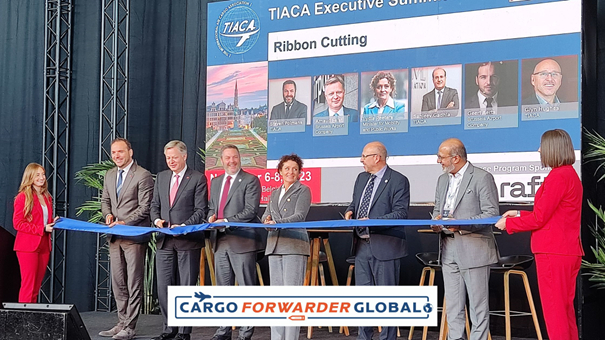
Smiles all round at the official opening ceremony. Image: CFG/bg

Hailed as the largest TIACA Executive Summit to date, its Chair, Steven Polmans subsequently expressed his pride and verdict: “The cooperation between our team and our host, Brussels Airport Company, led to a highly successful event where the industry came together to network, learn, discuss, and debate issues affecting the industry. The energy throughout the event was extremely positive and fun. This underscores the importance the association’s events bring to the industry as we work together to unite us all on a global scale.”

Certainly, taking place on his home turf, sponsored by Brussels Airport, with a strong Nallian/BRUcloud presence and other key national players, the event appeared more intimate and familiar than its predecessors. This was reflected both in the relaxed attitude most delegates had, as well as in the fun, red Tintin et Milou ‘goodie bags’ adorning everyone’s shoulder at some point over the three days. Not to mention, the general humor and awful puns peppering parts of the moderation, throughout – liberally supplied by TIACA’s Director General, Glyn Hughes.

Something for everyone
Before the agenda’s packed mix of topics (which included a look at trade and business challenges, airports, regulatory challenges, creating new opportunities, drones, digital innovation, workforce developments, precious cargo, sustainability, air cargo outlook, freighters, talent, statistics, etc.), really got going on 07-08NOV23, a more hands-on approach was offered as a regional introduction, the Monday prior. Around 30 participants turned up for a comprehensive tour of Brussels Airport on the morning of 06NOV23. Starting at the airport office, the group was presented an overview of the company’s strategy and focus points and learned that (among other things such as BRU being the country’s second largest economic driver after Antwerp), at a record annual revenue of €280 million [in 2022], Pharma was worth 6 times more than all the [1,600 types of] beer and chocolates in Belgium!

The airport has ambitious expansion plans and leads the way in CEIV Pharma certification and digitalization. Delegates of the airport tour visited the immaculate warehouses of Swissport and Expeditors before boarding an airside bus to pass DHL freighters, photograph a Hongyuang Group freighter, and see one of the airport’s USPs which secure its position as preferred Pharma hub in Europe: Airside Pharma Transporters that ensure a closed cool-chain between warehouse and aircraft.

Slightly cloudy BlueSky
Parallel to the Airport Tour were Nallian info sessions on cargo community system digitalization, which appeared well-attended. A BlueSky workshop was offered to those interested in learning more about TIACA’s sustainability program. Though the timing was well-planned to finish just before the welcome reception nearby, attendance was unfortunately far from what it should have been for such an important aspect of our industry and a helpful, well-thought-out program to guide companies on their sustainability journey. CFG’s suggestion would be to offer regular webinars on the topic, to accelerate awareness, acceptance, and adoption. Currently 15 companies are already benefiting from BlueSky guidelines, since the program was launched last year.

Rock of Ages
When they say that TIACA covers the entire air cargo industry, it is still nonetheless a delightful surprise to find that it grows its own entertainment, too. The Welcome Reception on 06NOV23, from 6-8 p.m., was accompanied by an excellent German import band by the name of Mallet, and featuring none other than TIACA member, BeConProject’s CEO, Uwe Beck. The band, which has been around for 4 decades, delivered high quality classic rock music, covering both hard and soft rock – the latter perfectly reflected in the guitarist’s stunning, silky-smooth hair.

That evening also saw around 40 Under-40s gather together for the Cargo Collective initiative – a network hosted by Michelle Lawrence, Sara Van Gelder, and Sam Quintelier, aimed at “inspire[ing] the next generation and empower[ing] the future of air cargo”. Some of the new generation in attendance, had flown in all the way from FUI Business – a Florida-based university offering a logistics program, and where PayCargo had provided event sponsorship.

In fact, overall, the delegates’ average age was lower than at previous TIACA events and there was a good gender mix. The food throughout the event, and particularly at Sint-Goriksplein, the evening location on 07NOV23 (a social meeting venue originally dating back to the Middle Ages, with the current original market building constructed in 1881), was top quality, and of course, no one could leave without tasting the national Moules et Frites specialty – particularly since the oil from Belgian frites is used to produce SAF – as delegates were taught back in the conference hall, the next day.

A perfect chocolate box of topics
The core of the event took place 07-08NOV23, with a packed agenda, and with almost all panels being very well attended. Opening with an aerial performance artist in honor of Amelia Earhart – one of the aviation industry’s first women and a fighter for women’s rights – and to encourage more, TIACA’s DG Hughes urged those present to put the industry’s women forward for future Hall of Fame nominations. Among the opening speeches, was one from the Flemish Minister for Mobility and Public Works, Lydia Peeters – an encouraging link to those in government with influence on the air cargo industry’s future.
A good mix of panel discussions and presentations followed, tackling the various challenges within the industry, adding some new information (with presenters such as UPU and the International Trade Center), dispelling a few myths (such as the nose-door drama which covers 3% of all global shipments and will not be a problem for another 20 years at the moment), and updating the audience on past Sustainability winner projects, for example. Alongside the three recurring central themes of Sustainability, Talent, and Digitalization, one incredibly popular buzzword this time around, was AI. Interestingly, it had even been deployed to create a couple of strikingly odd, future air cargo images for the Trade presentation. Two event highlights were the 2023 Hall of Fame induction, as well as the winners of the Sustainability Awards (both of these topics – and other TIACA panels – are reported on separately in this week’s and future CFG editions).

Next events
“Logistics is the lifeblood that keeps the world in motion,” was one memorable quote from Steven Polmans’ self-proclaimed “longest welcome speech, ever!” during which he also announced his third term as Chairman and pledged “that I will spare no effort in fortifying and improving TIACA, just as I have done over the past 4 years.” Speaking to delegates, the overall feedback regarding the event was positive, therefore boding well for the association’s 2024 plans, which include two more Regional Events, taking place this time in Latin America and Asia, and its next global event: the Air Cargo Forum in Miami, Florida, 12-15NOV24.