
South America’s flower business hits a climax every February – no surprise there, given that it is the month wherein Valentine’s Day is celebrated. This year’s Valentine’s Day flower air cargo peak from Latin America to North America exemplified both logistical scale (Avianca Cargo and LATAM Cargo) and accelerating sustainability efforts (joint effort between LATAM Cargo Colombia, Kuehne+Nagel, and The Elite Flower), with record volumes and pioneering emissions cuts via Sustainable Aviation Fuel (SAF).
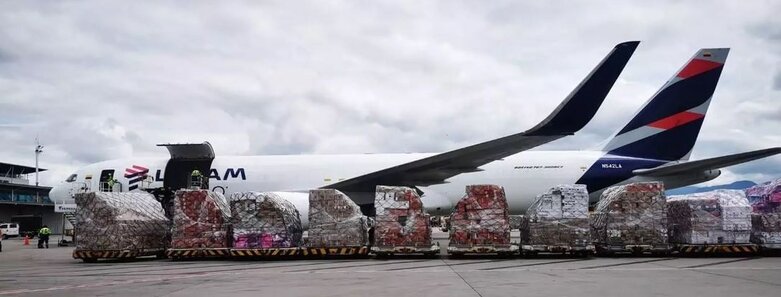
LATAM Cargo Colombia, alongside Kuehne+Nagel and The Elite Flower, scaled its multi-year SAF collaboration to one of its largest deployments yet, allocating over 130,800 liters of SAF on the Bogotá–Miami route. This achieved a lifecycle emissions reduction of about 75% versus conventional jet fuel, avoiding nearly 300 metric tons of CO₂e. That is equivalent to eight B767 freighter flights or the transport of 470 metric tons of flowers (over 10 million stems). Implemented during the sector’s busiest export window, this marked the third straight year of such chain-of-custody initiatives, using Neste MY SAF™ from waste animal fats under a ‘Book and Claim’ model.
SAF collaboration deepens
Partnership is key to embedding decarbonization without sacrificing speed for perishables. Cristina Oñate VP of Sustainability and Product at LATAM Cargo Group, highlighted how SAF integrates emissions management with airfreight’s reliability: “This agreement is rooted in a shared conviction: managing aviation industry emissions requires multiple solutions and, above all, collaboration. Together with our customers, we have taken another step toward more sustainable aviation by applying the environmental benefits of a SAF-based operation to the flower transport chain. This action demonstrates that emissions reduction can already be integrated alongside the speed and reliability of air freight—both critical for fresh products such as flowers.”
Kuehne+Nagel’s Sustainability Manager for Latin America, Ana San Carlos stressed inspiring broader value-chain change: “Collaborative engagement with our partners drives positive and innovative change in key industries such as perishables and air logistics, where reducing carbon emissions is essential. We are proud of our commitment to expanding this initiative year after year and to inspiring more stakeholders across Latin America and globally to continue advancing decarbonization efforts within their value chains.”
The Elite Flower’s Álvaro Camacho spoke of balancing quality delivery with a shrinking carbon footprint, which ties in with LATAM’s four-pillar strategy of efficiency gains, tech/fleet upgrades, sustainable fuels, and ecosystem offsetting: “During the Valentine’s Day season, we export close to 40 million stems through LATAM Cargo – an operational challenge we undertake with a commitment to doing so more responsibly each year. Integrating Sustainable Aviation Fuel (SAF) into our logistics chain enables us to reduce the carbon footprint of air transport without compromising the quality or timely delivery of our flowers. Initiatives like this reflect our contribution to a more sustainable floriculture industry, where operational efficiency and environmental stewardship go hand in hand.”
Market leadership to U.S. solidifies
LATAM Group’s cargo affiliates claimed overall leadership for the fourth consecutive year, shipping over 24,000 tons of flowers from Colombia and Ecuador to the U.S. and Europe in three weeks via around 430 flights from Bogotá, Medellín, and Quito. Roughly 12,300 tons came from Colombia and 12,000 from Ecuador, backed by the region’s largest freighter fleet plus passenger belly capacity. In 2025 alone, LATAM moved 245,000 tons, underscoring year-round floriculture dominance with strong on-time performance and perishables expertise. Claudio Torres Faini, LATAM Cargo’s South America commercial director, credited customer trust and flexible operations: “Valentine’s Day is one of the most demanding seasons for the flower industry in the region, and leading this market for the fourth consecutive year directly reflects the trust our customers place in LATAM Cargo. Our role as a partner to the industry goes beyond specific peak seasons: we support our customers year-round, ensuring capacity, operational flexibility, and reliable service when they need it most.”
Avianca Cargo also delivers strong performance
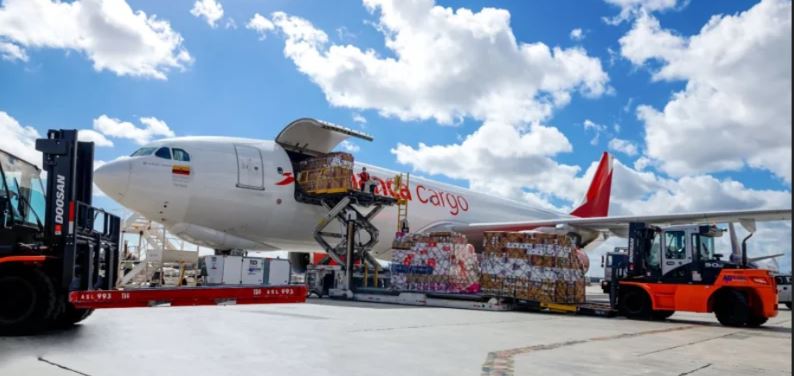
Avianca Cargo also laid claim to being the Number 1 carrier of flowers from Colombia to the U.S., carrying one in every three Colombian flowers on its aircraft. The airline airlifted 19,000 tons from Colombia/Ecuador across 320 flights to Miami and Los Angeles. During the Valentine peak, it doubled its Colombia capacity (operating its fleet of nine A330F), tripled Ecuador’s, partnered with Amazon Air for 80 of its 320 flights, and boosted its workforce by 30% amid infrastructure upgrades. Cold-chain rigor prevailed: 4–8°C handling in controlled zones and holds, enabling near-hourly peak-day arrivals. Diogo Elias, Avianca Cargo CEO, praised chain-wide coordination: “For the 2026 Valentine’s Day season, we strengthened our operation to deliver the capacity, reliability, and consistency our customers rely on during the industry’s most critical peak. Today, one in every three Colombian flowers exported to the United States traveled with Avianca Cargo, reaffirming our leadership after transporting a total of 19,000 tons of flowers. This performance is also made possible thanks to the coordinated work with our strategic partners across the entire logistics chain.”