

At the end of last year, experts were predicting air cargo growth rates of between 2% and 3% for 2026. Yet, the year actually began on a high, greatly exceeding those forecasts: IATA reported that JAN26 saw +5.6% year-on-year growth, after which FEB26 surged to +11.2%. It looked as though forecasts might need to be positively revised.
Then came 28FEB26… And the revision is now likely to be negative, since the immediate impacts were an unprecedented fuel crisis, capacity shortages, and greatly inflated rates. For some regions, these challenges are exacerbated by additional obstacles such as strikes and movement restrictions for reasons of safety.
The U.S.-Israeli strikes on Iran and the subsequent Strait of Hormuz disruption have fundamentally altered the air cargo scene for the next few months. Traffic through the Middle East has suffered from retaliation measures leading to temporarily closed air spaces, capacity squeezes and severe rate volatility as crucial Gulf transit hubs are bypassed. And jet fuel costs have also exploded in the unforeseen scenario.
An unparalleled fuel crisis
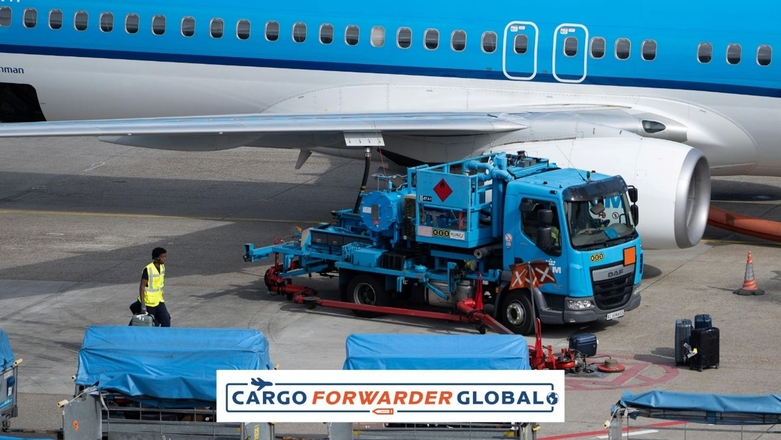
The root of the problem lies in the Strait of Hormuz. The waterway, through which 20–25% of the world’s oil supply previously flowed freely, has been effectively closed since the attack on Iran on 28FEB26. The consequences for aviation fuel were immediately and severely felt. According to IATA, jet fuel prices surged 103% month-over-month as of MAR26, while in the U.S. alone, the price per gallon nearly doubled. CNBC reported an increase in price from USD 2.50 on 27FEB26 to USD 4.88 by 02APR26. While on 15APR26, the International Energy Agency (IEA)’s Executive Director, Fatih Birol warned that Europe now has “maybe six weeks of jet fuel left,” characterizing it as potentially the most significant energy crisis the world has ever encountered. Reuters recently published a list of airlines that have largely halted their operations to the Gulf and Israel over the next weeks and months – in some cases even up to SEP26. The general feeling is that the war on Iran will not be over soon, no matter the current ceasefire at the time of writing.
Capacity shortages
The long list of passenger flight cancellations impacts air cargo, too, since belly capacity is removed from the market. All airlines are also reevaluating their route offers to absorb the impact of rising fuel costs. Cathay Pacific recently announced a 2% capacity reduction from mid-MAY26 through to JUN26, entirely suspending certain Middle East routes. United Airlines, Air India, Air New Zealand, and Vietnam Airlines have followed suit with similar cuts to frequencies and services. Over in Europe, carriers are drawing up contingency plans that include grounding older, less fuel-efficient freighters and reallocating fleets – with some preparing to reduce total capacity by up to 5% if conditions deteriorate through to JUN26.
Lufthansa: strikes and shutdown
Perhaps the most dramatic European casualty of the fuel crisis to date, is Lufthansa Group’s CityLine. On 16APR26, Lufthansa Group announced the immediate and permanent shutdown of the regional carrier – a move that had originally been planned for 2028, but was accelerated by soaring kerosene costs and relentless labor disputes (6 consecutive days in APR26 alone, with up to 90% of the airline’s flights out of Frankfurt and Munich being cancelled on peak days). All 27 CRJ regional jets were then grounded on 18APR26.
O’Hare: service failures lead to movement cap
While Europe and the Middle East grapple with fuel and airspace disruptions, Chicago O’Hare International Airport – the U.S.’ second-most significant cargo hub in terms of trade value – has become a case study in compounding ground-level failures. Since Good Friday, 03APR26, the airport has seen major flight delays over twelve consecutive days – for a number of reasons ranging from weather, to Lufthansa’s strike, to short-staffing. On 17APR26, alone, it counted 972 flight disruptions (cancellations and delays). The previous day, a United Airlines aircraft struck another United plane, which triggered an emergency order from the FAA to cap daily operations to a total of 2,708 flights instead of the 3,080 operations on peak summer days. The restriction will be in place from 17MAY26 to 24OCT26. “Our number one priority is the safety of the flying public, and that means ensuring airline schedules reflect what the system can safely handle,” FAA Administrator, Bryan Bedford, explained. “We appreciate the airlines working together with us to reach a responsible level of operations that strengthens safety and delivers a more reliable travel experience for the American public.” The FAA is also working on recruiting more air traffic controllers, and optimizing the routes and airspace around the airport to reduce delays The air cargo industry is known for its resilience and adaptability, but right now it is vulnerable under the weight of challenges it, for the most part, cannot really influence.