
An example from the Ukrainian region near Kharkiv, which was attacked by Russian troops, shows the disastrous consequences that wars can have not only for humans, but also for captive wild animals. There, two completely exhausted big cats left behind in cages by their owners, were rescued from starvation: a white tiger and a lynx. Thanks to a complex international effort supported and coordinated by DHL, they were taken to a sanctuary in the UK.
Abandoned and left behind
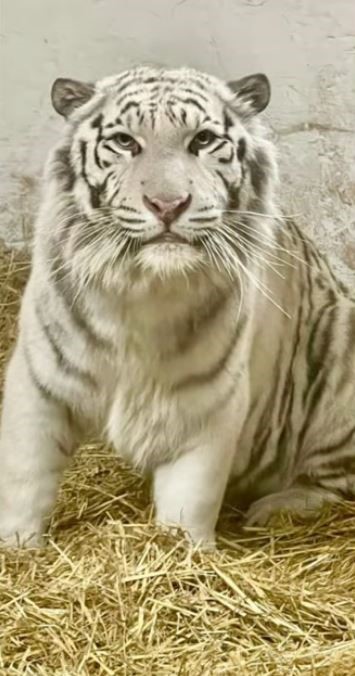
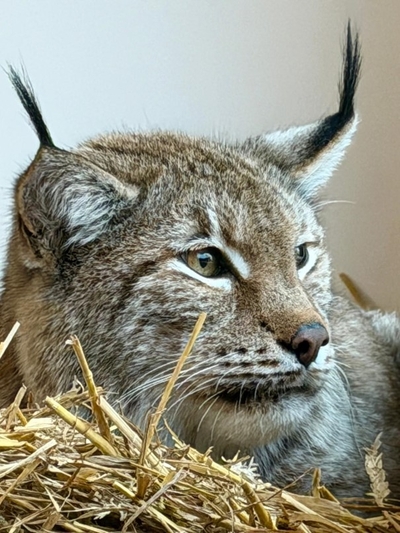
Aleks, as the tiger is called, was discovered by Ukrainian soldiers behind bars in a dilapidated shed near Kharkiv. He was in extremely poor condition, suffering from parasites, skin infections, malnutrition, dehydration, and impaired liver and kidney function. Aleks was so weak that he could no longer stand. His former owner abandoned him when the war spread, without notifying any animal protection organization or official body. The lynx, Lothar, also appears to have gone through a similar ordeal. He was simply left behind in his cage by his owners, who fled as the Russian invaders came closer. There are no official figures, but NGOs report a constant number of wild cats kept illegally in private households. Many are purchased as cubs and later abandoned when they become too dangerous, too expensive or are simply no longer wanted. Sadly, their experience is not unusual. Wildcats kept as pets or in other inappropriate settings, often face severe neglect, and wars only intensify this untenable situation.
From Ukraine to UK
After their rescue by animal rights activists, Aleks and Lothar were first taken to a Wild Animals Rescue Center in Ukraine to regain basic strength. Once the animals’ condition had stabilized, they began their approximately 2,600-kilometer journey in specially designed transport crates aboard a large transport van. They traveled from Ukraine to Calais (France), through the Eurotunnel to the UK, and continued by road to Lincolnshire Wildlife Park. Upon arrival on 27FEB26, they were examined by a veterinarian and then released into a specially built enclosure. Lincolnshire Wildlife Park is one of the UK’s largest facilities dedicated to rescuing animals and providing them with lifelong sanctuary.
Working with the NGOs, Nadiya and Wild Animals Rescue Center, veterinarians, customs authorities, and Lincolnshire Wildlife Park, DHL helped coordinate and support the animals’ journey to their new sanctuary. Both animals are now beginning their next chapter in a safe, species‑appropriate environment.
Track record of rescue logistics
“Aleks and Lothar were born in captivity and would not survive in the wild. They lack the instincts typical of wild animals, such as hunting. Facilities like ours are the only way animals like them can live a safe and fulfilling life,” explained Steve Nichols, Chief Executive Officer, Lincolnshire Wildlife Park, upon the arrival of the wildcats.
DHL has a track record of wildlife support and rescue logistics. In 2024, for example, the company transported the disabled female chimpanzee, Chocolat, from Kenya to her new long-term home in Monkey World – Ape Rescue Centre, Dorset, UK. CargoForwarder Global reported: https://cargoforwarder.eu/2024/08/25/dhl-express-delivers-on-serious-monkey-business/
From little to large and big
That same year, DHL flew 25 rare bongo antelopes from the United States to Kenya, as part of a program to release rare and endangered species into the wild again. Please see: https://cargoforwarder.eu/2025/03/30/17-bongo-antelopes-fly-from-florida-to-kenya/ Even heavyweights such as manatees and hippos, have traveled with DHL, the company notes in a release.“For us, every shipment entrusted to us is something special, and we always look for the best solution. But transporting animals is particularly complex. It requires an extra level of care – after all, they are living beings and they need our special attention. Together with all our partners and our combined logistics expertise, we were able to bring Aleks and Lothar to a place where they will finally receive the care they deserve and can begin their long path to recovery,” Nicola Leske, Head of Communications & Sustainability, DHL Group, concluded.