
Last week we reported about air freight being featured at the upcoming ILA Berlin Air Show, as a main driver for SAF deployment. But the cost of SAF is still a prohibitive barrier, reaching three- to five-fold levels compared to fossil jet fuel. Since Aviation is a global business, which requires cross-border measures to decarbonize this industry, India is on its way to becoming a key player in the effort to reduce greenhouse gas emissions. Details will be presented and discussed at the ILA.
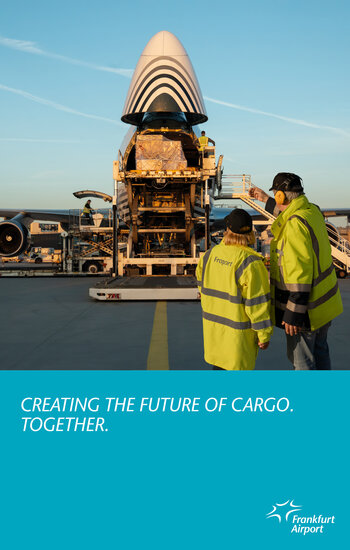
Recently, the airports of Frankfurt and Bangalore celebrated a new air freight partnership, CFG reported.
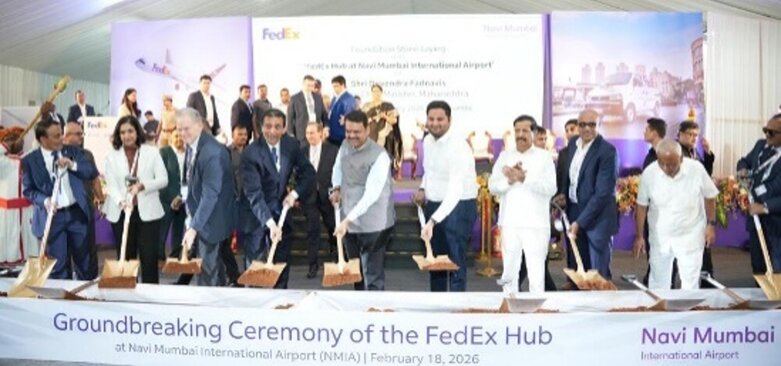
Mumbai progresses too, aligning with Paris and Guangzhou as regional FedEx hub. These signs of business enthusiasm follow the conclusion last January of the India–EU Free Trade Agreement (FTA), and its pivotal role in shaping trade relations between the two partners who together account for nearly a quarter of global GDP.
Sustainability is a key part of the agreement evidenced by the dedicated chapter on Trade and Sustainable Development (TSD) standing in the EU-India trade treaty. The chapter builds on existing international commitments that both parties have already endorsed – such as the Paris Agreement – and states that trade and investment should not come at the expense of environmental or social protections.
Air Show debate on hard-to-abate emissions
However, Sustainable Aviation Fuel (SAF) is still four to five times more expensive than traditional Jet A-1 fuel. This price difference is the biggest obstacle to the aviation industry’s transition from fossil fuels to SAF.
Scaling up SAF production to increase supplies is the only way to drive down costs. But that’s easier said than done, as an overview of European projects shows, many of which struggle to reach FID (final investment decision), or even stepped out of business meanwhile. The fastest growing SAF volumes during the next decades need to be eSAF, based on a Fischer-Tropsch process with feedstock of Green Hydrogen, made with renewable energy built up for that purpose. But this is exactly what makes the costs explode.
India powers a clean future
This is where India comes into the game. It started in 2022 by the first talks between both countries, when the German top political leaders met their counterparts in India. It took a while, but now the breakthrough came with a long-term import deal between the German (still) state-owned energy company Uniper, and their Indian supplier AM Green. India is one of several selected partner countries for Green Hydrogen imports, a multi-origin sourcing strategy to compensate limited domestic German production. The Hydrogen is shipped as Green Ammonia, being the safest technical solution. In return, Germany’s engineering capabilities will enable faster manufacturing build-up, for Green Hydrogen, and ultimately SAF made in India.
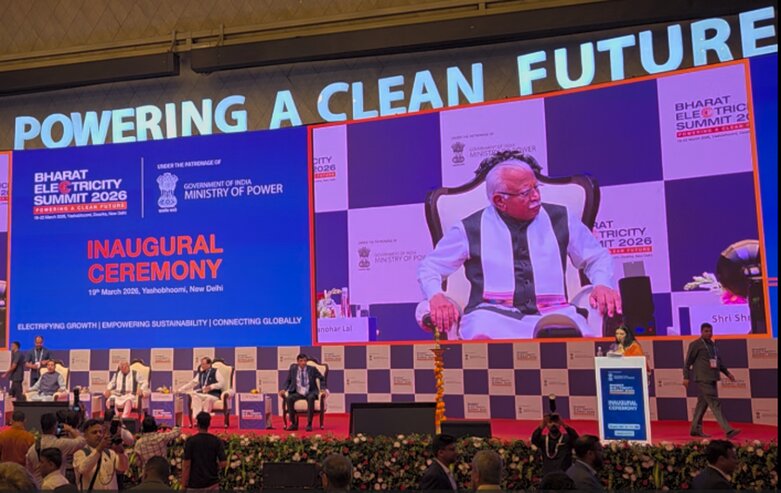
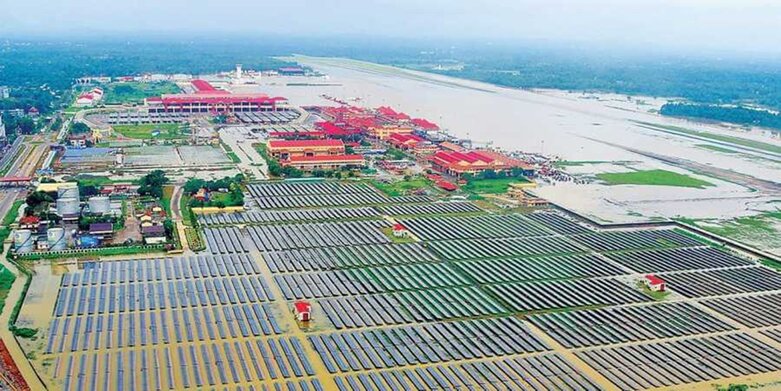
In speed of building up huge capacities of renewable energy, India is almost second-to-none, as again demonstrated at the recent Bharat Electricity Summit in Delhi and clearly advertised when promoting Green Hydrogen production. Economic production overcompensates transportation cost, and certification makes the product suitable for the EU. Highly dependent on oil and coal imports, India chose the year 2047 as target for independence in the energy sector, including fuels, making it the centennial of the country’s political independence. And 2070 is the declared target year for achieving net-zero emissions.
A growing aerospace superpower
All of this progress is perfectly in line with India’s role in aviation and space, promoted by the Federation of Aviation Industry in India. As partners of Airbus, industry champions like Hindustan Aeronautics Limited have built helicopters for over 60 years, with another Airbus Final Assembly Line just announced in cooperation with Tata Advanced Systems. Huge orders from the Indian state and its airlines, major customers of Airbus, Boeing, Dassault Rafale and others, contribute to above-average growth of this industry, especially in clusters like the one existing in the Bangalore aera. Hence it comes as no surprise that Germany’s capital region, with Berlin’s Senator for Economic Affairs, recently opened an overseas office in Bengaluru and has started a joint space research & industry partnership program.
The ILA Berlin Air Show will feature challenging discussions organized by Germany’s leading international SAF initiative aireg (Hall C, Stand 121), and more India-specific by the SAF driver of the capital region, Berlin-Brandenburg Aerospace Allianz (Hall B, Stand 331), with a panel on the Indo-German value chain for SAF on 11 June at 13:00-14:00.
Hugo Duchemin