Home Blog Page 46

Blocked Airline Funds: IATA has had enough!

0

Aviation in Africa is on the rise, at least in some of the continent’s 54 countries. However, the willingness of some governments to release withheld funds by returning them to their proprietors, passenger and cargo airlines, is in decline. If they do not change this practice, they risk being isolated from intercontinental air traffic. The International Air Transport Association (IATA) has now issued a warning about this problem and its possible consequences. It remains to be seen whether those affected will heed this alert and change their policy.

A significant number of countries are resisting the repatriation of funds belonging to foreign airlines  –  photo: archive CFG

Algeria tops the list of countries that are permanently blocking airline funds. The country owes USD 307 million to foreign passenger and air cargo companies operating there. These are funds from local ticket sales or booked and paid air cargo shipments, but to which the airlines concerned have no access due to a repatriation blockade proclaimed by the aviation authority of the country. Blocked funds are revenues earned by international airlines in local currencies that cannot be converted and repatriated in U.S. dollars due to government-imposed restrictions or foreign exchange shortages. But how does this happen and what measures are needed to release blocked funds?

Complex scheme
Internationally operating airlines have a unique business structure. They earn revenue in many countries, but most of their major costs are incurred at their home airports – maintenance, manpower costs, fuel, expenditures for ground equipment or office buildings.

This very complex scheme can only function when airlines are able to repatriate the funds earned from sales outside their home turf. It ensures that carriers can pay their bills and keep operations running permanently, safely and reliably. Binding agreements between airlines and national aviation authorities or government bodies are supposed to guarantee this. However, as the table shows, this is often not the case. As of OCT25, airlines had a staggering USD 1.2 billion in blocked funds globally, claims IATA. Timely repatriation in U.S. dollars is essential for airlines to meet dollar-denominated expenses like leasing, maintenance, fuel, and salaries.

Blocked funds block airline development
Should funds remain trapped, airlines are exposed to currency depreciation. If a local currency loses 20% of its value during the delay, the airline suffers a direct financial loss when converting it back to dollars. At the same time, carriers often borrow to cover operational expenses while waiting for blocked funds to be released, and rising interest rates can add hundreds of thousands in unplanned costs. Or there could be opportunity cost: capital tied up in blocked funds cannot be invested in fleet upgrades, route expansion, or sustainability initiatives, torpedoing growth and reducing competitiveness.

Consequently, airlines must factor this risk into their network and financial planning, particularly if serving financially strapped African countries. Trapped funds often lead to reduced flight frequencies, higher fares, or even the suspension of routes altogether. In effect, unlawfully withheld proceeds make a country more expensive and less attractive to foreign carriers.

Loss of trust
Thomas Reynaert, IATA Senior Vice President, External Affairs, warns of another consequence of this obstructionist attitude: loss of trust. “The longer funds remain trapped, the greater the damage to confidence. International airlines and investors see blocked funds as a warning sign of financial instability. Currency controls, while sometimes necessary during crises, can tarnish a country’s reputation and strain relationships with global institutions, making recovery harder and slower.”

The problem is serious, but there is light at the end of the tunnel, says IATA official Reynaert. “With political will, open dialogue, and a commitment to transparency, governments can resolve blocked fund challenges in ways that support economic and aviation growth.”

Nigeria is an encouraging example
Prioritizing aviation in foreign exchange allocation is the first step toward clearing blocked funds. From there, authorities can streamline administrative processes and eliminate unnecessary bureaucratic hurdles that slow repatriation. Experience shows that, with the right approach, blocked funds can be released without destabilizing local economies.

Nigeria offers a clear example: through constructive engagement and phased repatriation, the backlog was successfully cleared. At one stage, the government withheld funds amounting to staggering USD 850 million. However, through constructive dialogues and phased payback, the backlog was successfully cleared.

IATA’s list of the largest 10 debtors***
***The XAF Zone includes Cameroon, Central African Republic, Chad, Republic of the Congo, Equatorial Guinea, Gabon.

CountryAmound Held in USD Million
Algeria$307M
XAF Zone$179M
Lebanon$138M
Mozambique$91M
Angola$81M
Eritrea$78M
Zimbabwe$67M
Ethiopia$54M
Pakistan$54M
Bangladesh$32M
*As of October 2025 – Courtesy: IATA

Spotlight on… Alexey Zotov, Managing Director, Air Cargo Green Capabilities S.a.r.l.

0

Each week, CargoForwarder Global shines its ‘Spotlight On…’ a different area of the air cargo industry and illustrates the manifold career opportunities available through the voices of those working in it. Freight forwarders have a vital function in the air cargo supply chain, acting as expert intermediaries between shippers and airlines (and other modes of transport) to ensure the efficient, cost-effective, and compliant movement of goods across the world. One freight forwarder has developed its role further and, among other services, has embraced the shift to sustainable logistics, focusing on green initiatives and eco-friendly air cargo solutions – even going as far as including its aim in its company name. This week, Alexey Zotov, Managing Director of Air Cargo Green Capabilities S.a.r.l., explains his role and shares his views and advice to anyone considering a career in air cargo.

A world of pragmatic problem-solvers. Image: ACN Group

CFG: What is your current function and company? And what are your responsibilities?

AZ: I am the Managing Director of Air Cargo Green Capabilities, part of ACN Group, a role that sits at the fascinating crossroads of global commerce and environmental innovation. My core mission is to pilot the air cargo industry’s transition to sustainable operations. I translate ambitious global climate targets into actionable, technical roadmaps for airlines and logistics partners. My team and I are responsible for everything from evaluating and sourcing Sustainable Aviation Fuel (SAF) for long-haul freighters to implementing carbon-neutral handling solutions for e-commerce fulfillment hubs, ensuring our vital global network evolves responsibly.

CFG: What does a normal day look like for you?

AZ: ‘Normal’ is a fluid concept! My day is a whirlwind of global orchestration. It might begin reviewing the emissions profile of a dedicated e-commerce charter from Shanghai to London. Then, I’m in a virtual summit with aircraft manufacturers discussing next-gen, fuel-efficient freighters. Afternoon calls involve negotiating SAF offtake agreements with producers. I also spend time analyzing data from our green warehousing pilots. The rhythm is a constant blend of high-level strategy with nitty-gritty operational details, all while juggling time zones and fostering collaboration between traditionally separate teams.

CFG: How long have you been in the air cargo industry, and what brought you to it?

AZ: I have navigated this exhilarating industry for 20+ years. My entry began on the commercial and marketing side, captivated by the sheer magnitude of moving critical goods – from lifesaving pharmaceuticals to vital automotive parts – across continents overnight. The initial attraction was the complex, high-stakes puzzle of global trade. I stayed because of the incredible, fast-paced energy and the people; it’s a world of pragmatic problem-solvers. Today, my passion is fueled by the new challenge of evolving this essential network for a sustainable future.

CFG: What do you enjoy most about your job?

AZ: The greatest thrill is building the bridge between legacy systems and a bold new future. After 15 years driving commercial revenue of Cargo Airlines, I now use that operational knowledge to design the ‘how’. I love taking a conceptual goal like ‘net-zero’ and engineering the tangible pathway – the fuel contracts, the new technology partnerships, the operational tweaks. It’s profoundly rewarding to be a catalyst, turning environmental responsibility from a cost center into a core component of resilient, modern, and competitive global logistics.

CFG: Where do you see the greatest challenges in our industry?

AZ: The monumental challenge is the triple constraint: meeting the explosive, 24/7 demands of cross-border e-commerce, achieving aggressive decarbonization targets, and doing so within razor-thin economic margins. We must fundamentally redesign a system built for fossil-fuel efficiency while it’s operating at full throttle. This requires unprecedented collaboration across the entire ecosystem – from fuel producers and regulators to airports, forwarders, and consumers – to align on standards, investments, and perhaps a recalibration of the true cost of ‘next-day’ delivery to the other side of the planet.

CFG: What advice would you give to people looking to get into the air cargo industry?

AZ: Embrace the industry’s behind-the-scenes magic! Start anywhere – in operations, sales, or IT – and be relentlessly curious. Understand that you’re joining the central nervous system of globalization. Build relationships; this is a people-business where trust is currency. Develop a thick skin for volatility and a passion for solving puzzles under pressure. Most importantly, bring fresh perspectives, especially in tech and sustainability. We need innovators who can help rewire this essential industry for its next century of flight.

CFG: If the air cargo industry were a film/book, what would its title be?

AZ: ‘The Invisible Web: A Logistics Symphony.’ It would be a sprawling, real-time thriller with no single hero. The plot follows a single urgent parcel across the globe, interweaving the high-stakes decisions of pilots, the frantic coordination of handlers in midnight hubs, the digital dance of customs bots, and the strategic gambles made in corporate boardrooms. It’s a story of precision, chaos, human grit, and brilliant technology, revealing the breathtakingly complex and often unseen lattice that keeps our modern world connected and supplied.

Many thanks, Alexey!

If you would like to share your personal air cargo story with our CargoForwarder Global readers, feel free to send your answers to the above questions to cargoforwarderglobal@kopfpilot.at We look forward to shining a spotlight on your job area, views, and experiences.

Gemini Alliance could inspire imitators

0

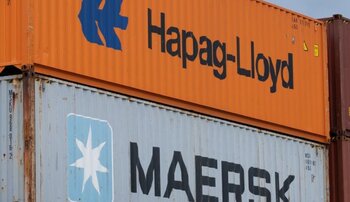
The Gemini network alliance between Maersk and Hapag-Lloyd, which has been in place since 03FEB25, could inspire other players to follow suit. This was indicated by Hapag-Lloyd CEO, Rolf Habben Jansen, during his shipping company’s traditional New Year’s dinner with media representatives in Hamburg’s Hafen City last week. The impetus for this are the positive performance and convincing results achieved by the maritime partnership since its inception.

Gemini:  Hub and spoke network leads to high shipping punctuality  –  courtesy: picture alliance

Outstanding schedule punctuality
Currently, 350 container vessels from Maersk and Hapag-Lloyd are operating under the Gemini flag. The result from the perspective of the Hamburg-based shipping company: After initial adjustment processes, costs decreased and the on-time arrival rate surpassed the 90% mark at the end of last year. According to Xeneta, the leading ocean and air freight rate analytics platform, this highlights “that the Gemini Cooperation occupies a prominent position due to strategic decisions such as reducing port calls and utilizing vertically integrated terminals. These measures, along with a strong focus on the North American market, have favored the daily operations of the alliance.” With this reliability rate, Gemini has left the competition far behind, as a comparison by Xeneta shows. This adherence to schedules fosters customer loyalty and ultimately pays off in the form of more volumes and higher sales.

Further above-market growth is expected
Asked about Trump’s punitive customs policy and its impact on Hapag-Lloyd’s U.S. business, Habben Jansen said that the tariffs had indeed had a negative effect on his shipping company’s traffic to and from the States. Tariffs are poison for international trade, but above all, the constant back-and-forth on tariffs makes supply chain planning a lottery, the executive criticized. In contrast to the contraction in tonnage to and from the U.S., traffic on the routes between Europe, South America, Africa, and Asia grew by 6.5% in 2025. That is 1.5% above market average. For 2026, he expects a slightly lower increase in shipment volume, reaching +5%. If this happens, it would be the third consecutive year in which Hapag-Lloyd has grown above the global ocean transport market.

Suez transit remains critical
The focus of the evening was on the pros and cons of Red Sea transits. CMA CGM and Maersk have already completed their first passages through the Suez Canal. However, a few days ago, CMA CGM made a U-turn, announcing that it would stop transits of its FAL1 and FAL3 rotations connecting Asia and Europe via the Suez Canal, and return to lengthier sailing around the Cape of Good Hope.

Habben Jansen commented: “Three or four weeks ago, I was still optimistic about the Suez routing. However, new threats from the Houthis have made these Red Sea crossings unsafe again. Therefore, we will continue to circumvent Africa until further notice, even if this adds 10 or 12 days to a vessel’s journey. Our primary goal is to protect our seafarers and ships as best we can and to stabilize supply chains. A policy of constant ins and outs produces nothing but chaos.”

Eyeing e-commerce
When asked by CargoForwarder Global whether e-commerce could become an interesting business area for Hapag-Lloyd should the Red Sea risks be eliminated and sailing times significantly reduced, the manager confirmed his shipping company’s interest. “Even if e-commerce would only add 1% to our total cargo volumes, it would increase our sales.” A sea-air combination is also a feasible option, he said.

In contrast, he denied any ambitions to enter the sea transport of military goods. Hamburg, the home port of Hapag-Lloyd, is developing into an important hub for military equipment. However, there are specialists with experience and professional handling expertise for the maritime transport of these goods, he replied.

Finally, the executive confirmed growth plans for the subsidiary, Hanseatic Global Terminals, to acquire stakes in/or take over additional port facilities. Its portfolio currently comprises 22 assets. By the end of 2026, this figure is expected to rise to 23 or 24, with 30 terminals planned by 2030.

Gemini rival CMA CGM and investor Stonepeak inked Terminal JV
The joint venture named United Ports LLC is backed by USD 2.4 billion and based in the USA. It spans 10 major CMA CGM-operated port terminals worldwide.“The creation of United Ports LLC […] marks an important step in the development of our terminal activities in the United States and globally,” stated Rodolphe Saadé, Chairman and CEO of CMA CGM Group. The executive went on to say: “Through this strategic partnership, we bring together ten CMA CGM-operated terminals across six countries, including major facilities such as FMS in Los Angeles, Port Liberty in New York, Santos in Brazil and Nhava Sheva in India. By joining forces with a partner with strong infrastructure expertise, we strengthen our ability to invest further in our port terminals, secure access to key gateways and enhance service quality for our customers.”

Both players state that their JV forms the basis for a long-term relationship between their companies, including the potential to develop and support future investment capacity and new terminal projects in the U.S. and globally. As part of the transaction, Stonepeak will have the opportunity to contribute an additional USD 3.6 billion in funding for future joint terminal projects.

“Container terminals play an essential role in global trade and are among the most difficult to substitute or replicate transportation infrastructure assets,” said James Wyper, Senior Managing Director, Head of U.S. Private Equity, and Head of Transportation & Logistics at Stonepeak.

The transaction is expected to close in the second half of 2026, subject to customary regulatory approvals, including relevant antitrust and foreign direct investment approvals.

“Sponsors welcome!” says Chicago’s Airport operator CDA

0

In the UK and Germany, it is already common practice to sell naming rights for soccer stadiums to financially strong investors. Examples include Manchester City’s arena, now called Etihad Stadium, and the Red Bull Arena in Leipzig, home ground of the local soccer club, RB Leipzig. In Canada, big money mainly purchased the naming rights for hockey stadiums, such as in Toronto, where the Maple Leafs play their home games at Scotiabank Arena. Now, 700 km further southwest, at two Chicago airports, the naming rights for hangars, terminals, and other assets can soon be purchased by sponsors.

Chicago’s Department of Aviation intends to tap into new sources of income by selling naming rights – credit: CDA

“The colleague responsible for airport security has just gone to the Amazon hall, but he may also be in the Bud Light® cargo terminal, or probably he has already arrived at the Kentucky Fried Chicken boarding zone.” This is how information at Chicago O’Hare Airport might sound in the future. Or at nearby Midway International Airport.

ORDNext
Both Chicago airports want to increase their revenues and start tapping into additional financial sources outside the aviation sector.

At O’Hare, the campaign is called ORDNext and aims to brand infrastructure facilities. The desired sponsors are companies with international appeal and a flawless reputation. By purchasing the naming rights of airport assets such as gates, concourses, or entire satellite buildings, they hope to gain financial benefits and/or improve brand awareness.

Uncle Ben’s terminal
But where might this kind of commercialization in aviation end? Will runways, aprons, or aircraft stands also be named after fast food chains in the future? It seems that the sky is the limit when it comes to generating additional cash to finance airport operations, modernization or expansion projects. That said, in the future, cabin crew might tell passengers before departure, after they have taken their seats, fastened seatbelts and gone through the safety instructions that “our aircraft is taxiing from our stand at the Pepsi Cola Gate, will pass through the Cadillac Apron sector and turn onto the Roadrunner Hot Rod Runway for take-off.”

Sound bizarre? Perhaps, but other industries, such as the film and sports industries, have long since embarked on this course.

Non-stop commercialization
The Chicago Department of Aviation (CDA) has now invited interested companies to submit proposals for obtaining naming rights for assets belonging to O’Hare or Midway. Prior to that, the administrator identified potential targets for sponsorship, including charging stations for electric vehicles, the bus fleet linking the airport terminals at ORD, parking buildings, or lounge areas, cargo terminals and warehouses, among others. The call for proposals does not constitute a tender or may be understood as the entry into a contract but supports CDA in gaining an overview of the interest of potential contractual partners as a basis for further planning and steps, argue the initiators.

Expressions of interests expected
“By managing two global hubs, CDA is committed to thinking commercially and seizing every opportunity to strengthen airport revenues in ways that support our partner airlines and the traveling public,” Michael McMurray, CDA commissioner told the media. “By inviting the best ideas from the industry and gauging market interest, we are laying the groundwork for sponsorship opportunities in existing facilities and new developments,” he illustrated.

According to the official, companies may submit their expression of interest until 17FEB26. Based on the data received, CDA will set up a program for future naming rights aimed at broadening the sources of income to increase the passenger experience and offer superior cargo services at O’Hare and Midway.

China Airlines signs Wexco for a further 2 years

0

China Airlines and the UK’s Wexco Cargo GSSA are already into double-figures in their partnership which dates back to 2012. The two companies have now signed another 2-year extension to their agreement, effective immediately, taking their cooperation to 2028. London’s China Airlines manager lauded the close cooperation with Wexco, and the continued high-quality service being given to UK customers. Wexco’s Managing Director is confident of further development and success. The GSSA is responsible for the airline’s UK cargo sales, ensuring that passenger belly capacities are filled, and managing cargo on its dedicated freighter services, as well as UK road feeder (RFS) operations. It cooperates with China Airlines’ teams at London Heathrow Airport (LHR), as well as in Luxembourg (LUX), and Taipei (TPE), Taiwan.

Des Vertannes, Managing Director, Wexco, part of the Kales Group B.V. Image: Wexco

Five direct flights per week connect London’s Heathrow with Taipei, and RFS ex UK feed into China Airlines’ freighter services out of Luxembourg and on to destinations across Asia, such as Hong Kong, Bangkok, Thailand, and Manila, Philippines.

“Since the beginning of the partnership, Wexco has supported CI to adapt and expand its cargo offering, including supporting CI’s ‘preighter’ flights during the pandemic and adapting road feeder services to accommodate new post-Brexit customs parameters,” the press release underlines.

Des Vertannes, Managing Director, Wexco (part of the Kales Group B.V.), explained: “China Airlines and Wexco truly define how tangible collaboration delivers optimal performance and success. A shared focus on solutions-driven outcomes and a customer-first approach have enabled us to deliver a consistently high standard of service for the UK market, both companies are extremely proud of. This extension will see us beyond the 15-year mark during its term, and reflects the diligence and commitment shown by both teams and the continued confidence China Airlines places in Wexco to safeguard and enhance the airline brand. We are hugely grateful to CI for their ongoing trust.”

Alan Price, Cargo Sales and Services Head of Europe, China Airlines, Luxembourg, commented: “We have always felt that China Airlines is excellently represented by Wexco in the UK and that our customers are in very good hands. We value Wexco as a trusted partner on both a professional and personal level and expect the relationship to continue to grow and succeed for many years to come.”

Mandy Kwok, London Airport Manager, China Airlines, said: “China Airlines London is proud to work closely with Wexco. Their exceptional support enables us to provide seamless and dependable cargo operations to the markets we serve.”

Cool solutions not just for air cargo, but for a good cause

0

Envirotainer is a well-known name in our air cargo industry, known for its innovative and reliable temperature-control solutions. Yet, how many of you have heard of Mercy Ships and what they do? These days, between 5,500 and 6,500 ships traverse the oceans at any given moment. The majority of those are cargo ships. A fraction are passenger cruise ships, and precisely two are non-governmental hospital ships: namely the Africa Mercy® and the Global Mercy™. On board of these two ships, are surgeons, dentists, nurses, health trainers, cooks, and engineers – all volunteers (around 2,500+ in total from 60+ nations) who come together to offer free and safe surgical, anesthetic and health care to those with limited access, and who need it most, as well as local healthcare training. Founded in 1978 as an international faith-based organization, Mercy Ships has offices in 16 countries and an Africa Service Center in Dakar, Senegal. Some 122,000+ surgical procedures have been carried out since its founding, and more than 55,500+ healthcare professionals have received training, thus helping local communities to help themselves once the ships have left.

Envirotainer supports Mercy Ships in providing safe healthcare. Image: Envirotainer

The latest volunteer has now come on board in the shape of Envirotainer, which has partnered with Mercy Ships and is donating the use of its cold chain solutions to ensure that the lifesaving medicines being transported are stored correctly and safely. This is done, for example, with its ProofPak solution, “a robust, reusable and easy-to-use packaging system that enables medicines to remain safe and effective even in the most challenging environments,” the release says.

Niklas Adamsson, Interim CEO and COO at Envirotainer, stated: “Supporting Mercy Ships’ mission to provide essential medical care in underserved regions aligns closely with our own vision of enabling global access to medicines. We are proud to contribute our cold chain expertise to help ensure that critical medicines remain safe and effective for the patients who need them most.”

Simone Jones, Director of Global Corporate Partnerships at Mercy Ships, explained: “Every day, our volunteer crews work to bring hope and healing to patients who would otherwise have no access to safe, affordable surgery. Partnerships like this one with Envirotainer, help make our work possible, ensuring that we can deliver the medicines and treatments needed to transform lives across the communities we serve.

Marco di Mario appointed Executive VP Fuels

0

Menzies Aviation has appointed Marco di Mario as Executive Vice President Fuels, reinforcing its position as the world’s largest independent aviation fuel services provider. Menzies’ focus is on delivering safe, efficient, and integrated fueling solutions to airlines, airports, and fuel suppliers. Menzies currently provides into-plane fueling (ITP) and fuel farm management at 79 airports in five countries, annually handling 3.3 million fuel turns and nearly 40 billion liters of fuel. It boasts a strong safety record and a highly trained team of fuel operations specialists. “With an established fuels footprint in Europe and the Americas and further expansion planned in OSEA and MEAA, Menzies supports customers at every stage of the fueling process – from fuel receipt and storage through to aircraft delivery. This integrated approach helps airlines enhance on-time performance and safety, while enabling airports and fuel suppliers to maximize compliance, and operational resilience,” the release emphasizes.

Marco di Mario as Executive Vice President Fuels. Image: Menzies

Marco, who joined Menzies in 2022 after two decades of aviation fuels experience in senior roles at Skytanking and Shell Aviation, will continue to lead the European fuels business while expanding growth across Oceania, Southeast Asia, the Middle East, Africa, and Asia. He will collaborate with regional leaders such as SVP Fuel Americas. Kevin Lager, to ensure global service coordination. To date, at Menzies, Marco managed the expansion of its European fuels network; the launch of ITP operations at Paris Charles de Gaulle Airport (CDG), as well as a number of start-ups across the Netherlands, Germany, and Denmark.

Philipp Joeinig, Group CEO, Menzies Aviation, said: “Aviation depends on safe, efficient fueling, and it’s an area where we’re continuing to grow and invest. Marco’s industry experience and proven track record of growing our European operations make him ideally placed to lead our global fuels portfolio as we continue to expand and invest in long-term partnerships.”

Marco di Mario, EVP Fuels, Menzies Aviation, added: “It’s a privilege to take on this expanded role at such an exciting moment for our fuels business. We have built strong foundations in Europe and the Americas, and I look forward to working with colleagues worldwide as we strengthen our capabilities and unlock new opportunities across the Menzies network.”

AfA and MACA collaborate on truck flow at MIA

0

Air cargo relies on a robust road feeder service to bring in and distribute shipments, yet truck congestion is often a headache at airports. And when that airport is one of the top ten cargo hubs in the world, then action is needed to remove the obstacles. And that is what Airforwarders Association and Miami International Airport’s newly launched Miami Air Cargo Association (MACA) have agreed to tackle, among other things. During the recent MACA launch celebration, Brandon Fried, Executive Director of the AfA, held a speech in which he committed to working together to solve challenges facing the airport’s air cargo community, such as the afore-mentioned truck congestion, infrastructure efficiency, and ensuring operational resilience. “The MACA has been established as a 501-C non-profit organization with full bylaws and an appointed Board of Directors, and aims to strengthen engagement across the local cargo community,” the release explains, going on to list “a program of five industry lunches in 2026, alongside a fall golf outing, a year-end holiday event, charitable initiatives, and the development of a scholarship program for members.”

From left: Warren Jones, Gizelle Sarmento, Brandon Fried, Christine Richard, Dmitrios ‘Jimmy’ Nares, Richard Garcia. Image: AfA/MACA

Members of the MACA Board of Directors include Warren Jones, Vice President of Business Development, Alliance Ground International; Richard Garcia, Chief Operating Officer, Sterling Transportation; Patrizia Harmeier, USA Vice President of Sales, Swissport; Gizelle Sarmento, Regional Sales Director, Cargo Solutions Network; Dimitrios “Jimmy” Nairs, Section Chief of Aviation Marketing, Miami-Dade Aviation Department; Christine Richard, Cargo Consultant.

Brandon Fried, Executive Director, Airforwarders Association, stated: “The Miami Air Cargo Association provides an important new platform for collaboration at one of the United States’ busiest cargo gateways. Working together, we will press for solutions to tackle truck congestion and stand up for the day-to-day operational needs of freight forwarders.

Warren Jones, President and Director, Miami Air Cargo Association, underlined: “The creation of the Miami Air Cargo Association gives our local industry a focused platform to connect, collaborate, and give back. We appreciate the Airforwarders Association’s willingness to partner with us on issues that directly affect day-to-day operations at Miami International Airport, and look forward to working with them.”

TIACA’s looking for a whole host of nominations

0

The press releases from TIACA came in thick and fast this week, as it ramps up to host several awards – mainly at the Executive Summit coming up in Warsaw, Poland, in early JUN26. Three award categories were opened for nominations on tiaca.org’s website. First up is the ‘Inspirational Leadership Award’ which lauds industry leaders from all sectors of the global air cargo ecosystem (airlines, airports, freight forwarders, ground handling, technology providers, regulators, and associated organizations), who have made a positive, lasting impact on the air cargo industry, by demonstrating inspirational leadership, innovation, industry dedication, a positive impact on society and digitalization, and fostered the development of young talent. “The Inspirational Leadership Award reflects TIACA’s commitment to recognizing leadership that strengthens the industry today while shaping its future,” the release says, naming an independent 8-member jury who will judge the nominations received by 08APR26.

Next up is the 2026 Rising Star Award, now in its second year, which recognizes ‘outstanding individuals under the age of 35 who are making a meaningful impact on the air cargo and logistics industry through innovation, leadership, and measurable achievement’ – again, nominees can come from any air cargo industry stakeholder.

And finally, TIACA’s long-established Hall of Fame Award, which honors a lifetime achievement: someone who has truly impacted the air cargo industry over the course of their career. Here, the deadline for nominations is 16MAR26.

Roos Bakker, TIACA Chair, stated: “Strong, principled leadership is essential to the continued success and resilience of the air cargo industry. The Inspirational Leadership Award recognizes individuals whose influence extends beyond business performance, inspiring people, fostering collaboration, and helping to move our industry forward. The Rising Star Award is about recognizing the people who are not just participating in our industry but actively shaping where it is headed. The TIACA Hall of Fame represents the very best of our industry, those individuals whose leadership, vision, and commitment have created meaningful and enduring change. We encourage the entire global cargo community to take part in this process by nominating the leaders who have inspired them and helped move our industry forward.”

Glyn Hughes, TIACA Director General, commented: “The credibility of this award is grounded in the rigor and independence of its judging process. By bringing together a highly respected international jury, we ensure that the Inspirational Leadership Award truly reflects the values, diversity, and global nature of the air cargo industry. The response to the inaugural Rising Star Award highlighted just how much talent and ambition exists within our industry. As we open nominations for the second year, we look forward to discovering and celebrating the individuals who are shaping the future of air cargo. The Hall of Fame shines a light on those who have challenged the status quo, championed progress, and helped define the modern air cargo and logistics industry.”

Globe Air Cargo UK has a new MD

0

Michelle House led the UK subsidiary of ECS Group, Globe Air Cargo (GAC) UK, until the end of last year. She retired after 44 years in the industry – the final decade of which was as Managing Director for GAC UK. Steve Hughes has now stepped up in her place. He was appointed as new Managing Director for Globe Air Cargo (GAC) UK, and spent the last three months working alongside Michelle House, (whom he had previously already worked with at Virgin Atlantic), to ensure a smooth handover into the new year. His cargo journey began in 1998, with British Airways Cargo, moving on to Virgin Atlantic Cargo in 2005, and shifting to GSSA management in 2017. Before joining Globe Air Cargo, he spent 7 years as Managing Director of Wexco Cargo GSSA. His experience covers regional sales and customer management (EMEA and the Americas), global key account management, and GSSA operations.

Steve Hughes is new MD of GAC UK. Image: ECS Group

Steve Hughes, Managing Director of Globe Air Cargo UK, commented: “I join the Globe Air Cargo UK team at an optimum moment – we have a great team, established airlines and loyal customers. My focus is on continuing the growth and development of our relationships and business, making full use of our market-leading data suite and digital infrastructure to improve efficiencies and offer truly customized solutions. The combination of ECS Group’s international reach, our excellent UK team and my local knowledge, experience and network, creates an unparalleled service offer to airlines and forwarders alike in the UK, and I look forward to discussing how Globe Air Cargo UK can deliver on the market’s requirements. Exciting times ahead!”

Jean Ceccaldi, Chief Executive Officer of ECS Group, confirmed: “With Steve Hughes, Globe Air Cargo UK and its customers are getting the best of both worlds. He understands how airlines work and what they expect from their GSSA, and he is well-versed in the ins and outs of managing a GSSA. Steve’s strong focus on customer-centricity, process optimization and positive sales results is very closely aligned with our ECS Group values, and our joint strategy going forward, will be on further improving the load factors for our existing customers, as well as expanding Globe Air Cargo UK’s customer base to new regions. At this point, I would also like to express my heartfelt thanks, also on behalf of ECS Group, to Michelle House for her outstanding contribution to Globe Air Cargo UK over the past ten years, and we wish her a happy and well-deserved retirement after an impressive 44 years in the industry!”