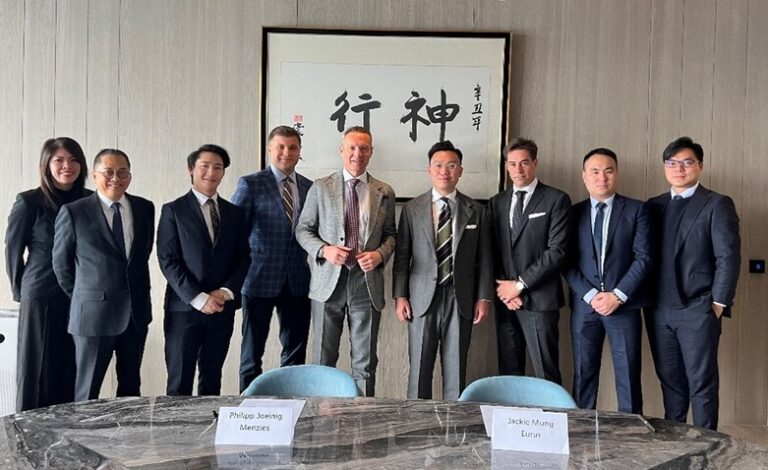
Menzies Aviation and logistics company, Eurus Express started the new month with the signing of a Memorandum of Understanding (MoU) aimed at developing a joint venture (JV) to benefit from the business growth potential that exists in China’s Hainan Province and beyond. Hainan was chosen because it has a free-trade port status, which offers the best foundation for growth on an international level. Eurus Express, which has its headquarters in Hainan Province, is among China’s leading integrated logistics companies, with a global network of 58 locations in 17 countries. Together with Menzies Aviation, it aspires to “provide best-in-class cargo and logistics services in China [and help] the province become an international logistics and aviation leader,” the press release states.
Collaborating to secure sustainable growth in China. Image: Menzies
Philipp Joeinig, Group CEO, Menzies Aviation, announced: “We are thrilled to be working with Jackie Mung, CEO of Eurus Express, and his team, whose outlook and ambition is strategically aligned with our own vision. The creation of a JV presents a valuable opportunity for us to accelerate business growth in China and beyond to deliver best in class aviation services across the region. We are looking forward to working with Eurus Express to deliver market leading, high quality aviation services in Hainan and beyond.”
Jackie Mung, CEO, Eurus Express, outlined: “Our vision is to empower our people, partners, and communities in Hainan to thrive, as this market transforms at breakneck speed. The future of progress relies on imagination and vision to see beyond today. By combining vast local insight and global best practices, together we can facilitate pioneering solutions for sustainable growth.”
Ever optimistic on the future of the air cargo industry. Image: Meantime Communications
Sponsored by the Airforwarders Association (AfA), the Air and Expedited Motor Carriers Association (AEMCA) and Airports Council International-North America (ACI-NA), the AirCargo 2024, now in its 27th year, is looking to exceed its previous visitor stats, according to Fried. 85 exhibitors and around 800 representatives from airlines, airport authorities, freight forwarders, truckers, expediting companies and the like, will descend on Louisville, Kentucky from 11-13FEB24, to discuss key topics such as sustainability, cargo security, shifting global regulations and their impact on trade, and emerging tech designed to support forwarder processes. The agenda features almost 50 industry experts in the series of panels and presentations.
Brandon Fried, Executive Director, Airforwarders Association, expects a record turnout, detailing: “Our sessions will delve into critical issues that impact the daily operations of freight forwarders, trucking companies, airlines, and other stakeholders. I am particularly proud of the Women’s Networking Session, focusing on Perspectives on Imposter Syndrome, as we strive to foster inclusivity and diversity within our industry” and refers to the event as “a premier networking event, bringing together key players and fostering collaborations that drive success for the global airfreight industry.”
Multimodal supply chain technology provider, Kale Info Solutions, announced the appointment of two new positions in its Americas team: Maureen Kam, who assumes the post of Vice President Sales, Canada, and Camilo Navarro, who is the Sales Manager for South America. They will be instrumental in the company’s strategic expansion across North and South America, continuing to promote and implement Kale Info’s Port and Airport Cargo Community Platforms across the region. Both are well-versed in cargo. Maureen Kam’s background includes sales, marketing, ecommerce and digital transformation positions at Cathay Pacific Airways, Air Canada, Air New Zealand, and Cargojet, for example, with posts in Asia, the South Pacific, and North America. Camilo Navarro, has a solid Colombian industry background, having begun at British Airways World Cargo back in 1989, and worked for Cargex, Centurion Cargo Airline, Menzies Aviation, among others since then. He will be spearheading Kale Info’s growth of its Cargo Community Systems in South America.
Maureen Kam is Kale’s VP Sales for Canada. Image: Meantime Communications
Amar More, Chief Executive Officer, Kale Info, specified: “We are heading into 2024 and beyond with the best expertise and knowledge at the helm of our Americas operations. Our focus is on fostering growth and enhancing community systems across the Americas, ensuring the benefits of digitalization reach ports and airports throughout the regions.”
Maureen Kam commented: “In my new role I will be leading Kale Info’s sales and marketing strategy to deliver customer success across our community platforms and enterprise solutions. Our customer-centric approach and commitment to delivering end-to-end collaboration among stakeholders will benefit users with cost efficiency, reduced cargo dwell time, rapid information exchange, and heightened efficiencies across the supply chain.”
Camilo Navarro stated: “Latin America (LATAM) is a strategic hub for global trade. Our cargo community systems, fortified with a dynamic multi-modal corridor, are designed not only to enhance collaboration throughout the supply chain but also to bolster the advancement of burgeoning economies in the region.”
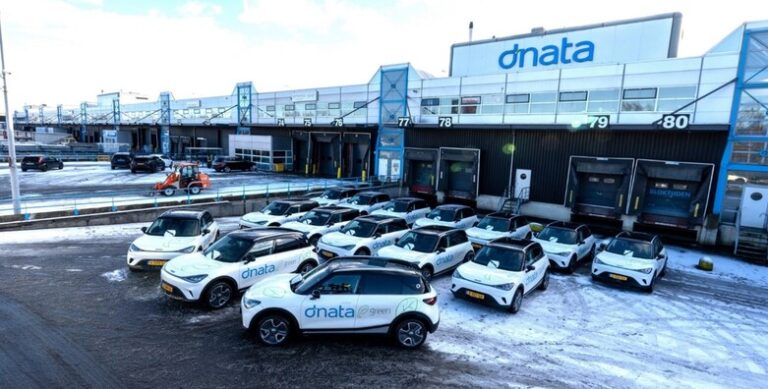
Over in Amsterdam, where the 1,000-strong dnata handles around 550,000 tons of cargo each year and carries out ground services for almost 40 airlines (operating circa 10,000 flights/year), the company is well on track to meet its 2030 carbon reduction target. Globally, dnata aims to reduce its carbon emissions by 50% within the next 6 years. On a local level, this translates into transitioning from fossil-fuel powered vehicles to electric, for example. With the delivery, recently, of 15 electric smart cars, soon to be complemented by a further five, dnata can now boast that over 65% of its fleet of 250 ground support equipment (GSE) units in The Netherlands is green since it is either powered by electric or solar energy. Not just that, but also its remaining legacy GSE fleet is fueled by biofuel in the form of 100% hydro-treated vegetable oil (HVO), and thus emits 90% less carbon dioxide emissions than its diesel predecessor throughout its lifecycle.
15 electric smart cars have been added to dnata’s AMS ground fleet. Image: dnata
Jan van Anrooy, Managing Director, dnata Netherlands, said: “We are committed to investing in green equipment and infrastructure to maximize environmental efficiency across our operations. Through close collaboration with our partners, we have promptly leveraged the airport’s new infrastructure by replacing our entire car fleet. As a result, over two-thirds of our fleet now operates on electric power or solar energy. We will continue our efforts to further reduce our environmental footprint, contributing to dnata’s commitment to reduce global carbon emissions.”
The development of green hydrogen for aircraft propulsion and for airports to achieve net zero is gaining momentum – predominantly in Northern Europe. Shortly before the turn of the year, 16 airports between the Baltic States, Scandinavia, and northern Germany, founded a hydrogen initiative1). This was followed, a few days later, by a landmark agreement on the use of SAF between the Norwegian company, Norsk eFuel, Cargolux, and the airline, Norwegian2). And the H2 journey continues apace.
Image of ZEROe hydrogen-powered turboprop aircraft – courtesy: Airbus
A group of companies, led by aircraft manufacturer Airbus, has signed a Memorandum of Understanding (MoU) to investigate the feasibility of a hydrogen ground infrastructure at airports in Norway and Sweden.
Alongside Airbus, the signatories are SAS, Swedavia, Avinor, and Vattenfall. This group’s main aim is to provide better understanding of hydrogen aircraft concepts and operations, supply, ground infrastructure and refueling needs at airports, in order to push forward the development of a hydrogen aviation ecosystem in both Nordic states and beyond. The work will also identify the pathways to determine which airports will be transformed first to operate hydrogen-powered aircraft in both Scandinavian countries, as well as clarify regulatory requirements.
“Sweden and Norway have great potential for H2”– Faury Hydrogen is expected to gradually become an increasing part of the aviation industry’s fuel mix in the future and will therefore have effects on the ground infrastructure of airports.
Turning to the MoU; Airbus emphasized that it is the first time that a feasibility study of this kind covers two countries and more than 50 airports. The pact reflects the partners’ shared ambition to use their respective expertise to support the decarbonization of the aviation industry and to achieve net zero carbon emissions by 2050 at the latest.
“Hydrogen stands out as a key enabler as we pioneer a sustainable aviation future,” notes Guillaume Faury, CEO of Airbus. The executive went on to say: “Norway and Sweden are among the most demanding regions for aviation and have great potential for hydrogen production from renewable energy sources. I am very pleased to enter into this cooperation with partners fully engaged to take significant steps towards decarbonizing aerospace. It fits perfectly with our strategy of deploying hydrogen aviation ecosystems in the most suitable parts of the world.”
Early movers The role of green hydrogen as the most environmentally friendly energy carrier in aviation is underlined by Abraham Foss, CEO of airport operator, Avinor: “Hydrogen is emerging as a key energy carrier in future fossil free aviation.”
As the owner and operator of 43 airports across Norway, Avinor has been working on sustainability for many years already and has been a driving force and facilitator for the green transition of Norwegian aviation. “Norway, as well as Sweden, is well positioned to be an early mover in the introduction of hydrogen-powered aircraft. We look forward to contributing with our expertise as well as infrastructure to bring this important work forward,” the Avinor executive states.
Jonas Abrahamsson, Swedavia’s President and CEO, emphasizes that the partnership is a major and important step towards fossil-free aviation in northern Europe. “It will strengthen Swedavia’s role as a front-runner in fossil-free aviation, while at the same time taking another important step in the transition within the aviation industry,” the executive notes.
Still a bumpy road ahead Encouraging the transition towards achieving net-zero emissions is a journey that matters not just for SAS, but for the entire aviation industry, exclaims SAS’ President & CEO, Anko van der Werff. He points out that SAS has already established some collaborations in fossil-free aviation. But with Airbus on board, the transition from carbon to hydrogen powered aircraft gains additional drive.
Yet, it is still a bumpy road until the first H2 powered passenger and/or freighter aircraft crosses the skies. This is acknowledged by Anna Borg, President and CEO of energy giant, Vattenfall. Breaking away from fossil fuels is a huge challenge, she states. However, “the cross-border collaboration demonstrates the willingness to bring about change. We look forward to contributing with expertise in electricity market development, electrical infrastructure, and hydrogen production in Sweden.”
While all this is comparable to plans presented by ADP as airport operator of Paris-CDG, and other large platforms, it needs to be said that smaller, regional airports will probably be faster movers in the field of Green Hydrogen and its transformation into Sustainable Aviation Fuel, remarks aviation and energy expert, Hugo Duchemin of COMWORXX S.A.S., France. Business flight operators at these airports are experiencing pressure to comply with environmental aspects. “Their customers, often multinational corporations, are also publicly under fire and can be a driving force when it comes to investing in the availability of emission-free synthetic kerosene (e-fuel),” he adds.
Decarbonizing ground ops at airports are part of the scheme The use of H2 to power future aircraft is not only expected to significantly reduce aircraft emissions but could also help decarbonize air transport activities on the ground. In 2020, Airbus presented its first ZEROe concept with the ambition to bring the world’s first hydrogen-powered commercial aircraft to market by 2035. The development of the corresponding technology is now underway in a global Research & Technology network, the plane maker assures.
In addition, Airbus kicked off the “Hydrogen Hub at Airports” program to jumpstart research into infrastructure requirements and low-carbon airport operations across the entire value chain. To date, agreements have been signed with partners and airports in ten countries including France, Germany, Italy, Japan, New Zealand, Norway, Singapore, South Korea, Sweden, and the United Kingdom.
As pointed out by Hugo Duchemin (COMWORXX), the concept of hydrogen hubs at airports was already presented independently by both an aerospace alliance and a hydrogen company at the ILA Berlin Air Show in 2022. Not only will these hubs serve airport-internal operations, but they will also benefit all connecting services such as the thousands of air freight trucks working on behalf of the major airlines and forwarder to feed industrial cargo from production sites to cargo terminals, and from there to larger freighter terminals across Europe, notes the expert.
Even in the ideal world, where every employee is safety-conscious and up-to-date with their training, medical emergencies can still occur in the workplace. Whilst most accidents can be prevented through relevant awareness training, sudden illness is not predictable. Whatever the emergency situation, are you and your colleagues well prepared to deal with it? Would you know what to do?
Every second counts when it comes to an accident or illness. Image: Canva/CFG
Having just voluntarily attended a 2-day first aid course and realized that much has changed since the last time I was instructed in the subject, it caused me to reflect on safety in the air cargo workplace. Not least, because most of the other participants were nominated company first aiders and similarly reported that it had been years since their last course.
Standards are usually regulated Standards for first aid in the workplace are generally set by your national authority. They describe the legal requirements or guidelines surrounding the number of trained first aiders per team size, and the necessary first aid supplies, training, and equipment, based on the nature of the work and potential hazards.
ICAO, IATA, and EASA offer safety courses and/or medical manuals and guidelines, but a general first aid course can be taken anywhere and is usually offered by the Red Cross or ambulance services in your country. Even if your workplace does not encourage or offer this, you would do well to bring up the topic with HR, and ensure that – whatever the result – you arrange your own training. After all, accidents and incidents do not just happen at work.
Prevention is better than cure Particularly work in the warehouse or on the aircraft ramp, poses a number of safety risks if staff is not properly trained, or if they are exhausted due to limited resources, or having to deal with badly built-up pallets coming in, for example. Not to mention, dangerous goods, forklift incidents, heavy lifting, etc. Training in all aspects of workplace safety should come first on any company’s staff agenda and be regularly refreshed. The usual recommendation is every two to three years for basic first aid, or every year for CPR training. You should consider the different potential risks in work environment and arrange the necessary training to counteract these. For example, learn how to deal with the many possible dangerous goods incidents. And since we learn through routine, regular practice scenarios should be planned or at least written/verbal reminders of how to deal with certain situations should be sent via regular, available communication channels.
Are you set up to provide quick, basic help? Yet, whether you work in the warehouse, on the ramp, or in an office, medical emergencies are not just the result of accidents, they can also be due to illness, dehydration, or stress. Whatever the case, does your workplace have a first aider quickly on hand, and the necessary medical supplies or equipment to provide quick, basic help until the medical crew arrive? Does everyone in the workplace know where the first aid kit is kept? Are they familiar with its contents? Do you have enough trained staff on hand who know how to apply those supplies? And if so, when was your staff last trained in first aid? In an ideal world, everyone should be aware of the measures to be taken in the case of an injury or illness, rather than have the responsibility for immediate care rest on just one or two sets of shoulders, since what would be the scenario if they were both not there on the day something happens? Have you developed clear first aid procedures on how to respond to medical emergencies, are these displayed, and is everyone aware of them and who their local first aiders are? Are all emergency numbers clearly listed?
And how up-to-date is your first aid kit? Would your first aid kit pass an inspection? Is it easily accessible and clean? Are you aware of what it needs to contain? Are all the contents still within their sell-by date? Do you have a functioning defibrillator (AED)? Enough supplies to deal with wound care in the case of cuts, scrapes, or other injuries, and prevent infection, or should more be ordered? In other words, enough bandages, disposable gloves, and antiseptics, etc.?
A safe workplace is a happier workplace Quite aside from having to face legal penalties if workplace first aid procedures are not upheld, a working environment in which everyone is aware of how to act in a medical emergency, is likely to function far better than one where employees feel less safe. From a safety perspective, too: the more aware staff is of the risks around them, the more careful they will be in their work. Ideally, all employees should be trained in basic first aid, since the quicker an ill or injured person receives help, the greater their chances of recovery/survival and prevention of further injury. Also, the more people are trained, the more likely they will feel confident to step in when needed. Ultimately, it also creates a better company culture, knowing that help is on hand in an emergency.
Keep the information fresh at all times However, as I stated at the beginning, make sure your employees regularly get to refresh what they know about first aid. Practices change over time, and if you were still taught about using biros to create tracheotomies for people having problem breathing or were told that anyone having an epileptic fit should have a spoon in their mouth to prevent them from swallowing their tongue, you could now be doing more harm than good. Those methods are no longer used.
And the era of technology – whether in the form of a multi-lingual, talking defibrillator unit or a smartphone that you can place on speaker phone while you administer help following the instructions of the professional emergency services contact on the other end – also creates better response possibilities.
So, invest in first aid training and thus in your team.
And if you have an air cargo first aid story or Best Demonstrated Practice that you would like to share with CargoForwarder Global’s readers, let us know in the comments below, or send us a LinkedIn message/email to cargoforwarderglobal@kopfpilot.at
The airline’s rebranding strategy which began late last year, is more than just a name change and livery refresh. Cathay Cargo’s focus is on customer care, digital innovation, and specialist solutions, and highlights its long-standing experience in its claim: “We know how”. The company’s press releases since DEC23, tell a much more positive story than the many troubles the airline faced during the pandemic.
The first Hong Kong cargo terminal operator to provide end-to-end digitalized import collection – image photos: Cathay Cargo
The first of its 20 B747 freighters left the hangar in its fresh, new livery last month, just a few weeks after Cathay Cargo announced plans to invest in next-generation Airbus A350F freighters as part of its strategy to become the world’s most customer-centric air cargo service brand and strengthen Hong Kong as the world’s number one air cargo hub. A firm order for six aircraft was placed [planned delivery from 2027] with the option for a further 20.
At the time, Cathay Group Chief Executive Officer, Ronald Lam, explained: “As we move into 2024, our rebuild journey is gaining momentum. This order marks another major component in our investment for the future. It reflects Cathay’s confidence in the Hong Kong hub as we look ahead to the opportunities provided by the Three-Runway System. These highly fuel-efficient, next-generation freighters will provide important additional cargo capacity, expand our global network, and contribute to our sustainability leadership goals.”
Fuel efficiency starts with SAF Those sustainability leadership goals were demonstrated mid-January, when Cathay welcomed three new partners to its Corporate Sustainable Aviation Fuel Program. In 2022, Cathay was one of the world’s first airlines to set an SAF target and wants to reach a target of 10% SAF for its total fuel use by 2030. It uplifted SAF at Hong Kong International Airport for the first time that year, branching out to SAF uplifts from Singapore Changi Airport and Los Angeles International Airport, the following year. Now, Cathay Cargo customers, Dimerco Express Group, Yusen Logistics, and NGO partner, Business Environment Council, have joined AIA, Airport Authority Hong Kong (AAHK), Kintetsu World Express (KWE), PwC China, Standard Chartered and Swire Pacific, in Cathay’s SAF initiative. Lam commented: “We have received strong support from our corporate and cargo customers since the launch of our Corporate SAF Program [and] convey a clear message to the SAF supply chain that there is firm demand from this part of the world.”
Working together with ExxonMobil and Shell, Cathay’s SAF is made from used cooking oil and animal fat waste. The airline also signed a MoU last year with State Power Investment Corporation (SPIC) to drive the further development of the SAF supply chain in China.
Pioneering full end-to-end digital import processes in HKG Cathay Cargo’s latest news is the launch of Electronic Shipment Release Forms (eSRF), at its cargo terminal in Hong Kong, which enables end-to-end digitalized import collection. Not only does the new eSRF feature make for a much faster, more efficient, and flexible import process for all involved stakeholders, it is also more secure than its manual counterpart, not to mention sustainable, since it does away with paper documents and their storage requirements. “Under the new process, an eSRF can be issued through electronic authentication. Airlines can issue the eSRF to freight forwarders or consignees for pre-registration, automatic truck dock allocation, and online queuing for cargo clearance. With the inspection confirmation being recorded electronically, a cargo release confirmation will be shown on the mobile device,” the release states.
The feature forms an integral part of the Import Air Cargo Collection Digitalization Module of Airport Authority Hong Kong’s (AAHK) HKIA Cargo Data Platform and Cathay Cargo is now the first cargo terminal operator in Hong Kong to provide full end-to-end digital import process. It pioneered the solution together with AAHK and in collaboration with the Hong Kong Association of Freight Forwarding and Logistics (HAFFA), airlines, cargo agents, truckers, and regulators.
A digital game-changer for cargo Cathay Cargo Terminal Chief Operating Officer, Mark Watts, emphasized: “The introduction of eSRF is a real game changer – akin to the introduction of e-tickets in passenger aviation. We are proud to have worked hand-in-hand with the AAHK to make this a reality. Our customers are increasingly looking to leverage digitalization to unlock efficiency and transparency, while also looking to work with common standards and true community solutions that enable them to share data quickly across the supply chains with minimal integration. The HKIA Cargo Data Platform serves as an enabler in driving such transformational change for the industry. The introduction of eSRF reinforces our position as a digital leader in the cargo terminal industry, further strengthens Hong Kong International Airport as the leading international aviation hub and is another milestone to help us meet our vision of becoming the world’s most customer-centric cargo terminal.”
Cathay Cargo’s first freighter showcasing the carrier’s new livery.
Positive figures as a good foundation Cathay’s recently published cargo figures for DEC23 and the entire past year, are also “encouraging”, as the airline itself states. It reported having transported 128,546 tons of cargo that month, which translates into a 20.7% increase compared with DEC22. e-commerce, perishables, and particularly live animals (mainly racehorse transports to and from Hong Kong’s international race events), were the strongest commodities in the final month of 2023. Overall, the airline transported near to 1.4 million tons of air cargo in 2023 – a clear increase on the 1.2 million tons carried the previous year. “We expect cargo demand to steadily pick up from the second half of the month with the e-commerce demand on the Americas and European lanes remaining solid and local demand strengthening up to the Lunar New Year holidays,” Cathay predicted in its JAN24 press release.
The world’s largest trade fair for fruit, vegetables and agricultural products will open its doors in Berlin from 07-09FEB24 and a new record number of participants is on the horizon. A total of 2,750 exhibitors from 94 countries have registered, which is an increase of around 10% compared to last year’s trade fair. The 26 halls at the Berlin exhibition grounds are therefore almost fully booked by exhibitors, much to the delight of the organizers. And the event has a few new features. This was made clear by experts at the digital press event on Thursday 01FEB24, in the run-up to the Berlin trade show.
Fruit Logistica, which takes place annually in Berlin, is a magnet for the fresh produce industry – image: courtesy Messe Berlin
As Event Director Kai Mangelberger emphasized at the beginning of the call, the importance of digitalization, automation and AI is also rapidly increasing in the agricultural industry. He called for participation in a symposium on innovation next Friday (09FEB24), at which companies – especially start-ups – will present new developments. In his preview of this year’s trade fair, he pointed out a global trend in the agricultural sector with recognizable effects on supply chains and trade: The spread of risks. This is because the pressure on producers is constantly growing, for example due to increased red tape set up by politicians and authorities, the consequences of climate change with a lack of precipitation and high temperatures which lead to crop failures and the desertification of usable agricultural land, rising energy costs for producers, and the decline of consumer spending due to price hikes caused by inflation in many countries.
From outdoor to indoor production Due to their urgency, such critical topics are listed much higher on Fruit Logistica’s 2024 agenda than in previous years. It seems that the days are gone when exhibitors mainly presented their products to the public in neat and attractive packaging. Now it is all about the future of the industry, including its air and maritime transport partners, as well as trucking and warehousing.
Water hoses, LED lighting, nutrient supply: Indoor farming is largely automated – courtesy: bachrauf.org.
In his presentation, Tom Stenzel, Managing Director of the Controlled Environment Agriculture Alliance (CEA), USA, illustrated the gradual change in the cultivation of vegetables and fruit. CEA is an exciting and highly topical subject. It plays an important role in the Berlin event program and is the focus of this year’s Trend Report, which will be published at the trade fair. Stenzel said that meanwhile 85% of all tomatoes planted and harvested in the U.S., are grown indoors. According to him, the advantages of indoor farmed products over those grown on green fields are: “that they can be marketed 365 days/year, irrigated and harvested whenever needed. Compared to field grown tomatoes, their quality is superior when it comes to freshness and flavor. Less manpower is needed, and transportation costs are lower.”
New trends In addition, two other topics take precedence on the agenda of this year’s Fruit Logistica: vertical farming and emerging markets. Vertical farming is a growing phenomenon, especially in urban areas. However, it is likely to remain a niche product in the longer term due to small-scale production limitations, remarked Mike Knowles, MD Fruitnet Europe, UK. This example illustrates his statement: “To meet its residents’ demand, Paris would need 16,000 hectares of roof and vertical cultivation area to supply its dwellers with sufficient fruit and vegetables.”
Another focus is on emerging markets. “Kenya and large parts of Africa will become Europe’s future basket for fruit and vegetable supply,” predicts expert Knowles. The cultivation of agricultural products is growing rapidly there, many of which are exported by air or ocean carriers to markets in the northern hemisphere.
Exhibition Chief Kai Mangelsberger expects a record number of exhibitors and attendees at Fruit Logistica 2024 – credit: Messe Berlin
Networking opportunities are also taken into account As Managing Director Mangelberger said, there will be an “Innovation Of The Year Award. Exhibitors and media representatives can take part in the voting. After-work events are also scheduled and will take place at the North and South exits of the fairground for networking purposes and to create a pleasant atmosphere for participants. Exhibitors, visitors, and media representatives alike can take part in these events.
CargoForwarder Global will be represented at the trade show. Anyone interested in a personal meeting or discussion, should send an e-mail to info@cgofor.eu no later than Monday afternoon (05FEB24).
Coal and steel were the mainstay of the economy and prosperity of both Pittsburgh and Liège. Steel produced in Pittsburgh was once used to construct the Golden Gate Bridge. However, the industrial landscape has changed dramatically at both locations. In Liège, the transition towards new, clean technologies and modern transportation has already been accomplished.
Bryan Dietz is Pittsburgh’s Prince Charming who kisses the Sleeping Cargo Beauty awake – photo / image: courtesy PIT
In contrast, Pittsburgh, a city of two million, is in the midst of transformation with a new focus on life science, health care, high tech, pharmaceuticals and banking, among others.
The change in the macroeconomic environment is also affecting Pittsburgh International Airport (PIT). As a result, the management has placed air freight matters high on its agenda.
This has been confirmed by Bryan Dietz in an exclusive call with CargoForwarder Global. He is senior VP Air Service & Commercial Development at the Allegheny County Airport Authority, which operates Pittsburgh International (PIT) and Allegheny County Airport. Bryan must feel like Prince Charming in the fairy tale where he kisses Sleeping Beauty awake after an eternally long sleep, just that his Sleeping Beauty is Pittsburgh’s air freight business. That said, a targeted wakeup call is appropriate because PIT offers enormous potential for cargo throughput which would benefit the local economy, the industry in a wider sense, and secure jobs, outlines Mr. Dietz.
Sandwich situation To start with, PIT faces a sandwich situation. Geographically, it is squeezed halfway between the giants New York (JFK) and Chicago O’Hare (ORD). However, Dietz and his team do not see these as direct competitors but as airports that have passed their zenith. Due to their size, operational hiccups, and sheer traffic volumes, they cannot offer the same level of service compared to agile, efficient, and fast airports such as Pittsburgh International. Thanks to its 4 runways, PIT is a congestion-free airport, has no slot problems and is operational 24/7/365.
Cheaper and more flexible Then there is the cost difference as demonstrated by the landing fees that are roughly 50% cheaper than those that carriers have to pay at ORD or JFK. This is because the base costs at PIT are lower. It is a self-powered airport, thanks to the availability of abundant natural gas and a large number of solar panels – 9,000 in total – which supply clean energy. Agility combined with limited energy costs and lower charges are therefore selling points for Dietz and his team to place their airport on the international air freight map.
Market closeness And the executive emphasizes a third aspect: “45% of the entire U.S. population lives within an 8-hour radius of Pittsburgh, measured in terms of truck driving times.” A truck needs 6 hours to NYC, 7 to 8 hours to Chicago, depending on traffic situations, and 4 hours each to Toronto and Washington DC, according to traffic statistics. “From wheels down to the onforwarding of goods, we need only a couple of hours, not days as the statistics of our larger peers evidence.”
“Cargo 4” will start in Q4, 2024 In order to meet the expectations of stakeholders in terms of infrastructure, management has initiated working groups with participants from all sectors of air freight, including forwarding agents, airlines, trucking companies, ground handlers, customs officials and regulators. The development of the project was strongly and long supported by advisor, Steven Verhasselt, who held a leading position at Liège Airport for many years. His experience gained there and during some other projects, among them Leipzig/Halle Airport, was valuable to develop cargo-friendly solutions for PIT.
The Cargo 4 project will enhance the airport’s ability to accept international freight and distribute it throughout the U.S. and North America – courtesy – PIT
The main result of consultations, discussions with stakeholders, and managerial decisions, is a 7,100 m2 state-of-the-art cargo terminal called Cargo 4, which is currently under construction and is scheduled to go online in Q4, 2024. It will be equipped with cutting edge technology to facilitate the fast throughput of freight and offer forwarders multiple truck docks for fast unloading or loading of their goods. The design of the warehouse allows for very flexible use, as it can be quickly adapted to changing market requirements. Bryan Dietz mentions criteria such as sudden increases in pharmaceutical shipments, a high volume of e-commerce or the need for fast handling of bulk cargo.
“We are building and will lease the facility,” Joe Rotterdam, Director Air Service Development, Allegheny County Airport Authority explained to CargoForwarder Global. The executive thus contradicts earlier reports that a developer had secured the operations of the warehouse for at least a decade.
More intercontinental operations needed All in all, management has set the course for leveraging the airport’s cargo position. However, the handling volumes are still very manageable, as seen by the throughput of 86,000 tons in 2023. What the airport lacks for achieving a critical volume, are long-haul connections. That is the biggest difference to the earlier mentioned Liège Bierset Airport in Belgium. Apart from occasional charter flights and domestic operations by UPS and FedEx, only British Airways operates scheduled intercontinental flights, connecting the Pennsylvanian city with London Heathrow six times a week, using a passenger B787 jetliner. Icelandair will follow suit in May, deploying a B737 MAX on flights to Reykjavik. The aircraft can accommodate 5 tons of cargo per flight, the bulk of which is transferred directly to flights destined to airports in continental Europe.
Finally, PIT’s management will also have to work on balancing the import/export ratio (20% / 80%). With exports only likely to increase if additional intercontinental airlines, especially European carriers, add Pittsburgh to their transatlantic network.
The U.S. integrator confirmed earlier announced plans to ax 12,000 jobs. This is due to significant volume declines in the transportation of consumer goods in 2023 and a gloomy outlook for the coming months. The mass layoffs come only months after the delivery company averted a massive strike by agreeing to a new labor contract.
UPS operates 41 Boeing 747F, among them 13 B747-400F and 28 B747-8F – credit UPS
The package delivery company is facing headwinds for almost a year. In MAR23, The Wall Street Journal noted that a decline in e-commerce hit the companies’ payrolls. In a reaction other parcel-delivery companies, truckers and warehousing companies cut nearly 17,000 jobs in the U.S. In the summer months, large retailers have cut back on orders to feed end-of-year peak shopping demand, which lowered transport volumes further. This in turn translated to less shipments, putting pressure on UPS but also some of its peers.
Drop in profits Ever since, e-commerce demand hasn’t really improved, which continues suffering from low consumer spending. This has an impact on integrators in particular, who have to adjust their business plans downwards.
In Q4, 2023, UPS suffered a drop in profits. Earnings fell to US$2.47 per share from US$3.62 previously, while revenue fell from US$27.0 billion to US$24.9 billion.
UPS CEO Carol Tomé said in a conference call that the job cuts are intended to save one billion dollars (roughly 920 million euros). The layoff of 12,000 employees is around 2.5% of UPS’s global headcount of nearly half a million employees. In addition to job cuts, there are also plans to divest unprofitable subsidiaries in order to reduce costs. One sales candidate could be the trucker Coyote, which UPS only acquired in 2015. Coyote is suffering from a sharp drop in transport prices that went south following the corona virus boom.
Analysts had expected higher sales Last year, UPS also missed its earnings adjusted downwards several times since volumes kept declining. In addition, significant wage increases for employees have eaten up large portions of the profit. Concerning this year’s business prospects, Group CEO Tomé expects only a slight increase in turnover to around 92 to 94.5 billion dollars, she predicted during the conference call. This is below the 95.57 billion USD sales expected by analysts.
Last year, UPS turnover fell 9.3%, to USD 91 billion, while the adjusted operating profit plummeted by almost 29% to 9.9 billion dollars. At the bottom line, UPS earned 6.7 billion dollars, around 42% less than in the previous year.
In contrast, there was a slight increase in average revenue per parcel, however, it did not suffice to compensate for the decline in shipment volumes. Simultaneously, high inflation dampened consumer demand as did economic uncertainty. In addition, UPS customers were unsettled by strike warnings indicated by The Teamsters union, motivating them to migrate to competitors such as DHL Express and FedEx. Finally, UPS management reached an agreement with the transport workers’ union on wage increases.
No recession looming The package delivery company joins a number of other major U.S. companies cutting jobs in 2024 amid forecasts for slower economic growth. Among them are Google that laid off hundreds of workers on its hardware, voice assistance and engineering teams to reduce expenditures. Others are Microsoft, eBay, Levis, Macy’s and Wayfair that plan to ax jobs as well.
However, most market analysts forecast that the U.S. will avoid a recession in 2024. Despite the layoffs at UPS and in the tech sector, the U.S. labor market remains very robust seen by 2.7 million new jobs created in 2023.